Best Fabric Types for Leggings: Complete Guide for Brands
Leggings carry more weight than any other product in an activewear line....

Polyester fabric is one of the most widely used textiles globally, shaping everything from everyday clothing to advanced performance wear. Recent industry reports show that over 54% of all clothing produced globally is made from polyester, making it the most dominant fiber in today’s fashion and performance wear markets. Its strength, versatility, easy care, and cost efficiency make it a preferred choice for brands, designers, and manufacturers across the USA.
In modern fashion trends, polyester plays a major role due to its adaptability. It supports the rise of streetwear, athleisure, minimalistic designs, and tech-driven apparel. Its ability to hold bold colors, complex prints, clean silhouettes, and performance finishes makes it ideal for trend-forward collections. From oversized fits to sleek, stretchy activewear sets, polyester continues to shape the look and feel of contemporary wardrobes.
For apparel startups and private label brands, polyester provides reliable performance without compromising style. Seam Apparel works closely with these businesses, developing custom polyester garments tailored to specific design and quality goals. With strong expertise in synthetic materials, Seam Apparel understands why polyester fabric remains a smart and future-ready option for fashion and performance wear.
Polyester fabric is a synthetic material made from petroleum-based chemicals. It was invented in the mid-20th century as an alternative to natural fibers like cotton and wool. Over time, it gained widespread popularity because of its strength, affordability, and resistance to wrinkles and shrinking.
When people ask what polyester fabric is, the simplest answer is that it is a manufactured fiber created through chemical processing. The result is a lightweight, durable, and smooth material used in a wide range of industries. Today, polyester fabric is known for its reliability, long life, and ability to hold color well, making it a staple in both casual and performance clothing.
Thanks to modern technology, polyester material is available in many forms, from soft microfibers to stretchy blends. This flexibility is why brands in the USA continue to rely on it for activewear, uniforms, and fashion apparel.
Private Label Tracksuit Manufacturing Cost Breakdown
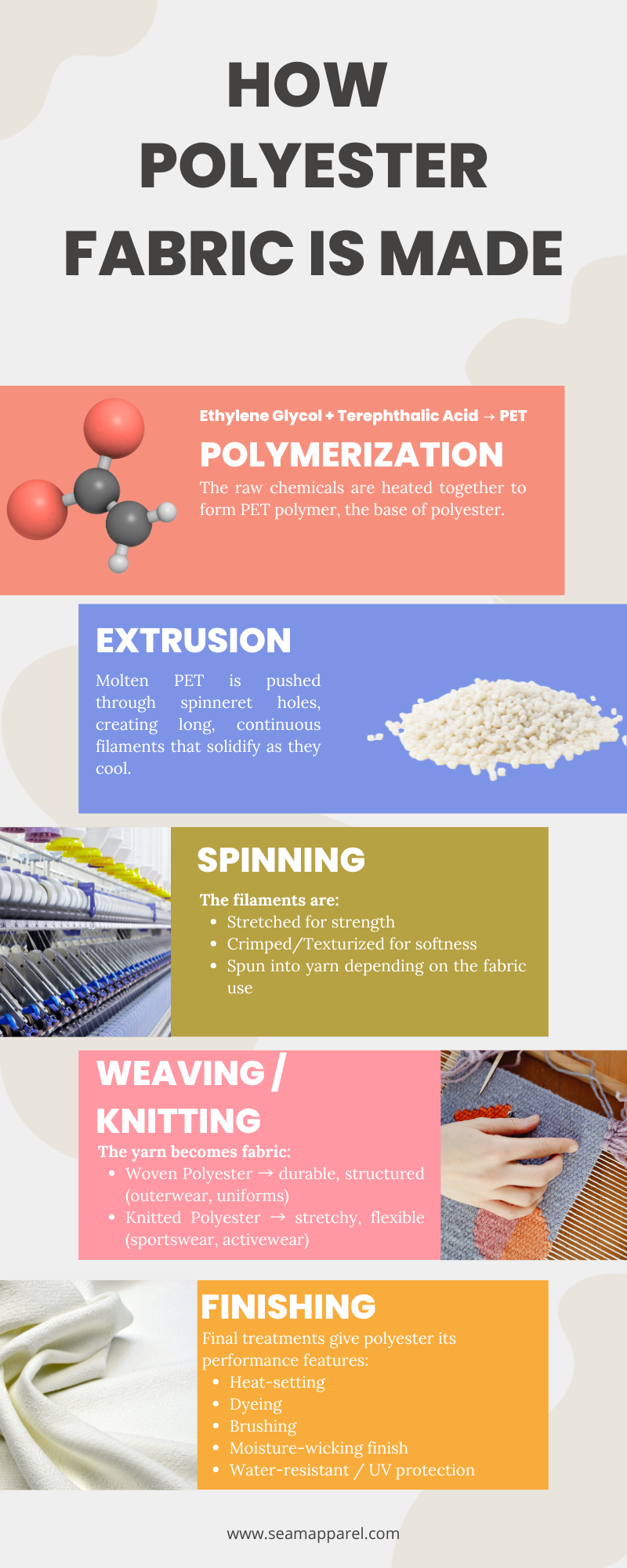
To understand how polyester is made, it helps to break the process into clear steps.
The polyester manufacturing process involves several stages:
The journey begins by combining ethylene glycol and terephthalic acid. When heated together, they form PET (polyethylene terephthalate), the base of most polyester fabric.
The molten PET is pushed through tiny spinneret holes, forming long, continuous filaments. These solidify into fibers as they cool.
The fibers are stretched, crimped, or texturized, then spun into yarn depending on the desired fabric performance or softness.
The yarn is woven or knitted into fabric. Woven polyester tends to be stronger and ideal for outerwear, while knitted polyester offers more stretching, making it suitable for sportswear and performance garments.
The fabric goes through heat-setting, dyeing, brushing, or coating to create specific textures or performance features. These finishing processes help control softness, colorfastness, moisture wicking, and durability.
A growing part of the industry is recycled polyester fabric, often made from plastic bottles, textile waste, and ocean plastics. rPET reduces environmental impact while still offering the same strength and versatility as virgin polyester.
This entire production chain allows polyester to be adapted for numerous fashion and industrial purposes, making it one of the most flexible fiber types available today.
Understanding polyester fabric properties helps brands select the right material for performance, comfort, and longevity. Polyester offers a range of features that make it suitable for everyday fashion, activewear, and industrial use. Below are the core characteristics that set polyester apart:
Polyester is extremely strong and resistant to stretching, shrinking, and tearing. This makes it ideal for garments that face frequent movement, washing, or heavy wear. Uniforms, sportswear, and outdoor clothing benefit most from its long-lasting performance.
One of the biggest advantages of polyester is its low moisture absorption. Water evaporates quickly from the surface, allowing the fabric to dry much faster than natural fiber. This makes it an excellent choice for gym wear, swimwear, and outdoor apparel designed for active lifestyles.
Polyester naturally maintains its structure and shape throughout the day. It resists wrinkling even after packing, washing, or long-term use. Brands choose it for travel clothing, office wear, and casual garments that need to stay crisp without ironing.
Modern polyester is engineered to move sweat away from the skin and onto the surface of the fabric, where it dries faster. This moisture-wicking ability enhances comfort during workouts, high-intensity activities, and warm weather conditions.
Despite its strength, polyester is lightweight and smooth against the skin. It offers comfort without adding bulk, making it suitable for T-shirts, dresses, leggings, and layering pieces used across different seasons.
Polyester holds dye exceptionally well. Colors remain bright and vibrant even after repeated washing, exposure to sunlight, or daily wear. This makes it ideal for fashion brands that focus on bold prints, logos, and long-lasting colors.
Polyester fabric comes in many different forms, and each type serves a unique purpose in the apparel industry. Understanding these variations helps brands choose the right material for comfort, durability, performance, or sustainability. Below are the most common and widely used types of polyester fabric:
PET polyester is the standard and most used polyester material in the global textile industry. It is strong, long-lasting, and resistant to stretching and fading. Because of its versatility, PET is used in a wide range of products, including T-shirts, jackets, uniforms, sportswear, and casual everyday apparel. It balances durability and cost-effectiveness, making it a popular choice for both fashion brands and performance-focused designers.
PCDT polyester is known for its softness and elasticity. Compared to PET, it offers a more flexible structure, making it ideal for garments that require a smooth drape and gentle stretch. Designers often use PCDT for dresses, skirts, blouses, and flowy silhouettes that need movement without losing shape. Its comfort and graceful draping ability make it a preferred option for women’s fashion and lightweight apparel.
Recycled polyester is made by processing plastic bottles, industrial waste, or discarded textile fibers into new usable yarn. This reduces the reliance on virgin petroleum and supports sustainable polyester development. rPET offers the same durability and performance benefits as traditional polyester but with a significantly lower environmental impact. Many eco-conscious and USA-based activewear brands now choose rPET for T-shirts, leggings, outerwear, and performance wear.
Microfiber polyester is made from extremely fine filaments, creating a soft, smooth, and luxurious fabric. It is lightweight, breathable, and known for its superior drape and silky feel. Microfiber is often used in premium apparel like outerwear, high-end activewear, and fashion tops. Beyond clothing, it is also popular in home textiles such as bedding, curtains, and cleaning products due to its softness and excellent absorption qualities.
The range of polyester fabric uses is incredibly wide. Because of its versatility, it appears in:
T-shirts, dresses, jackets, trousers, skirts, and uniforms commonly use polyester because of its durability and color retention.
Performance garments like leggings, compression wear, tracksuits, and gym tops rely on polyester for its moisture-wicking and quick-drying capabilities.
Curtains, bedding, tablecloths, upholstery, and carpets often include polyester due to its strength and stain resistance.
Polyester also serves conveyor belts, ropes, insulation, tire reinforcement, and outdoor gear.
Seam Apparel, a private label apparel manufacturer, frequently works with both woven and knitted polyester fabrics, helping brands create products that match performance and style requirements.
| Feature | Polyester | Cotton |
|---|---|---|
| Source | Synthetic (petroleum) | Natural (plant-based) |
| Breathability | Moderate | High |
| Durability | Excellent | Moderate |
| Moisture Wicking | High | Low |
| Environmental Impact | Higher (unless recycled) | Renewable |
| Cost | Lower | Moderate |
When deciding between polyester vs. cotton, the choice comes down to performance and comfort. Polyester delivers long-lasting durability, excellent shape retention, and moisture-wicking properties—perfect for sportswear, activewear, and high-performance garments. Cotton provides unmatched softness and natural breathability, ideal for everyday apparel that feels good against the skin. Many USA-based brands now leverage blended fabrics to combine the best of both worlds: polyester for strength and performance and cotton for comfort and breathability.
This balance allows brands to create premium-quality clothing that meets customer expectations while optimizing cost and sustainability. Whether you’re designing high-intensity athletic wear or comfortable lifestyle apparel, selecting the right fabric ensures your products stand out in quality, comfort, and style.
Learn about more fabrics: What is Polytetrafluoroethylene (PTFE) Fabric: Properties, How It’s Made, and Where It’s Used
While polyester fabric is highly functional and widely used, it poses environmental challenges due to microplastics shedding during washing and its slow decomposition in landfills. The fashion and activewear industries are increasingly prioritizing greener solutions to address these concerns.
rPET transforms used plastic bottles and textile scraps into new fibers, reducing landfill waste and conserving natural resources. By lowering carbon emissions and energy consumption, rPET offers a practical step toward more sustainable polyester options that don’t compromise on durability or performance.
Cutting-edge technologies now allow polyester garments to be broken down and re-spun into new fibers, creating a circular production system that significantly reduces waste. This process ensures that polyester can be reused multiple times while maintaining fabric quality.
Seam Apparel actively supports these sustainable initiatives by providing eco-conscious fabric sourcing and giving brands access to sustainable polyester materials. This enables brands to move toward responsible, environmentally friendly production without sacrificing the performance and feel of their garments.
When it comes to manufacturing high-quality polyester garments, Seam Apparel offers strong expertise and reliable production support. The company works with performance wear labels, uniform suppliers, and fashion brands that need consistent quality and on-time delivery. Their experience with different types of polyester fabric, from PET to microfiber to sustainable blends, allows them to produce garments tailored to specific needs.
Seam Apparel excels in high-volume production, ensuring consistency across every batch. They utilize advanced finishing technologies to enhance durability, texture, and appearance, while rigorous quality control inspections guarantee that every garment meets strict standards.
Additionally, Seam Apparel provides in-house fabric sourcing, dyeing, printing, and customization. Their focus on sustainability, precision, and efficient bulk production makes them a dependable partner for USA-based businesses looking to scale their polyester apparel collections.
Polyester remains a cornerstone textile in both fashion and performance wear. Its durability, moisture-wicking abilities, and easy-care nature make it a preferred choice for apparel brands worldwide. With sustainable innovations like rPET, polyester continues to evolve, offering eco-friendly options without compromising performance or style.
For brands aiming to create high-quality polyester garments, Seam Apparel provides the expertise, fabric selection, and production capabilities to bring your collection to life. From performance wear to everyday fashion, we help brands craft durable, reliable, and fully customizable polyester apparel.
Bring Your Polyester Collection to Life—Contact Seam Apparel Today.

Leggings carry more weight than any other product in an activewear line....
A hat looks simply until you must specify one. Panels, sweatband, closure,...
Shorts sit in more categories than almost any other garment: gym, beach,...
Introduction A tank top is about as simple as clothing gets. Two...
Most brands take weeks to develop their colour palette, packaging, and then...