Best Fabric Types for Leggings: Complete Guide for Brands
Leggings carry more weight than any other product in an activewear line....

Faux leather has become one of the most in-demand materials in the global apparel and accessories market. Brands today look for alternatives that are stylish, durable, and animal-free. Also, faux leather material delivers exactly that. In fact, as of 2024, the global faux leather market size reached approximately USD 36.46 billion, reflecting strong demand for synthetic leather fabric solutions. Many clothing labels in the USA now prefer synthetic leather for jackets, bags, footwear, and modern fashion lines because it is cost-effective, easy to manufacture, and offers a consistent finish.
This guide explains what faux leather fabric is, how it is produced, its key qualities, and where it is used in fashion and upholstery. It also provides insights for designers, sourcing teams, and startup apparel brands exploring vegan leather for the first time. Seam Apparel works with multiple synthetic leather fabric options, helping businesses develop products that look luxurious and perform well in everyday use.
Faux leather, also known as synthetic leather fabric, is a manufactured alternative to real animal leather. It is engineered using polymers such as polyurethane (PU) or polyvinyl chloride (PVC), combined with a textile base like cotton or polyester. The result is a material that mimics the feel, appearance, and performance of natural hide, but without the cost or ethical concerns.
You may also see faux leather called:
| Term | Meaning |
|---|---|
| Faux Leather / Synthetic Leather | General manufactured leather alternative |
| Vegan Leather Fabric | Animal-free material |
| Artificial Leather | Non-natural leather substitute |
| PU Leather or PVC Leather | Based on the coating polymer used |
Why do brands choose faux leather?
Quick Comparison
| Feature | Faux Leather | Real Leather |
|---|---|---|
| Cost | Low to moderate | High |
| Animal-free | Yes | No |
| Production control | High (uniform texture) | Natural variation |
| Care | Easy to maintain | Needs conditioning |
| Breathability | Moderate | High |
| Ethical choice | Yes (vegan) | No |
Understanding what faux leather fabric helps new designers and product developers make smarter sourcing decisions for jackets, handbags, furniture, and more.
Not all artificial leathers perform the same, even though they serve a similar purpose. Variations in coating material, base fabric, and manufacturing method can dramatically change softness, strength, breathability, and environmental impact. Understanding these differences helps designers choose the right material for jackets, accessories, footwear, upholstery, and lifestyle products. Below are the four most widely used types of faux leather in modern product development.
PU leather is the most popular form of vegan leather fabric used in clothing and fashion accessories. It is made by coating a fabric backing with polyurethane, giving it a smooth, natural grain feel without the weight or stiffness of animal hiding. Because it drapes well and remains comfortable during movement, PU is a common choice for apparel brands producing ready-to-wear and streetwear pieces.
Key advantages:
PVC leather is known for its hardness, toughness, and high moisture resistance. It withstands rough handling and is far more resilient against cracking, making it the preferred choice for products requiring long-term durability and structure. Compared to PU, PVC is slightly stiffer, but its robust performance makes it ideal for commercial and heavy-duty applications.
Benefits:
While affordable and strong, PVC is less breathable and not viewed as ecofriendly faux leather, given the chemical additives involved in its creation.
Microfiber leather is considered the premium grade among synthetic leather fabric categories. It uses tightly woven microfibers layered with PU to create a soft, breathable surface that closely mimics genuine hide. This makes it especially appealing for designers who want a luxury look without using animal leather.
Strengths:
Because of its quality, microfiber leather is often used in advanced performance products, offering both durability and comfort.
The newest and fastest-growing category includes materials made from natural sources such as pineapple leaf fiber (Piñatex), mushroom mycelium, cactus leather, and even apple skin. These materials aim to cut down on petroleum-based plastics and reduce dependence on chemical-laden production.
Why they matter:
Although still developing in availability and performance range, plant-based materials are emerging as the next generation of ecofriendly faux leather, gradually gaining traction in apparel manufacturing and consumer markets.
Also, check our guide on: What is Polytetrafluoroethylene (PTFE) Fabric
Understanding how faux leather is made helps brands evaluate quality and choose the right material for production.
Below is a clear breakdown of how synthetic leather fabric is typically created:
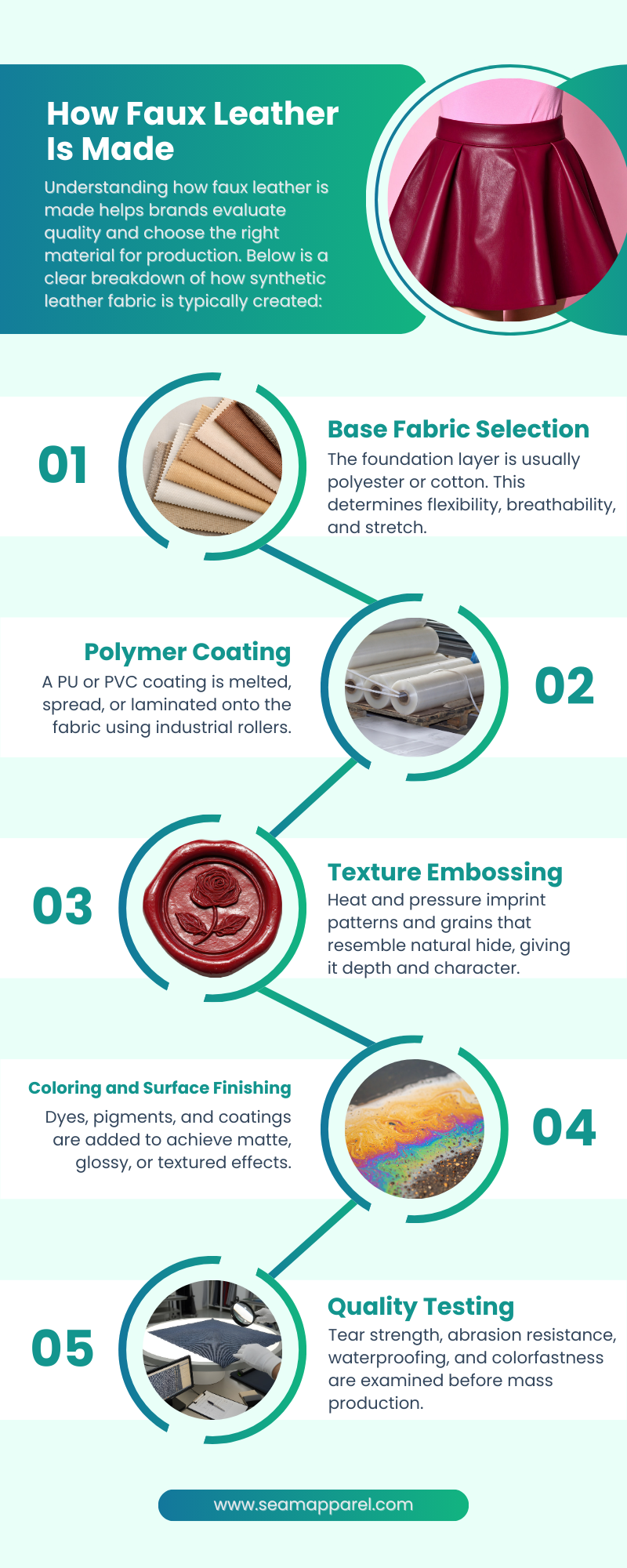
The foundation layer is usually polyester or cotton. This determines flexibility, breathability, and stretch.
A PU or PVC coating is melted, spread, or laminated onto the fabric using industrial rollers.
Heat and pressure imprint patterns and grains that resemble natural hide, giving it depth and character.
Dyes, pigments, and coatings are added to achieve matte, glossy, or textured effects.
Tear strength, abrasion resistance, waterproofing, and colorfastness are examined before mass production.
This technical process allows manufacturers like Seam Apparel to deliver faux leather that is durable, smooth, and consistent for large-scale apparel runs.
Understanding faux leather fabric properties is crucial for designers, sourcing managers, and product developers making material decisions. The performance of synthetic leather fabric varies depending on whether it is PU, PVC, microfiber, or a plant-based alternative, but most versions share common characteristics that make them popular in modern apparel manufacturing. From fashion to upholstery, knowing both strengths and limitations helps ensure the final product meets comfort, durability, and sustainability expectations.
Faux leather is valued for its practicality and versatility, especially for brands aiming to offer premium aesthetics at a more accessible cost.
Key benefits include:
These benefits explain why synthetic leather fabric has become a go-to choice for jackets, handbags, furniture, and lifestyle goods.
Despite the advantages, faux leather does not replace every characteristic of real hide. Some challenges should be considered during product development.
By weighing these strengths and drawbacks, brands can choose the right faux leather material for performance, price point, and consumer expectations.
| Feature | PU Leather | PVC Leather | Microfiber Leather |
|---|---|---|---|
| Softness | High | Moderate | Extremely high |
| Durability | Strong | Extraordinarily strong | Excellent |
| Breathability | Good | Low | Best |
| Cost | Moderate | Low | Higher premium |
| Sustainability | Better than PVC | Not eco-friendly | Improved impact |
The uses of faux leather extend across multiple industries. In the USA especially, startups and established labels rely on it for fashion collections and consumer goods.
Main applications include:
Its versatility and cost-efficiency make faux leather material ideal for brands scaling production. Seam Apparel, a premium leather goods manufacturer, supports both small-batch and bulk orders for clothing and accessories.
Sustainability has become one of the biggest priorities for fashion brands, sourcing teams, and conscious consumers. When evaluating synthetic materials, many designers wonder: Is faux leather durable and eco-friendly? The answer varies depending on the specific material type, manufacturing method, and chemical treatment involved.
Traditional petroleum-based faux leathers have environmental drawbacks, but newer technologies and bio-based innovations are steadily improving their impact. Understanding these differences helps brands choose materials that align with their sustainability goals.
PVC leather typically carries the highest ecological footprint among faux leather options. It relies on chlorine-based chemicals and plasticizers that can be difficult to recycle and may pose disposal concerns. While PVC is extremely durable and water-resistant, it is not widely considered ecofriendly faux leather, making it less suitable for brands prioritizing green alternatives.
PU leather offers a more balanced sustainability profile. It uses fewer toxic chemicals compared to PVC and has a smoother, softer finish suitable for apparel. Newer formulations like waterborne PU and bio-based PU reduce emissions, rely on cleaner production processes, and present a more responsible option for long-term use.
For many clothing labels, PU serves as the ideal middle ground between performance, comfort, and environmental responsibility.
Microfiber leather—made from ultra-fine fibers—uses more advanced technology that avoids many of the heavier chemicals associated with older faux leather types. It delivers excellent durability and longevity, which can reduce waste over time.
Plant-based materials such as pineapple leather, mushroom leather, and cactus leather are gaining momentum as next-generation vegan alternatives. These innovative materials rely on renewable natural sources and have significantly lower carbon footprints. Although still developing in availability and price, they are expected to play a major role in sustainable apparel manufacturing.
SEAM Apparel works closely with brands that want to incorporate greener materials into their collections. Whether you need bio-based PU, premium microfiber, or early-stage plant-based faux leather, the team can guide you through the most responsible options available for your product category.
From material recommendations to sample development and full-scale production, SEAM Apparel helps designers and sourcing teams choose faux leather types that balance durability, aesthetics, and sustainability. This ensures your brand stays aligned with modern environmental standards—without compromising on performance or style.
If you want, I can also expand the next section or provide a visual sustainability comparison chart.
Faux Leather vs Real Leather (Deep Comparison)
Choosing between faux leather and real leather requires understanding how each material performs in real-world use. Design teams, sourcing managers, and startup founders often compare both options to balance cost, durability, and brand values. Below is a deeper look at how the two materials differ across key performance factors.
| Feature | Faux Leather | Real Leather |
|---|---|---|
| Cost to Produce | Lower production cost; ideal for startups and fast-moving collections | High premium cost; expensive to source and process |
| Durability | Strong, especially microfiber and high-grade PU; consistency depends on type | Extremely durable; can last decades with proper care |
| Maintenance | Quite easy to clean; wipe with water or mild soap | Requires conditioning, cleaning, and protection from moisture |
| Weather Performance | Water-resistant and does not absorb moisture; great for jackets and bags | Can absorb water and may stain; needs protective treatments |
| Sustainability | Vegan, but not always eco-friendly (depending on PU/PVC or plant-based alternatives) | Natural material but tied to animal agriculture; tanning chemicals may raise environmental concerns |
| Stretch & Comfort | Soft, flexible, and consistent; PU and microfiber offer excellent comfort for apparel | Initially stiff but becomes more comfortable as it ages and breaks in |
| Color Range | Unlimited options; can be dyed, printed, and custom-finished | Mostly limited to natural tones; deeper or brighter colors require chemical treatments |
| Batch Consistency | Highly consistent thickness, grain, and texture across large orders | Each hide is unique; natural imperfections may appear |
| Weight | Lightweight; suitable for everyday clothing | Heavier and thicker; better for premium goods and heavy-duty items |
| Allergy-Friendly | Hypoallergenic (depending on chemicals used) | Some tanning chemicals may irritate sensitive users |
| Ethical Aspect | No animal use; preferred by vegan and cruelty-free brands | Involves animal byproducts; ethical concerns vary by consumer mindset |
Faux leather’s affordability makes it a smart choice for brands testing new categories, such as jackets, bags, or fashion accessories. Real leather works better for premium or luxury positioning.
Real leather wins on lifespan, but high-end microfiber leather can offer comparable durability with far easier upkeep. PU and PVC may not last as long, but they provide excellent value for mid-range apparel.
Faux leather wins in creative freedom. It can be matter, glossy, printed, textured, embossed, metallic, or patterned. Real leather provides a rich, natural patina that improves with age.
Faux leather avoids animal use but may involve petroleum-based plastics. Real leather is natural but linked to livestock farming and chemical tanning. Plant-based faux leathers and waterborne PU offer the most future-friendly options.
Both materials serve distinct purposes. Faux leather offers affordability, creative flexibility, and easier care, while real leather appeals to luxury buyers valuing natural texture and long-term patina. The best choice depends on your brand’s identity, budget, sustainability goals, and product intent.
SEAM Apparel supports both traditional and modern material needs, helping brands source the latest faux leather innovations while maintaining quality, durability, and style. Whether you’re developing performance wear, fashion lines, or accessories, SEAM Apparel can guide you toward the right material for your next collection.
Selecting the best material goes beyond look and cost.
New designers should focus on the following factors:
For reliable development support, brands can consult Seam Apparel to source the right faux leather for apparel and accessories.
1. Is faux leather durable for daily wear?
Yes. High-quality PU and microfiber versions offer strong durability, light weight, and abrasion resistance. For clothing and bags, these materials last well under regular use.
2. What is faux leather made of?
It is typically made using a textile base like polyester or cotton, coated with PU or PVC. The layer is embossed and finished to mimic the texture of genuine leather.
3. Does faux leather peel?
Low-grade PU leather may peel over time, especially without proper care. Microfiber and premium PU provide better resistance and longer life.
4. Is faux leather waterproof?
Most artificial leather is water-resistant and doesn’t absorb moisture like real leather. This makes it suitable for jackets, footwear, and outdoor use.
5. PU leather vs PVC leather, which is better?
PU is softer and more breathable, while PVC is tougher and more waterproof. The choice depends on usage: PU for clothes, PVC for heavy-duty upholstery or accessories.
6. Is faux leather sustainable?
It varies. PU is more eco-friendly than PVC, and plant-based innovations are improving. Microfiber leather also has a lower impact compared to traditional PVC.
7. What industries use faux leather the most?
Fashion, handbags, shoes, automotive interiors, furniture, and lifestyle goods. Brands choose it for versatility, finish options, and lower production costs.
Now you understand what faux leather fabric is, its manufacturing methods, properties, and usage across fashion and interior applications are. With multiple types of faux leather available (PU, PVC, microfiber, and plant-based) designers have more flexibility than ever. It remains a leading choice for US-based startups and established clothing manufacturers seeking low-cost, stylish, and ethical material alternatives.
If your brand is ready to work with faux leather material and explore vegan-friendly options for jackets, handbags, pants, or accessories, reach out to Seam Apparel for sourcing support and development guidance.
If you’re planning a collection that includes jackets, bags, bottoms, footwear, or upholstery goods, we can help you choose the right faux leather type for your project.
Contact Seam Apparel to start your material development and production planning today.
Leggings carry more weight than any other product in an activewear line....
A hat looks simply until you must specify one. Panels, sweatband, closure,...
Shorts sit in more categories than almost any other garment: gym, beach,...
Introduction A tank top is about as simple as clothing gets. Two...
Most brands take weeks to develop their colour palette, packaging, and then...