What is Neoprene fabric? What it is, how it’s made, and where it’s used
Neoprene is a new type of performance fabric that is noted for...
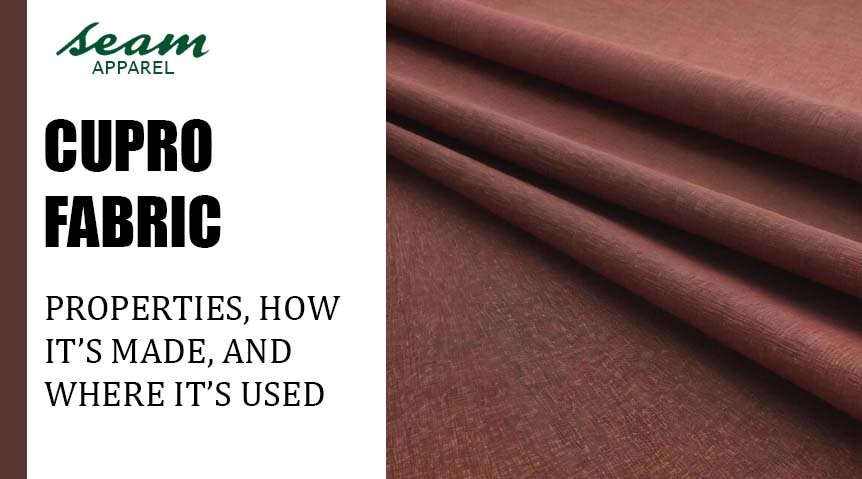
Cupro fabric is gaining attention as a premium, silk-like material used in modern apparel. Known for its smooth feel, elegant drape, and breathable nature, Cupro is often chosen by brands looking for a refined finish without using animal-based fibers. As fashion moves toward better material awareness, Cupro fabric stands out for its balance of luxury, comfort, and responsible sourcing.
Originally developed from cotton waste, Cupro clothing material is now widely used in linings, dresses, blouses, and high-end garments. Designers and brands are increasingly exploring it as an alternative to silk, viscose, and polyester linings. The global Cupro fabric market is projected to grow from around $1.09 billion in 2023 to over $2.2 billion by 2032, driven by consumer demand for eco-conscious textiles with silk-like qualities and superior comfort.
In this blog, we’ll explore what Cupro fabric is, Cupro fabric properties, how Cupro fabric is made, comparisons with silk and other regenerated fibers, sustainability considerations like are Cupro fabric sustainable, and common Cupro fabric uses in modern apparel. Seam Apparel helps USA-based fashion designers, brand owners, and buyers to manufacture what they desire for
Cupro fabric is a regenerated cellulose fabric made from cotton linters. Cotton linters are the fine fibers left on cotton seeds after the main cotton fiber is removed. Instead of being discarded, these fibers are processed and transformed into a smooth textile.
Cupro is often referred to as “vegan silk” because it closely resembles silk in appearance and feel, while being plant-based. It is not a natural fiber like cotton or silk, and it is not fully synthetic like polyester. Instead, it sits in between, making it a semi-synthetic fabric.
Unlike synthetic fabrics that are derived from petroleum, Cupro fabric starts with a natural source. However, it undergoes chemical processing, which is why it is categorized as a regenerated fiber rather than a purely natural one.
Understanding how Cupro fabric is made helps explain its unique qualities and why it is considered a regenerated cellulose fabric.
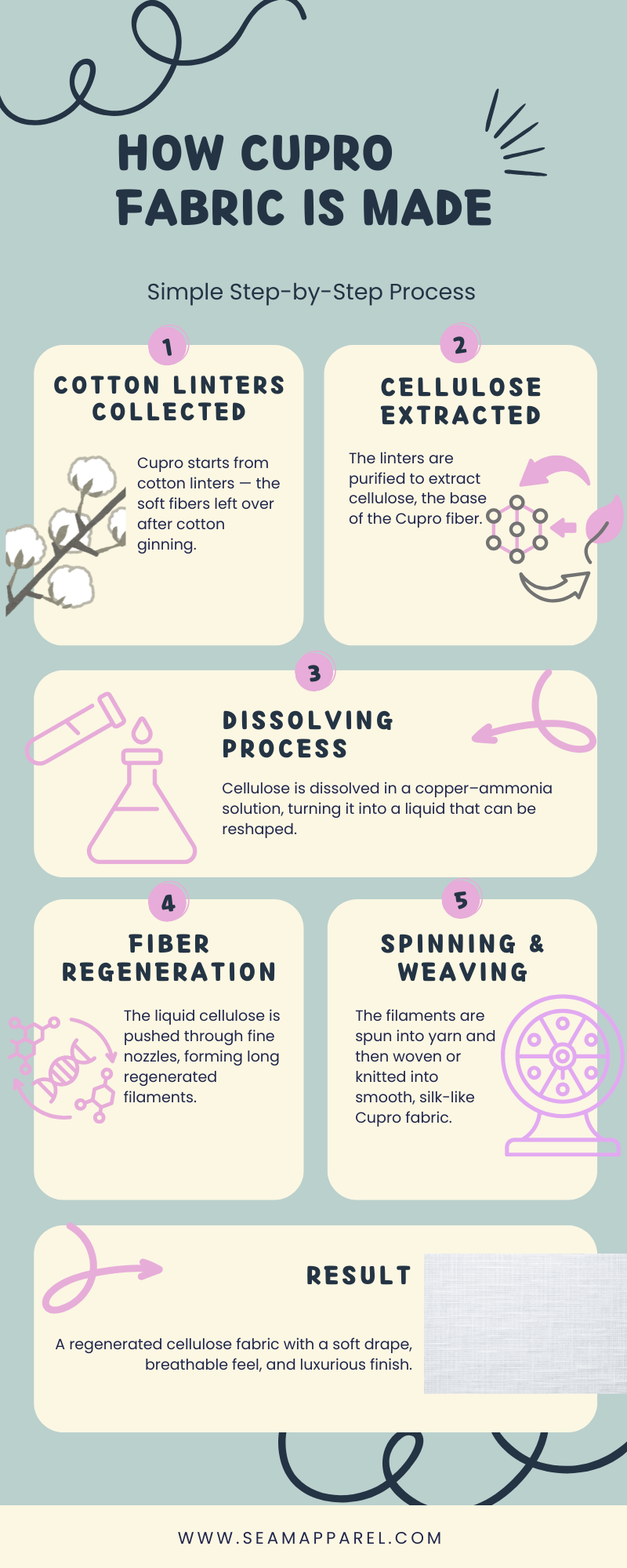
This controlled regeneration process is why Cupro is classified as a regenerated fiber. Compared to natural fibers, manufacturing is more complex, but it allows for consistent quality, smooth texture, and excellent drape.
Cupro fabric properties make it highly desirable for premium apparel, linings, and luxury garments. Its unique combination of comfort, elegance, and performance sets it apart from both natural and synthetic alternatives. Below is a detailed look at what makes Cupro fabric so special.
Cupro has an exceptionally smooth and soft hand feel, closely mimicking the texture of silk. This makes it ideal for garments where touch and comfort are crucial, such as blouses, dresses, and linings. The fabric’s silky surface also gives it a subtle sheen, adding a refined appearance to clothing without looking overly glossy.
One of Cupro’s standout features is its breathability. Unlike polyester, which can trap heat and moisture, Cupro allows air to circulate freely through the fabric. This quality ensures that garments remain comfortable in warm climates and during prolonged wear, making it an excellent choice for summer collections or clothing designed for active lifestyles.
Cupro is lightweight and drapes beautifully, flowing naturally around the body. Its fluid movement enhances the silhouette of dresses, skirts, and tailored garments, giving them a premium and elegant look. This makes Cupro especially suitable for occasion wear or high-end apparel that requires both style and comfort.
Cupro is highly absorbent, drawing moisture away from the skin more efficiently than synthetic fabrics like polyester. This feature not only increases comfort but also reduces the risk of stickiness or overheating, particularly when used as a lining material in jackets, coats, or blazers.
Unlike many synthetic fabrics that cling to the body due to static, Cupro naturally resists static build-up. This anti-static property contributes to smooth fitness and feel, which is why Cupro lining fabric is commonly preferred by apparel manufacturers. It ensures that garments glide over other layers of clothing, maintaining a polished look and comfortable wear.
Cupro is gentle on the skin and hypoallergenic, making it suitable for individuals with sensitive skin. Its soft, chemical-processed fibers reduce the likelihood of irritation, which is especially important for close-contact garments such as linings, blouses, and premium shirts.
| Property | Description | Benefit for Apparel |
|---|---|---|
| Soft & Silky Feel | Smooth texture resembling silk | Adds luxury touch to garments like dresses, blouses, and linings |
| Excellent Breathability | Allows air circulation | Keeps wearers comfortable, ideal for warm climates |
| Lightweight & Fluid Drape | Flows naturally over the body | Enhances silhouette and movement in dresses, skirts, and tailored pieces |
| Moisture-Absorbing | Draws moisture away from the skin | Improves comfort and reduces stickiness compared to synthetic fabrics |
| Anti-Static | Resists static cling | Keeps lining smooth and garments polished |
| Hypoallergenic | Gentle on sensitive skin | Suitable for close-contact apparel like blouses and premium shirts |
Overall, these properties make Cupro fabric a versatile choice for designers, apparel startups, and brand owners looking to combine luxury, comfort, and responsible material sourcing.
Know more about Crepe Fabric.
The question “is Cupro fabric sustainable” does not have a simple yes or no answer. It depends on how and where it is produced.
Many manufacturers now use closed-loop systems, where chemicals are captured and reused instead of released. When produced this way, Cupro is often considered more responsible than traditional rayon and comparable to improved viscose or modal.
Cupro can be an eco-conscious choice when sourced from certified and responsibly managed suppliers.
| Feature | Cupro Fabric | Silk | Viscose | Modal |
|---|---|---|---|---|
| Feel & look | Silky, smooth | Natural luxury | Soft, less fluid | Soft, slightly heavier |
| Breathability | High | High | Medium | High |
| Sustainability | Moderate to good | Animal-based | Varies by process | Better |
| Cost | Mid to high | High | Low to mid | Mid |
| Care | Gentle wash | Delicate | Easy | Easy |
For brands, Cupro vs silk often comes down to ethics, consistency, and care needs. Compared to viscose and modal, Cupro offers a more premium drape and finish.
Cupro lining fabric is one of the most popular applications.
It is used in:
Manufacturers prefer it because it improves comfort, reduces static, and enhances garment quality.
Cupro fabric uses include flowing dresses and skirts where drape and movement matter.
Its smooth surface and breathability make it ideal for premium tops.
Used either as outer fabric or lining for a refined feel.
Often chosen for evening and formal wear due to its elegant appearance.
Proper care helps maintain the quality of Cupro clothing material.
These guidelines are useful for both brands and end consumers.
Cupro fabric makes sense when:
Ideal product categories include linings, dresses, blouses, and tailored garments. While Cupro may cost more than standard rayon, its value lies in performance, appearance, and customer experience. Private label manufacturers like Seam Apparel often consider such factors when advising brands on fabric selection.
1. What is Cupro fabric made of?
Answer:
Cupro fabric is a regenerated cellulose fabric made from cotton linters, a byproduct of the cotton industry. These fibers are chemically processed to create a smooth, silk-like material often called vegan silk. Unlike synthetic fabrics, Cupro is plant-based but semi-synthetic due to its manufacturing process.
2. What are the main Cupro fabric properties?
Answer:
Cupro fabric properties include a soft and silky feel, excellent breathability, lightweight drape, moisture absorption, anti-static performance, and hypoallergenic qualities. These features make it ideal for linings, dresses, blouses, and high-end apparel.
3. How is Cupro fabric made?
Answer:
The process of how Cupro fabric is made begins with cotton linters, which are purified to extract cellulose. The cellulose is dissolved in a copper-ammonia solution, regenerated into fibers, spun into yarn, and woven into fabric. This process makes Cupro a regenerated cellulose fabric with consistent quality and luxurious drape.
4. Is Cupro fabric sustainable?
Answer:
Is Cupro fabric sustainable? Cupro uses cotton byproducts, reducing waste and making it more eco-conscious than traditional rayon. However, chemical processing is involved, so sustainability depends on responsible, closed-loop production methods. When sourced correctly, Cupro is a more responsible choice for eco-aware brands.
5. What are the common uses of Cupro fabric in apparel?
Answer:
Cupro fabric uses include linings for jackets, blazers, and coats, as well as dresses, skirts, blouses, luxury trousers, suits, and occasion wear. Its soft feel, breathability, and anti-static properties make it especially popular for Cupro lining fabric in premium garments.
Cupro fabric combines luxury, comfort, and innovation in one material. Its smooth texture, breathable nature, and elegant drape have made it increasingly popular in modern apparel. While it requires responsible sourcing, Cupro plays an important role in premium fashion, especially as brands explore alternatives to silk.
Understanding materials like Cupro fabric help designers, startups, and sourcing teams make informed decisions. Fabric knowledge is a key part of building high-quality apparel, something experienced private label manufacturers such as Seam Apparel recognize as essential in today’s competitive fashion landscape.
Contact Us Today for getting your manufacturing services.
Neoprene is a new type of performance fabric that is noted for...
Flannel fabric has become extremely popular as clothes that are comfortable become...
Denim fabric is one of the most recognized textiles in the global...
Damask fabric is one of the most recognized woven textiles in fashion...
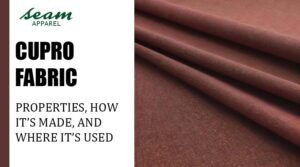
Cupro fabric is gaining attention as a premium, silk-like material used in...