What is Ikat Fabric? Properties, How It’s Made, and Where
If you’ve ever looked at a piece of clothing and noticed a...
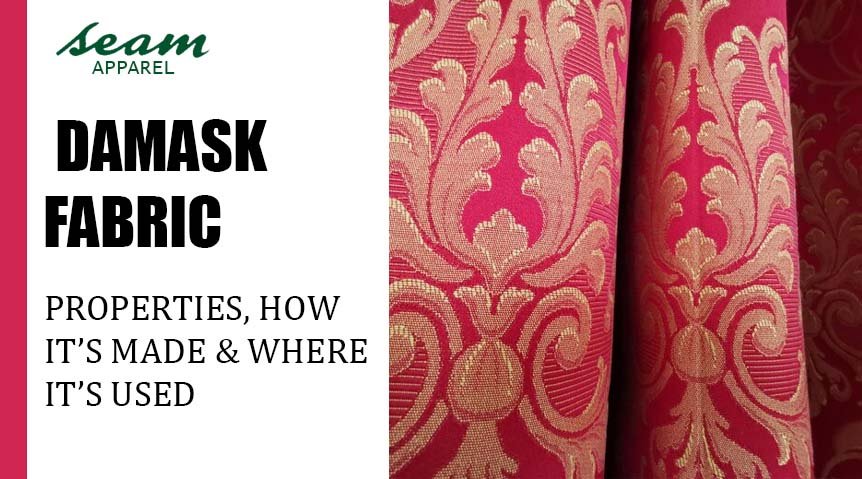
Damask fabric is one of the most recognized woven textiles in fashion and interior design. Known for its rich patterns, subtle sheen, and reversible woven designs, it represents a balance of luxury and craftsmanship. Its relevance is not just historical.
According to a 2024 Statista report on the global home textiles and decorative fabrics market, the sector is projected to exceed USD 145 billion by 2028, driven by rising demand for premium and decorative woven fabrics in the United States and other developed markets. From elegant fashion pieces to refined interior décor, damask fabric continues to stand out for its woven beauty, durability, and timeless appeal. This guide explains what makes damask fabric unique, how it is produced, and where it is most used today.
In this guide, we explain what damask fabric is, explore its history, break down how damask fabric is made, highlight key damask fabric properties, and show where it is commonly used today. This article is designed to help designers, brands, buyers, and students in the USA understand when and why damask fabric is the right choice.
Damask fabric is a woven textile known for its intricate patterns created directly on the loom rather than printed or embroidered. The design is formed by contrasting weaves—usually a smooth satin weave against a matte weave—resulting in a subtle pattern that becomes visible when light hits the surface.
The term “damask” comes from Damascus, an ancient city that played a major role in the early silk trade. Over time, the weaving technique spread to Europe and evolved into a wide range of fabric types.
These qualities make damask fabric a popular option for premium apparel and home décor.
Damask fabric originated in the Middle East, with Damascus serving as a major center for textile production during the early centuries. Silk damask was traded along ancient trade routes, reaching Europe by the Middle Ages.
Initially, damask was woven exclusively from silk and reserved for royalty, religious garments, and ceremonial uses. As weaving technology advanced, especially during the Industrial Revolution, damask became more accessible. Cotton, linen, and later synthetic fibers were introduced, expanding their applications.
Today, damask fabric blends traditional craftsmanship with modern production methods, making it suitable for both luxury and commercial markets.
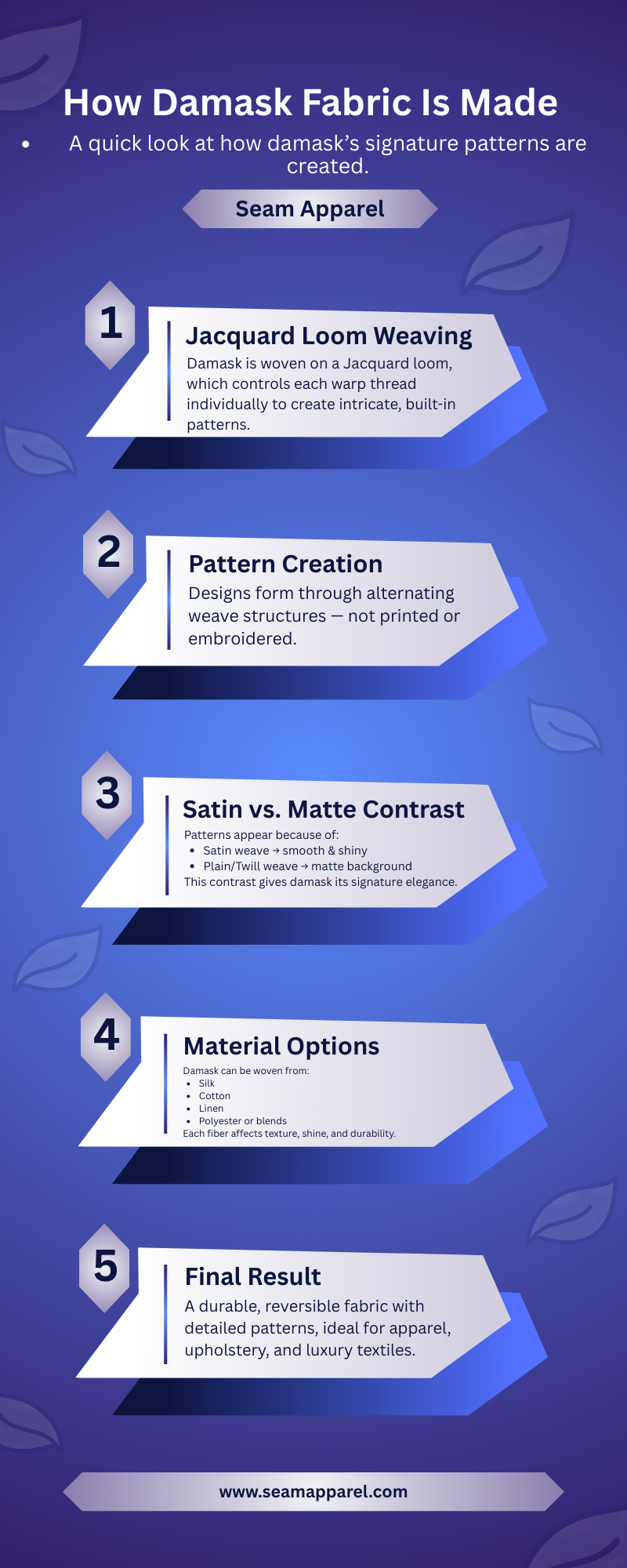
Understanding how damask fabric is made helps explain its durability and refined look.
Damask is produced using a Jacquard loom, which allows complex patterns to be woven directly into the fabric. The loom controls individual warp threads, enabling precise and detailed designs.
The patterns in damask fabric are created by alternating:
This contrast creates the signature visual effect without the need for extra materials.
Damask fabric can be made from:
Manufacturers like Seam Apparel often work with multiple fiber options to match design goals, performance needs, and budget requirements.
The popularity of damask fabric comes from a balanced mix of beauty and performance. Below are the key damask fabric properties explained in simple terms.
Damask has a smooth surface with raised or reflective patterns. The design looks elegant without being overly bold.
Because the pattern is woven into the fabric, it does not fade or peel easily. Damask holds its structure well over time.
Breathability depends on the fiber used. Cotton and linen damask are breathable, while synthetic blends may retain more heat.
Damask can range from lightweight to heavy, making it suitable for both garments and furnishings. It has a structured drape.
One of the standout features is reversibility. The pattern appears on both sides, often with inverted contrast.
Damask fabric is produced in several variations, depending on the fiber used. Each type offers a different balance of appearance, comfort, durability, and cost, making it suitable for specific applications in fashion and interior textiles.
Silk Damask
Silk damask is considered the most traditional and luxurious form of damask fabric. It has a naturally smooth surface with a rich sheen that highlights the woven patterns beautifully. The fabric feels refined and elegant, making it a preferred choice for formal wear, ceremonial garments, and decorative pieces where a premium look is essential. However, it typically requires delicate handling and professional cleaning.
Cotton Damask
Cotton damask combines visual elegance with everyday comfort. It is soft, breathable, and easier to maintain compared to silk. The woven patterns remain visible without feeling heavy, which makes cotton damask popular for table linens, bedding, and selecting apparel items. Its balance of durability and comfort makes it suitable for both residential and light commercial use.
Linen Damask
Linen damask is known for its crisp texture and natural appearance. It offers excellent breathability and a slightly structured feel, which enhances the clarity of the woven designs. This type is commonly used in premium home décor items such as curtains, tablecloths, and decorative furnishings, especially in settings that value a natural, high-end aesthetic.
Synthetic or Blended Damask
Synthetic or blended damask fabrics are made using fibers like polyester or fiber blends. These options are more cost-effective and exceptionally durable, with strong resistance to wrinkles and wear. While they may have less natural breathability, they are well-suited for commercial settings, hospitality use, and high-traffic environments where longevity and easy care are priorities.
Learn about Velvet Fabric in our blog: What Is Velvet Fabric? Properties, How It’s Made, and Where It’s Used
Understanding damask fabric use helps brands and designers choose the right application.
Damask fabric is often used in:
Its structured look makes it ideal for statement pieces.
Common interior uses include:
Damask is also used for:
Understanding damask vs jacquard fabric and similar comparisons help clarify its unique position.
Both use Jacquard looms, but damask refers to a specific weaving style.
Brocade uses extra threads to create raised designs, while damask patterns are flat and woven into the fabric.
Satin is a weave, not a patterned fabric. Damask often uses satin weaves but includes patterned contrast.
| Fabric Type | Pattern Style | Texture | Reversible |
|---|---|---|---|
| Damask fabric | Woven-in contrast | Smooth with a sheen | Yes |
| Jacquard | Woven patterns | Varies | Sometimes |
| Brocade | Raised patterns | Heavy | No |
| Satin | No pattern | Smooth | No |
Proper care extends the life of damask fabric.
Is Damask Fabric Sustainable?
Sustainability depends on fiber choice and usage.
Damask fabric lasts longer than many printed textiles, reducing the need for frequent replacement. This durability supports sustainable production when used responsibly.
Brands working with experienced manufacturers like Seam Apparel, a private label apparel company, often explore fabric blends and production methods that balance design quality with sustainability goals.
Damask fabric is a timeless woven textile valued for its elegance, durability, and detailed patterns. From understanding what damask fabric is to learning about damask fabric properties, production methods, and real-world applications, it’s clear why this material remains popular across fashion and interiors.
Designers and brands should choose damask fabric when they need visual depth, long-lasting quality, and a refined finish. Whether used in apparel or décor, damask continues to represent craftsmanship and thoughtful design. With the right fabric selection and production partner, such as Seam Apparel, damask can elevate collections for the modern US market while maintaining classic appeal.
Ready to explore our services? Contact Us now to avail.
If you’ve ever looked at a piece of clothing and noticed a...

Neoprene is a new type of performance fabric that is noted for...

Flannel fabric has become extremely popular as clothes that are comfortable become...

Denim fabric is one of the most recognized textiles in the global...
Damask fabric is one of the most recognized woven textiles in fashion...