What is Ikat Fabric? Properties, How It’s Made, and Where
If you’ve ever looked at a piece of clothing and noticed a...
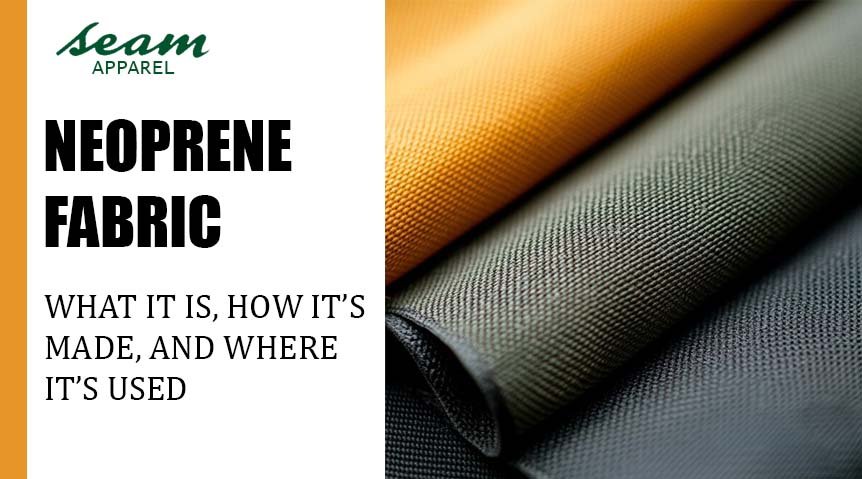
Neoprene is a new type of performance fabric that is noted for being strong, stretchy, and warm. You know Neoprene from wearing a wetsuit, using a laptop sleeve, or seeing a structured fashion jacket. It is a synthetic textile made of rubber that is meant to work well in tough settings.
Polychloroprene, a synthetic rubber that was initially made in the US, is what neoprene fabric is made of. DuPont made the first version. The brand name “Neoprene” was later given to this. When natural rubber was hard to find or not reliable, neoprene was made to take its place. Neoprene is a synthetic rubber-based fabric that is made to work well.
This guide explains what neoprene fabric is, how it is made, its properties, advantages, disadvantages, and where it is commonly used. At Seam Apparel, we manufacture top-notch fabrics for you.
Polychloroprene is a form of synthetic rubber that is often called neoprene. It was first made in the 1930s for industrial uses that needed to be resistant to water, oil, and fire.
Neoprene is rubber in its natural state. When you add fabric layers like polyester or nylon to the rubber core, it turns into a neoprene textile that may be used for clothing.
Neoprene rubber is a solid or foamed rubber sheet that is utilized in gaskets, seals, and insulation in factories.
Neoprene fabric is made of rubber foam and textiles that are glued together to make it flexible, comfortable, and easy to wear.
Clothing designers use neoprene fabric, not raw rubber. The layers of fabric make it gentler on the skin and easier to sew. For your convenience, here is a chart.
| Aspect | Neoprene Rubber | Neoprene Fabric |
|---|---|---|
| Form | Solid or foam rubber | Rubber laminated with fabric |
| Use | Industrial seals, gaskets | Apparel, sportswear, accessories |
| Feel | Dense and rubbery | Softer, flexible, wearable |
You don’t need to know a lot about chemistry to understand how neoprene fabric is created. It’s easy to break the procedure down into steps.
Process in steps
| Stage | What Happens |
|---|---|
| Raw material | Chloroprene monomer is produced |
| Polymerization | Chloroprene is chemically processed into synthetic rubber |
| Foam creation | Air is added to create neoprene foam |
| Fabric lamination | Foam is bonded with polyester, nylon, or spandex |
| Finishing | Fabric is cut, smoothed, and sized by thickness |
Depending on how the product will be used, manufacturers change the density and thickness. Neoprene that is good for clothes is usually thinner and more flexible. Here is the full process:
Chloroprene is the chemical ingredient that makes neoprene. This is the major part that makes up neoprene.
Polychloroprene is made by chemically combining chloroprene molecules. This makes the basic synthetic rubber.
The rubber is shaped into foam. Neoprene gets its insulation and cushioning characteristics from tiny air bubbles that are introduced.
The neoprene foam sticks to fabric surfaces like:
Polyester Nylon
Blends of spandex
This procedure converts rubber into a neoprene textile that can be worn and used to make clothing.
Neoprene fabric comes in a range of thicknesses, from very thin sheets to substantial insulating layers. Finishing treatments make things last longer, look better, and be more flexible.
Neoprene can be utilized in both sophisticated fashion items and heavy-duty performance gear since this material can be changed.
The qualities of neoprene fabric are what make it different from woven or knitted fabrics.
Important features of neoprene fabric
Neoprene can expand without losing its shape, which makes it great for tailored clothes.
Neoprene is popular for cold-water and winter gear because the foam structure holds heat.
Neoprene doesn’t soak up water easily and dries faster than most other textiles.
Over time, it won’t tear, crack, or wear down on the surface.
Neoprene keeps its shape, which makes clothes look clean and sculpted.
Heavier than regular knits or woven textiles.
Is neoprene breathable? is a common question. The short answer is no. There isn’t much airflow.
Neoprene works well in seawater, sunshine, and weak acids.
Want to learn about other fabrics like neoprene? Read our detailed guides on fabrics.
Neoprene gives designers more freedom than soft textiles when making statement designs or technical goods. The benefits of neoprene fabric make it appealing for both style and function.
Neoprene fabric is used in many different fields.
| Fabric | Best For | Key Difference |
|---|---|---|
| Neoprene | Insulation, structure | Thick, foam-based |
| Scuba fabric | Fashion garments | Similar look, lighter |
| Spandex blends | Stretch wear | Breathable, less structured |
| Polyester performance | Activewear | Lightweight, moisture-wicking |
Taking care of neoprene clothes properly makes them last longer.
Some private label manufacturers, like Seam Apparel, are developing eco-friendly rubber alternatives and recycled neoprene options.
Is neoprene water-resistant?
Neoprene is water-resistant, but not completely waterproof.
Can you breathe through Neoprene?
No. Compared to knits or mesh textiles; this one doesn’t breathe as well.
Is it easy to stitch neoprene?
Yes, but you need to be careful and use strong needles.
Is Neoprene good for clothes you wear every day?
It can be, but it works better for structured or statement pieces.
Does neoprene get bigger over time?
When you take care of it, quality neoprene keeps its shape well.
Neoprene fabric is a mix of style and function. Few fabrics can equal their insulation, structure, and durability. It isn’t breathable or light, but its performance-driven features make it useful when used on purpose.
Learn what neoprene fabric is, how it is created, and where it performs best. Neoprene is still a good choice for US-based clothing designs that need shape, protection, and durability, if it is used correctly.
Want to explore more fabrics like neoprene? Read our in-depth fabric guides.

If you’ve ever looked at a piece of clothing and noticed a...
Neoprene is a new type of performance fabric that is noted for...

Flannel fabric has become extremely popular as clothes that are comfortable become...

Denim fabric is one of the most recognized textiles in the global...

Damask fabric is one of the most recognized woven textiles in fashion...