A Complete Guide to Shorts Fabric Materials
Shorts sit in more categories than almost any other garment: gym, beach,...
Sustainable textiles are reshaping today’s apparel industry, especially as more brands in the USA move toward recycled and regenerated materials. According to the Ellen MacArthur Foundation, over 500,000 tons of plastic microfibers enter the ocean each year from washing synthetic clothing. This is a major reason the industry is shifting to circular materials like ECONYL®.
ECONYL is one of the leading regenerated nylon fabrics used by global swimwear, activewear, and luxury brands. It transforms waste into high-performance yarn while offering the same strength and feel as traditional nylon. Manufacturers like Seam Apparel support this transition by helping eco-focused brands develop durable, sustainable, and responsibly produced apparel.
What is ECONYL fabric?
ECONYL is a 100% regenerated nylon developed by Aquafil, an Italian materials company known for advanced recycling technologies. Unlike typical recycled plastics that are simply melted and reshaped, ECONYL fabric is created through a chemical regeneration process that brings nylon waste back to its original purity.
It is made from:
This regenerated nylon fabric can be recycled again, making it one of the most circular textile materials available today.
| Term | Easy Explanation |
|---|---|
| What is ECONYL? | A regenerated nylon made from waste using chemical recycling. |
| ECONYL material | Fabric or yarn produced from ECONYL regenerated nylon. |
| Regenerated nylon fabric | Nylon that comes from waste materials but is rebuilt chemically into new fiber. |
ECONYL fabric is created from several waste streams that would otherwise pollute oceans or accumulate in landfills. These materials are collected globally through dedicated recovery programs, ensuring that harmful waste is redirected into a circular production system.
The main sources include:
Abandoned fishing nets are one of the biggest threats to marine life. These “ghost nets” float for years, trapping fish, turtles, and other species. ECONYL actively partners with ocean clean-up initiatives to recover these nets and convert them into new nylon, giving harmful waste a second life.
Manufacturing sites often generate nylon scraps, offcuts, and defective materials. Instead of being discarded, these industrial waste streams are collected and sorted. They serve as a consistent and high-quality feedstock for ECONYL’s regeneration process.
Millions of carpets are thrown away every year, and many contain nylon 6 fibers. These carpets are dismantled, separated from backing materials, shredded, and processed so the nylon fibers can be completely regenerated.
Cutting room leftovers, fabric edge waste, and pre-consumer textile scraps also contribute to ECONYL material. These scraps would typically be burned or dumped, but through the regeneration pipeline, they become valuable input for new yarn.
All these waste materials go through a chemical regeneration process, where they are broken down into clean monomers rather than simply melted. This advanced method ensures that ECONYL behaves exactly like virgin nylon in strength, performance, and durability — but with a much lower environmental impact.
Want to know more about fabrics? Here is our blog on: What Is Linen Fabric: Properties, How It’s Made, and Where It’s Used. Check it out!
Many readers searching for how ECONYL is made want a simple but accurate explanation of its chemical regeneration.
Here is the full process:
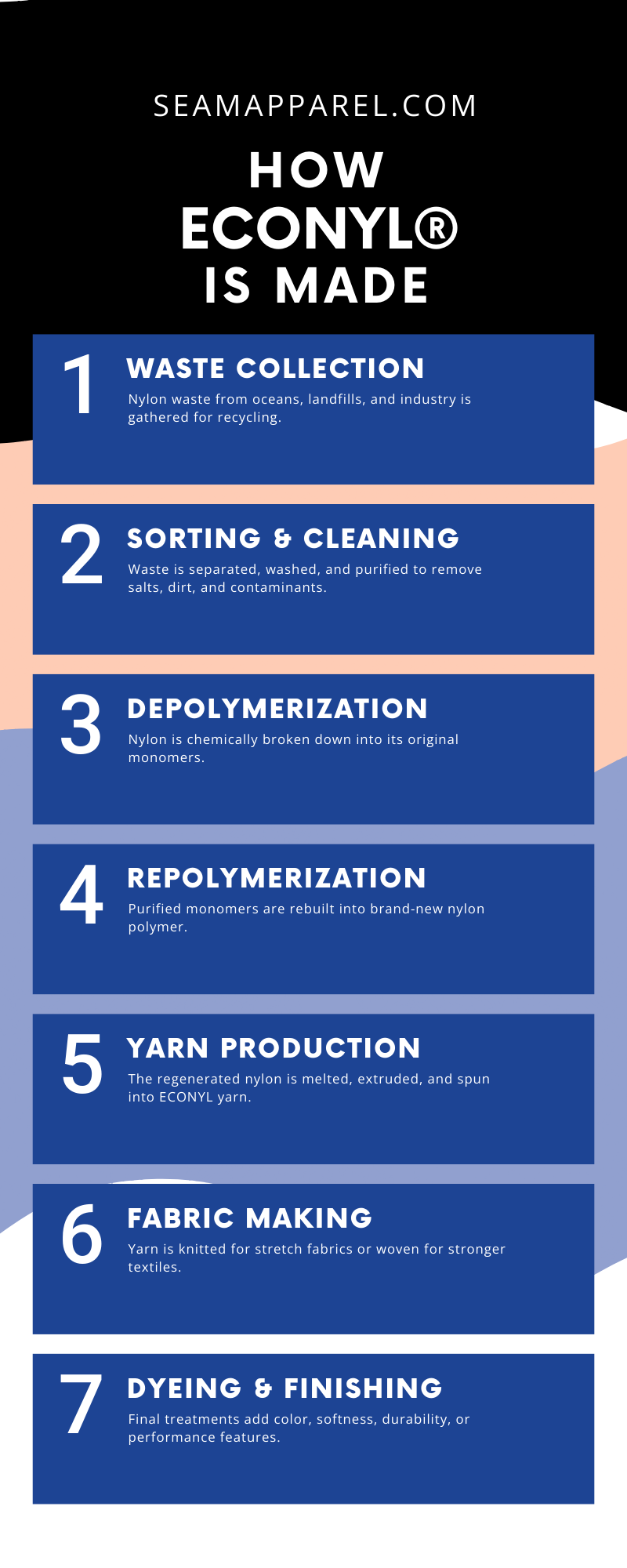
The yarn is:
The yarn or fabric is dyed, heat-set, and finished according to product needs such as compression, softness, or UV resistance.
This scientific but circular process shows why ECONYL is considered one of the leading ecofriendly synthetic fabric options in the world. Private label manufacturers like Seam Apparel work with regenerated textiles and understand how they behave during production.
ECONYL properties make it one of the strongest sustainable nylon alternatives available today, and these performance and environmental advantages are the main reasons it is replacing virgin nylon in many USA-based activewear, swimwear, and luxury collections. The fabric offers the same technical strength as traditional nylon but with a significantly lower environmental footprint.
| Feature | Traditional Nylon | ECONYL® (Regenerated Nylon) |
|---|---|---|
| Raw Material | Petroleum | Waste (nets, carpets, scraps) |
| Environmental Impact | High | Lower emissions & waste reduction |
| Recyclability | Limited | Infinitely recyclable |
| Strength | Strong | Equally strong |
| UV/Chlorine Resistance | Lower | Higher |
| Sustainability Level | Low | High |
| Durability | High | High (Is ECONYL durable? Yes.) |
ECONYL yarn can be engineered into many fabric structures, giving designers and product developers flexibility across swimwear, activewear, luxury apparel, and accessories. Each type offers unique performance, texture, and stretch levels, allowing brands to match the fabric to their exact product needs.
This is one of the most popular ECONYL fabric types. It is soft, smooth, and highly flexible, making it perfect for garments that need strong stretch and a comfortable skin feel. Stretch jersey is widely used in premium swimwear, yoga wear, and everyday activewear because it offers excellent recovery and holds its shape after repeated use.
Ribbed ECONYL has a textured surface that adds visual depth and gentle compression. It feels supportive while still maintaining flexibility, making it ideal for swimsuits, sports tops, and stylish athleisure pieces. Many modern swimwear lines use ribbed structures to add a luxurious, on-trend finish.
This type is lightweight, breathable, and designed for airflow. ECONYL mesh works well in areas that need ventilation or lower weight, such as sports inserts, activewear panels, pockets, or linings. It is also used in performance wear, where moisture control and breathability are essential.
Compression fabrics made with ECONYL are dense, strong, and supportive. They offer high stretch with controlled tension, making them suitable for leggings, cycling shorts, shapewear, and performance-focused apparel. These fabrics help stabilize muscles and provide a sculpted, athletic fit.
Woven ECONYL materials are more structured and durable. They are commonly used in luxury bags, small accessories, lightweight outerwear, and high-end fashion items. Woven blends offer a clean, sleek finish with excellent strength and abrasion resistance.
Product performance depends heavily on the fabric structure, not just the fiber.
Different ECONYL fabric types behave differently when stretched, sewn, printed, or washed. Seam Apparel guides brands in selecting the right ECONYL structure for each product category, ensuring durability, comfort, and the desired aesthetic.
Today, ECONYL is widely used across multiple industries. Its recycled nylon fabric offers premium performance along with strong sustainability appeal.
USA-based sustainable swimwear and activewear labels often select ECONYL material because it meets both performance and ethical production goals. Manufacturers such as Seam Apparel assist brands that want to bring eco-focused collections to life.
ECONYL is becoming a top choice for brands that want luxury-level performance with meaningful sustainability benefits.
Well-known global brands such as Prada, Adidas, and Stella McCartney rely on ECONYL material for their sustainable product lines.
Although ECONYL is one of the strongest sustainable nylon alternatives, it has a few limitations that buyers should understand.
Regeneration technology is expensive, so ECONYL costs more than standard nylon.
While improving each year, color availability is still less flexible than polyester.
Aquafil is the main supplier. This means demand is high, and availability can vary.
Some mills and manufacturers may require minimum order quantities.
Being transparent about these limitations builds trust with eco-conscious consumers and brands.
Choosing the right regenerated textiles requires a technical approach.
Here are the factors that product developers, designers, and sustainable brands should evaluate:
Check the percentage of elastane and test four-way stretch if needed.
Look for:
Sublimation printing works extremely well on ECONYL stretch materials.
Pair with soft, lightweight recycled linings.
Test for:
Manufacturers with experience in technical textiles—such as Seam Apparel—can guide brands through material selection and testing.
Eco-driven brands across the USA rely on sustainable materials, and ECONYL is one of the most reliable choices for durability and environmental responsibility. Seam Apparel works closely with recycled and regenerated materials and provides:
ECONYL is one of the most advanced circular materials available today. By transforming waste into high-performance regenerated nylon fabric, it offers a real solution for brands that want to reduce their environmental impact without sacrificing quality.
From swimwear and activewear to luxury fashion, ECONYL material is shaping the future of sustainable textiles. With expert partners like Seam Apparel, USA-based brands can confidently create eco-friendly collections that meet modern performance and sustainability standards.
If you want to develop swimwear, activewear, or sustainable garments using ECONYL fabric. Contact Seam Apparel to help bring your ideas to life.
Shorts sit in more categories than almost any other garment: gym, beach,...
Introduction A tank top is about as simple as clothing gets. Two...
Most brands take weeks to develop their colour palette, packaging, and then...
You have spent months perfecting the fit, the fabric, the finish on...
Today’s consumers are not just trying your product on; they are looking...