Best Fabric Types for Hats: A Complete Guide for Brands
A hat looks simply until you must specify one. Panels, sweatband, closure,...
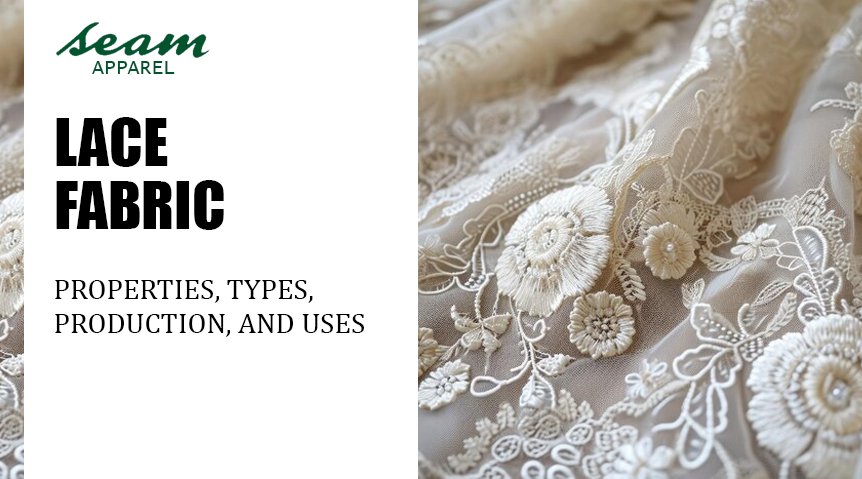
Lace fabric is a decorative textile characterized by an open, patterned structure created by looping, twisting, or embroidering threads into ornamental designs. It can be handmade or machine-made and is commonly used in bridalwear, eveningwear, lingerie, and decorative applications.
Lace has always represented understated elegance, a fashion mainstay. Some textiles don’t shout for attention but suddenly change the look and feel of a garment. The plain dress looks more sophisticated, the bridal dress more expressive, and even little design details take on visual depth.
Today, lace is utilized in bridalwear, eveningwear, lingerie, fashion clothes, and interior décor. It can be made by hand with ancient techniques or with sophisticated machines, and it is still one of the most identifiable ornamental textiles in the fashion business.
Lace is not only about the looks but also about how it is made. Some versions are still painstakingly constructed by hand, stitch by stitch. Other versions are made using modern machines that recreate the same intricate designs at scale. Either way, the outcome is still visually rich and detailed. In Encyclopedia Britannica’s guide on lace, “Lace has been prized for its decorative openwork construction and intricate craftsmanship for centuries, making it one of the most recognizable textiles in fashion history.
Lace is no longer limited to bridal wear in today’s fashion world. It is being used by designers in structured outfits, soft romantic silhouettes, and even in modern minimal collections where texture takes precedence over heavy design.
This guide describes lace fabric in plain language. It tells you what it is, how it’s created, where it originates from, and how it’s used in fashion and home décor.
Scuba Fabric Explained: Properties, Applications & Why It’s Trending in Modern Apparel
Lace is a textile decorated based on an open structure. Threads are looped, twisted, or stitched into a pattern rather than tightly woven together. That’s why lace seems naturally light and semi-sheer.
When individuals discuss the meaning of lace fabric, they often prioritize decoration, followed by function. It’s not a coverage issue like most fabrics, but a detail, texture, and visual expression issue.
Lace was once all handmade, and it took days or weeks to make just one. We have handcrafted lace and machine-made lace now, each with a role in the world of fashion. Handmade is more artisanal and rarer; machine-made allows marketers and designers to make things that are consistent.
And lace is not out of style with contemporary technology. The charm is still there, with its openwork and detailed surface.
One remarkable thing about lace is that, oftentimes, people recognize it instantaneously without understanding much about the fabric itself. For example, someone shopping for a wedding dress may ask for lace but rarely ask whether it is Chantilly, Guipure, or embroidered lace. The visual effect is usually the initial appeal. The technical elements tend to be important later when the designers must pick materials for production.
Lace is a very intricate fabric that was originally made in Europe hundreds of years ago, especially during the Renaissance. The first lace traditions were inspired by Italy, France, and Belgium, each developing its own techniques and design language.
All lace in those days was produced by hand, from fine threads like linen or silk. Bobbin lace and needle lace techniques required patience and a great deal of attention to detail. The initiative turned lace into a luxury product for wealthy families and nobles.
Lace gradually transferred from handcrafted to a broader-scale production. Then the Industrial Revolution happened, and machines could reproduce lace patterns much more efficiently.
But this was no alternative to the traditional procedures. Even now, the high-end design houses appreciate handmade lace for the depth, the flaws, and the feeling of craftsmanship, particularly in couture work.
When you look at historical clothes, it’s easy to see why lace came to be linked with luxury. Every beautiful element took time and talent before the days of industrial manufacture. What currently looks like a simple collar, sleeve trim, or veil would have taken weeks to make. That painstaking work helped define the reputation of lace long before contemporary fashion houses.
What Is Jersey Fabric? Types, Properties, Uses & Manufacturing Process
Lace making starts with something quite simple: the yarn. Manufacturers select cotton, silk, polyester, or nylon depending on the end purpose. The synthetics give strength and greater cost control, while the natural fibers provide a softer, more premium hand.”
There are two traditional hand-made lace techniques:
These procedures are time-consuming and inevitably increase the cost of handmade lace. Now, machines make much of the output on the industrial side.
Two of the most prevalent techniques are:
After the lace structure is made, it is finished, washed, dyed, softened, trimmed, and heat set. These techniques help to stabilize the fabric and enhance the final appearance.
Lace is sometimes more difficult to work with than people think on a factory floor. Ornamental patterns may be delicate, but they also influence the way clothing is cut, sewn, and constructed. And matching motifs across seams or keeping symmetry in a finished garment typically demands extra attention throughout production.
Different types of lace are utilized for different design purposes, especially for fashion and bridalwear.
There are many different varieties of lace, and each type will create a different look when applied in a garment. Some are gentle and delicate; some are heavier or more textured. In fashion design, the choice is usually determined by the mood of the garment, the level of intricacy required, and the intended drape of the cloth on the body.
Not all lace is the same. Two textiles can be named lace and look nothing alike when applied in a garment. Some have a romantic, soft look, while others give structure and visual weight. Knowing those differences helps designers pick the proper material for their projects.
This one is one of the softest and most delicate styles of lace. Chantilly lace is usually described as having beautiful flower patterns on a delicate net base. It is utilized so much in bridal gowns, veils, and formal dresses since it glides easily and doesn’t seem heavy.
The look of guipure is vastly different from lighter lace textiles. The patterns are not sitting on a mesh background but are directly connected. This will give the fabric extra texture and assertiveness. It is typically utilized when designers want the lace to be the highlight, instead of part of the garment.
Alencon lace is characterized by high outlines that surround the motifs. The slightly raised borders make the patterns stand out more and give the fabric greater dimension. It’s also popular in bridalwear for its detailed feel without being too crowded.
Lace created by crochet seems more homemade than that made by machines. Texture is a little more casual, less polished, which is extremely wonderful for bohemian designs. retro style apparel and resort attire. Often, it gives the clothing a more natural, handcrafted character.
Embroidered lace is a basic fabric, like net or tulle, which has been adorned with stitching. This approach gives more versatility in positioning and scale of design. This adaptability has ensured that embroidered lace is a staple in fashion collections and occasion wear.
Lace is unusual from most fabrics in its construction.
Lace has similar features too, so it’s perfect when designers want texture but not the weight.
Lace, like most decorative textiles, has its good points and bad points.
Designers typically choose lace based on the qualities of the lace and how it will be used in the finished garment.
Designers do not usually select lace because it is the simplest fabric to work with. They often use it because no other material can give the same texture and visual detail. The extra care it requires is regarded a fair trade-off for the final appearance.
Lace is a common element in fashion and home design, especially when detail is more essential than structure.
A tiny lace panel can transform the tone of a garment, making it so popular among the premium segments.
Lace isn’t just for gowns and occasion attire. Today, several companies are combining lace panels, lace sleeves, or elegant lace inserts with casual wear. Seam Apparel is a T-shirt company that provides upgraded everyday products such as fashion tops and quality T-shirts.
Many contemporary brands combine lace panels, lace sleeves, or decorative lace inserts with casual apparel. Seam Apparel, a custom t shirt manufacturer, creates elevated everyday products such as fashion tops and premium T-shirts.
Lace is called a sheer fabric, although it is not like the others.
These distinctions come into play when you select textiles for bridalwear and layered or structured fashion items.
Sustainable lace is about how it’s manufactured and what it’s made from.
Cotton and silk lace are more natural. Polyester and nylon variants are manufactured from synthetic sources but will be more durable and less expensive.
The way lace is utilized typically ties it to slower fashion cycles. It’s typically used for occasion wear—pieces that are worn less often but preserved longer.
Care also plays a crucial part in the life of lace. Gentle washing, proper storage, and solid construction all contribute to a longer lifespan.
Due to its sustainability, it has been widely used in bra manufacturing, too. Seam Apparel, as a reliable bra manufacturer, also provides high-end lace fabric designs for innerwear.
Sustainability debates around lace can be tricky, as the category is made up of both natural and manmade fibers. A cotton lace fabric and a polyester lace fabric may look the same on the outside, but the environmental considerations can be quite different. Durability and product lifespan are becoming as crucial to many manufacturers as the choice of fiber itself.
Today’s lace is no longer the lace of yore. Designers are no longer restricted to floral and decorative motifs; they are experimenting with basic, structural, and hybrid forms.
Lace is typically combined with satin, mesh, or tailored textiles for contrast. The softness and structure combined, giving the garment a more current personality.
Bridalwear remains its strongest category, but lace has become a standard in ready-to-wear and even street-inspired luxury, where texture is everything.
Many fashion brands incorporate lace into exclusive collections through custom development and branding programs. With professional private label production, businesses can create unique lace garments while maintaining complete control over labels, packaging, sizing, and overall brand presentation.
Lace is a detail-oriented fabric and requires care at every step at SEAM Apparel.
From choosing the fabric to the final construction of the garment, the focus is always on how the material works in real wear, not just how it looks on the bolt. The construction, durability, and suitability of each form of lace are assessed.
Whether it is delicate embroidered lace or heavier decorative types, the aim is to select the fabric best suited to the objective of the finished garment.
This due diligence also helps to maintain consistency in production and to guarantee the product reflects the design intent and quality.
Designers occasionally make the mistake of choosing lace for its looks alone. What seems good on a fabric swatch may behave quite differently once it is made into a garment. Stretch, weight, transparency, and positioning of the seams can affect the final look.
Another typical error is forgetting about the end use of the garment. Bridal, lingerie, evening, and fashion garments can require various lace structures, even if the visual design is comparable. When choosing the appropriate lace, one often must balance attractiveness, durability, comfort, and the practicality of production.
Lace selection is more than pattern selection for fashion businesses. The weight of the fabric, transparency, stretch, color consistency, and production compatibility all impact the finished garment.
During the design process, designers would usually try out several different laces before deciding on one. The fabric that performs well in a bridal gown may not function the same way in lingerie or ready-to-wear clothes.
Sampling is vital as lace might behave differently when coupled with linings, trimmings, elastics, or other fabrics. Before bulk production, we review physical samples to detect potential difficulties early on.
Lace has survived for centuries because it has been able to adapt to the times and the fashion without losing its own special character. The manner of manufacturing has changed from handcraftsmanship to sophisticated equipment, but the attractiveness of lace is still based on the same qualities: texture, detail, and visual intrigue.
Designers now put lace on everything from bridalwear and lingerie to modern fashion lines. Knowing how lace is manufactured, how different varieties behave, and where each style works best helps brands make better design and production decisions.
Build luxurious bridal gowns, designer clothing, and fashion-forward lines with SEAM Apparel’s curated lace fabrics and production capabilities.
A hat looks simply until you must specify one. Panels, sweatband, closure,...
Shorts sit in more categories than almost any other garment: gym, beach,...

Introduction A tank top is about as simple as clothing gets. Two...
Most brands take weeks to develop their colour palette, packaging, and then...

You have spent months perfecting the fit, the fabric, the finish on...