Choosing the Perfect Fabric for Cushion Covers
Most brands take weeks to develop their colour palette, packaging, and then...
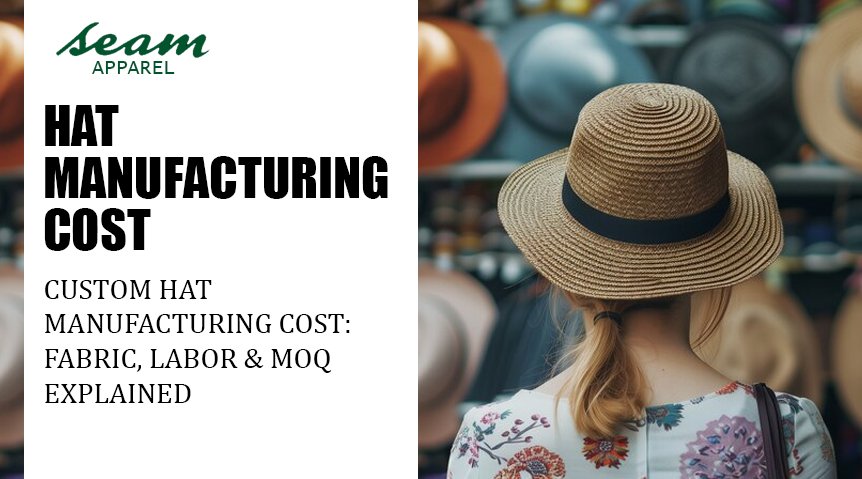
Hats have quietly become one of the hardest working products in fashion and merch. A brand drops a snapback, and it ends up on more heads than the T-shirt that took three times the budget. But before you place an order with any of the custom hat manufacturers out there, you need to understand what drives custom hat manufacturing cost. Style, fabric, customization, and order size all pull in different directions, and knowing how they interact is the difference between a hat that pays for itself and one that just sits in a warehouse.
Five factors decide hat manufacturing pricing on any given order:
Each one compounds the others. A structured cap in premium wool with dense embroidery at a low quantity will always cost more than a dad hat in cotton twill ordered in bulk.
Not all hats are built the same, and construction changes cap production cost fast.
| Style | Construction | Relative Cost |
| Baseball cap | Structured, six-panel | Moderate |
| Snapback | Structured, flat brim | Higher |
| Dad hat | Unstructured, curved brim | Lower |
| Trucker hat | Mesh back, foam front | Moderate |
| Bucket hat | Simple, one-piece panels | Lower |
Structured styles need more panels, stiffer buckram, and tighter stitching tolerances, which pushes labor time up. Unstructured styles skip most of that, which is why dad hats stay a favorite for startups evaluating a new line.
Material choice shapes both price and durability and understanding common fabric types upfront prevents costly swaps mid-production.
The common options:
If you are unsure which material fits your design, browsing common fabric types before you brief your manufacturer saves back-and-forth later. Cost here depends on material quality, how well it holds structure, and whether the fabric is in season or must be sourced specially.
Labor is where structured hats quietly get expensive.
It covers:
A six-panel structured cap with a buckram front takes noticeably longer to build than a soft, unstructured bucket hat, and that time shows up directly in your unit price.
This is usually the biggest swing factor on any quote, and it is where embroidery services separate a basic hat from a premium one.
Detailed logos with many thread colors or tight stitch counts cost more to run through embroidery services than a simple flat-rate design. If your logo has fine detail, ask your manufacturer for a stitch count estimate before finalizing artwork, since that number moves the price more than anything else on this list.
MOQ affects your per-unit price more than most first-time buyers expect, and it is one of the first questions any manufacturer will ask about your custom hat MOQ plans.
Understanding your custom hat MOQ options early lets you plan a realistic first run instead of overordering to chase a lower unit price you do not need yet.
Line items brands forget to budget for:
These hidden costs rarely show up in a first quote, but a proper manufacturing cost breakdown account for them before sampling even starts.
Here is how that cost drivers stack up as a share of your total unit price:
| Cost Component | Typical Share of Unit Cost | What Drives It Higher |
| Fabric & Materials | 15–25% | Wool blends, technical mesh, or premium twill vs. standard cotton |
| Labor & Construction | 25–35% | Structured builds, multi-panel construction, tighter tolerances |
| Customization & Branding | 15–30% | Dense embroidery, multiple thread colors, patches, custom labels |
| Setup & Sampling | 5–15% | Digitizing embroidery files, tech packs, prototype rounds |
| Packaging & Logistics | 5–15% | Branded packaging, shipping method, destination |
These ranges shift with your specific style, fabric, and order size, but they hold up as a rough guide for budgeting a first quote.
Before reaching out to a manufacturer, run through this checklist:
☐ Confirm your hat style (structured vs. unstructured) and who it is for
☐ Choose a fabric that matches your climate, budget, and durability needs
☐ Decide on your branding method (embroidery, patch, or print) and get a stitch count estimate
☐ Set a realistic MOQ based on actual demand, not guesswork
☐ Request a sample before committing to a full production run
☐ Build a tech pack with clear specs for colors, sizing, and logo placement
☐ Budget for hidden costs: setup, sampling, packaging, and shipping
☐ Confirm turnaround time and production lead times upfront
☐ Ask about the manufacturer’s quality control process
☐ Get a full manufacturing cost breakdown in writing before you place the order
Brands that succeed at wholesale hat manufacturing tend to follow the same concise list:
Cutting corners on a hat shows up fast. Cheap builds lose shape, fade, or fray within a few wears, and customers notice. Better materials and tighter construction cost more upfront but hold their shape wear after wear, which protects the way your brand looks on someone’s head months later. Fit and finish matter more here than in almost any other apparel category since a hat sits front and center on the body.
Seam Apparel works with USA-based brands at every stage of building a headwear line, backed by a clear that manufacturing cost breakdown at every quote stage, offering:
Whether you are evaluating your first dad hat drop or scaling a full cap collection, that manufacturing cost breakdown approach keeps pricing predictable instead of surprising you at invoice time.
Hat manufacturing costs come down to four things: material, construction, customization, and order size. Embroidery and structure are usually the biggest levers on your closing price, and bulk production is still the most reliable way to bring per-unit cost down. Get those variables right, and choosing the right partner from the available custom hat manufacturers turns a good hat design into a product that scales.
Most brands take weeks to develop their colour palette, packaging, and then...
You have spent months perfecting the fit, the fabric, the finish on...
Today’s consumers are not just trying your product on; they are looking...
A tank top is about as simple as clothing gets. Two straps,...
Amazon FBA packaging requirements for clothing come down to a few rules:...