Best Fabric Types for Leggings: Complete Guide for Brands
Leggings carry more weight than any other product in an activewear line....
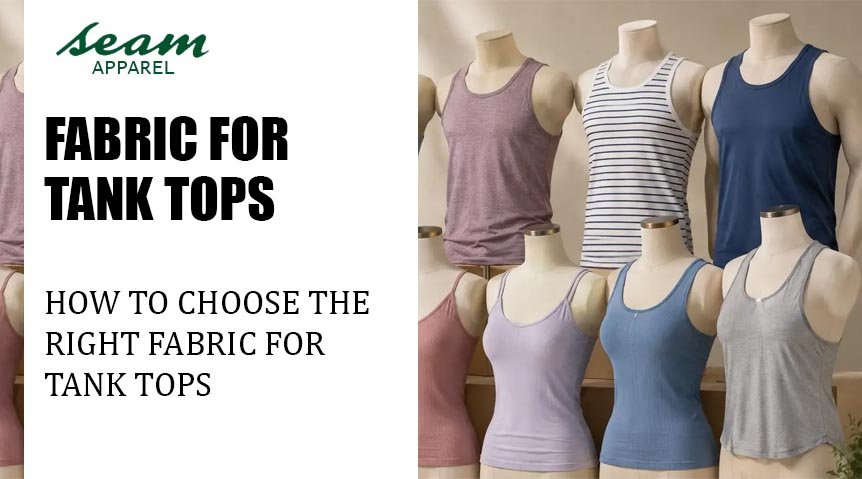
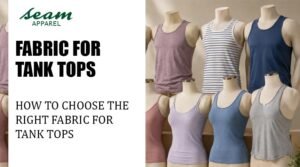
A tank top is about as simple as clothing gets. Two straps, a body, no sleeves. That simplicity is exactly why fabric matters more than people expect. There’s nothing else to hide behind. Get it wrong and a customer feels it in the first five minutes of wear, then again, the first time it comes out of the wash looking different. Talk to any tank top manufacturer long enough and you’ll hear the same complaint: brands spend weeks on the design and ten minutes on the fabric spec, then wonder why returns are high.
If you’re sourcing through a custom apparel manufacturing partner, that fabric conversation needs to happen before anyone falls in love with a silhouette, not after. This piece walks through the materials, weights, and blends that matter, and how to match them to what your customer will do while wearing the thing.
Nowhere to hide, like I said. No collar to distract from a cheap knit, no sleeve covering early pilling near the seam.
A few things ride on it:
Get this part right and the print, the fit, almost sell themselves.
Five fabric families do most of the work here, each solving a different problem.
Cotton’s the default, and there’s a reason it’s stuck around. Soft, breathable, familiar. Fine casual, everyday thanks. Where it falls short is moisture, it holds sweat longer than synthetics do, and it can stretch out if pulled too much over time.
Polyester does the opposite. Light, dries fast, barely wrinkles, exactly why it’s the default for gym and performance tanks. Untreated it can feel a little plasticky, so most decent lines run a wicking finish on top.
Rayon and viscose, drape fabrics. Hang soft, photograph well, which is why fashion tanks lean on them so hard. Fussy in the wash though and need careful handling once you’re producing in bulk.
Spandex and elastane rarely appear alone. A small dose, somewhere in the 5 to 20 percent range, is enough to give a real stretch and let it bounce back instead of staying stretched out.
And blends. Cotton-poly, tri-blends, these exist mostly to patch the weaknesses above, comfort from one fiber, toughness from another. Tri-blends tend to pick up that heathered look shoppers associate with a nicer product.
Use case first, fabric second. Too many brands do this backwards, falling for a fabric because it’s cheap or trending, then squeezing it into a category it was never built for.
Brands trying to build a real name as tank top manufacturers in the fitness space tend to pick one or two proven blends early and stick with them, rather than jumping fabric every season.
GSM, grams per square meter, gives you a rough sense of how heavy a fabric feels before you’ve touched a sample.
Heavier fabric costs more per unit, plain and simple. Worth pinning down early through real fabric sourcing for clothing brands conversations, rather than doing the math after the products already priced.
This is where fabric choice stops being theoretical and gets obvious the second someone tries the thing on.
Spandex or elastane content means fitted, body-hugging silhouettes work. Skip the stretch and you’re looking at a boxier cut where structure matters more than cling. Recovery is the part people underrate. A fabric can stretch beautifully off the shelf and still be a bad choice if it doesn’t snap back, because a tank that stays stretched reads as tired before its time.
If the design’s meant to sit close to the body, don’t shave the elastane percentage to save a fraction of a cent per yard. That savings disappear the moment returns start rolling in.
Cost tracks closely with feel and performance.
| Fabric Tier | Typical Fabrics | Cost Position | Best Fit |
|---|---|---|---|
| Budget-friendly | Cotton, standard polyester | Lowest | High-volume basics |
| Mid-range | Cotton-poly, tri-blends | Moderate | Balanced comfort and durability |
| Premium | Rayon, viscose, specialty fabrics | Highest | Fashion-forward positioning |
Contemporary brands tend to make the same mistake, chasing the lowest cost per yard without thinking about what fabric lets them charge later. A pricier fabric that supports a higher shelf price often beats a cheap one that quietly caps how much you can ever ask for the finished piece.
Organic cotton, recycled polyester, eco-conscious blends, all of it costs more going in. But it opens the door with customers who genuinely check for that label before buying. Worth folding into your fabric sourcing for clothing brands approach from day one since bolting sustainability on after the fact is a much harder path.
Fabric choice also decides what decoration methods are going to look decent on the finished product.
Cotton handles screen printing well, crisp edges, solid opacity, holds up wash after wash. Polyester is what sublimation was invented for, the dye bonds right into the synthetic fiber for vivid, edge-to-edge coverage. Blends sit in between and get unpredictable, results shift with the fiber ratio, so a 50/50 blend won’t sublimate as cleanly as straight polyester will.
Fabric choice shouldn’t feel like a gamble. Seam Apparel works with brands through the sourcing process, matching fabric to fit, using case, and budget before a single unit reaches the production floor, with support running through every step of product development and sampling.
Startups on tighter budgets aren’t left out either. Flexible, low MOQ clothing manufacturers friendly production means a new tank top line can launch at a realistic volume, no warehouse-sized commitment required.
Fabric selection isn’t a line item you check off somewhere. It decides comfort, fitness, durability, and where a product lands in a customer’s head the second they touch it. Cotton, polyester, rayon, their various blends, each solving a slightly different problem depending on how the piece gets worn. Blends tend to give the best balance of cost and performance, but only when the choice is made on purpose. A solid custom apparel manufacturing partner treats fabric as the foundation it genuinely is and holds that bar whether you’re ordering fifty units or five thousand under a low MOQ clothing manufacturers set up.
Leggings carry more weight than any other product in an activewear line....
A hat looks simply until you must specify one. Panels, sweatband, closure,...
Shorts sit in more categories than almost any other garment: gym, beach,...
Introduction A tank top is about as simple as clothing gets. Two...
Most brands take weeks to develop their colour palette, packaging, and then...