Top 15 Custom Sweatshirt Manufacturers in the USA
Ask any founder what their best-selling product was in year two, and...
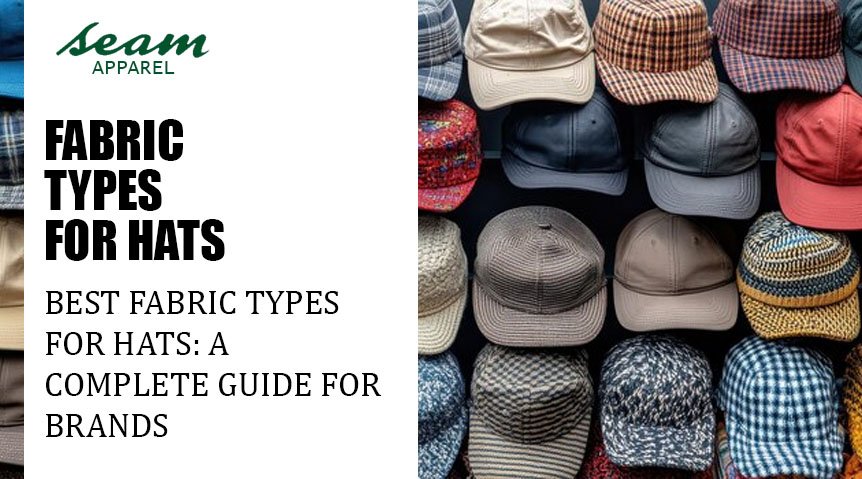
A hat looks simply until you must specify one. Panels, sweatband, closure, brim, and suddenly the whole product lives or dies on the material behind it. Fabric decides whether a cap holds its crown through a humid Gulf Coast summer or slumps by week three. Brands that treat hat manufacturers as materials conversation, not only a price conversation, but ship also better product and eat fewer returns. This cap materials guide covers the fabric types of worth knowing, where each one belongs, what it costs, and how to choose without guessing.
Four things move the moment the material changes.
“Getting the best fabric for hats right protects margin on both ends: fewer returns coming back, stronger perceived value going out.”
“Seven hat fabric types cover most of the headwear production.”
Most production runs land on blends anyway, because a 60/40 cotton polyester twill solve comfort and durability at once. Serious hat manufacturing fabrics get specified as a blend ratio and a weave, never as a single word on a tech pack.
The best fabric for hats always starts with silhouette, so settle that pairing before anything else. Forcing soft cotton into a structured snapback is where sampling budgets go to die.
“Weight, measured in GSM, separates headwear fabric types faster than fiber content does.”
Structure comes from weaving and interlining working together. A tight twill with fused buckram stands up. A loose knit at identical weight collapses. For caps and snapbacks, that difference is the product.
Among headwear fabric types, cotton wins on everyday comfort. Polyester and nylon win the moment sweat enters the picture, since they move moisture instead of storing it. Mesh back panels remain the cheapest ventilation upgrade in headwear, which is exactly why trucker caps refuse to die. A comfortable that gets worn, photographed, and reordered. An itchy one becomes a drawer ornament and a one-star review.
Nylon and coated polyester handle rain. Wool insulates through Chicago January. Canvas takes abuse on a job site and looks better for it. Any honest cap materials guide starts with climate because a brand selling in Phoenix and a brand selling in Minneapolis need different headwear fabric types even when the logo is identical.
| Fabric | Relative Cost | Durability | Comfort | Best Fit |
|---|---|---|---|---|
| Polyester | Low | High | Moderate | Performance, promo |
| Cotton twill | Low to mid | Moderate | High | Everyday caps |
| Cotton poly blends | Mid | High | High | Retail workhorses |
| Acrylic | Low to mid | Moderate | Moderate | Volume beanies |
| Canvas | Mid | High | Moderate | Rugged styles |
| Wool | High | High | High | Premium winter |
Hat manufacturing fabrics rarely top the cost sheet, but they set the ceiling on your retail price. Smart fabric sourcing for clothing brands usually means buying the mid-tier and spending the difference on trims and packaging, where shoppers notice. Testing that theory is cheap with low MOQ clothing manufacturers and expensive without them.
Organic cotton, recycled polyester, and recycled wool are all available in headwear now, at a material premium that shifts with volume and certification. Ask for certification documents rather than marketing claims. Unverified green language invites scrutiny from US regulators and retail buyers alike. Managed properly, sustainable custom hat materials cost more upfront and buy you shelf space with accounts that screen their suppliers.
Custom hat materials decide what decoration is even possible. Structured twill and canvas take 3D embroidery cleanly. Smooth cotton and polyester suit screen and sublimation printing. Textured knits blur fine detail, so simplify the mark before blaming the factory. Choose custom apparel manufacturing partners who prototype decoration on the actual fabric rather than a flat swatch, because thread tension behaves differently across a curved crown.
Seam Apparel handles sourcing, sampling, and full production under one roof for US brands. That means access to a wide range of hat manufacturing fabrics, blend development when stock options fall short, cost engineering that protects your margin, and firsthand product development and sampling before you commit scale. Because headwear sits beside our other categories, you can build a complete collection without juggling three factories and four lead times. Our fabric sourcing for clothing brands team also flags substitutions early, when changing course still costs nothing.
Fabric is the first real decision in headwear, not a detail to settle later. Assorted styles demand varied materials, and the best fabric for hats is always the one matched by the wearer, the climate, and the price point. Use this cap materials guide as a shortlist and let samples settle the argument. Choose deliberately and you build durability, comfort, and brand value into the product before a single stitch happens. Experienced hat manufacturers and a proven custom apparel manufacturing partner shorten that path, and low MOQ clothing manufacturers let you prove the choice before you bet inventory on it.
Ask any founder what their best-selling product was in year two, and...
Introduction Towels are the quiet workhorse of home, hospitality, and retail. Nobody...
Leggings carry more weight than any other product in an activewear line....
A hat looks simply until you must specify one. Panels, sweatband, closure,...
Shorts sit in more categories than almost any other garment: gym, beach,...