Top 20 Leggings Manufacturing Companies in the USA
Leggings went from gym-bag afterthought to the most reordered item in half...
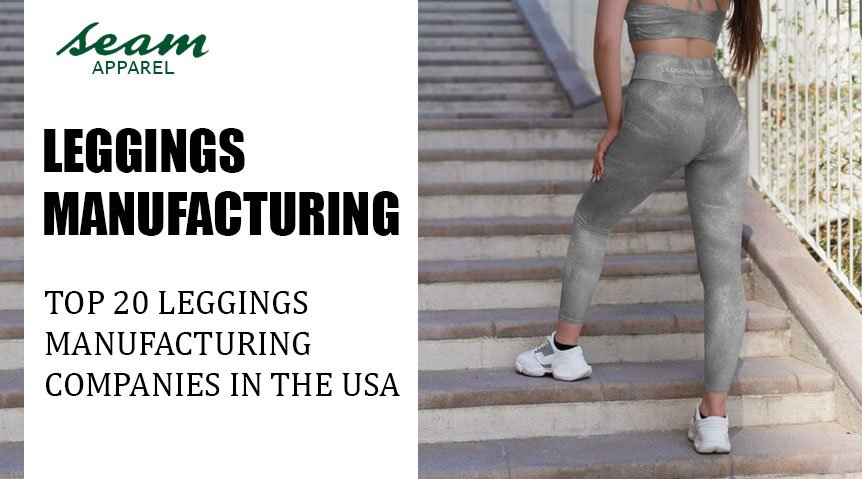
Leggings went from gym-bag afterthought to the most reordered item in half the activewear catalogs running today. Anyone who has managed a DTC store in this category knows the pattern: one style sells, customers come back for it in three more colours, and your entire margin starts depending on whether your factory can hold a size spec across four separate production runs. That is the real question sitting underneath every search for leggings manufacturing companies. Not who can sew a legging once, but who can sew the same legging eight times without the waistband creeping half an inch. Picking a leggings manufacturer is closer to hiring a head of production than buying a service.
There are good reasons the category keeps pulling in contemporary brands. Leggings carry high repeat purchase rates, they sit comfortably across yoga, gym, running, and everyday athleisure, and one well-fitting block extends into shorts, flares, and full-length tights without redoing the pattern work. Margins hold up too, provided the fabric is chosen with some intelligence rather than by price per yard.
The difficulty is that leggings punish sloppy manufacturing more than almost any other garment. A tee that runs a little wide is still a tee. A legging that runs a little wide is a return. Four-way stretch behaves differently on the cutting table than it does on a body, gusset placement decides whether a seam sits somewhere uncomfortable, and flatlock stitching either survives two hundred washes or it does not.
So, the criteria worth caring about are narrow. Product quality that survives real wear. Fabric performance you can defend on a product page, including opacity under squat. Fit consistency between the sample and the third bulk run. Scalability. And production reliability, which is a polite way of saying they hit the dates they promised.
This guide covers twenty options, most of them leggings manufacturers USA founders can visit in person, with a few internationally based partners included because they show up repeatedly in this category and readers deserve to know where their goods would be made.
No ranking is fully objective, so here is the criteria applied to each company. Where a factory publishes no figure, that is stated rather than guessed.
Manufacturing Capabilities. Cut-and-sew production in-house or through a directly managed floor, pattern making, sampling, and fabric sourcing. A company that only assembles pre-cut panels is doing something different from one that develops the garment with you.
Activewear Expertise. Compression garments, performance apparel, and technical sewing sit in their own category, and a compression leggings manufacturer needs machinery a general apparel shop does not own. We weighted activewear manufacturing experience heavily, since a factory that produces cotton tees will struggle with a nylon-spandex legging however good its intentions.
Customization Options. Sublimation, screen printing, embroidery, silicone branding, and custom packaging. Custom embroidery services matter more here than people expect, since a small, stitched logo at the hip is often the only branding a legging carry.
Quality Standards. Documented inspection at cutting, sewing, and packing. Measurement checks against the spec sheet rather than a visual once-over.
MOQ Flexibility. Whether a first-time brand can realistically place an order.
Customer Support. Response speed, whether you get a named contact, and how clearly, they explain what they need.
Industry Reputation. Published client work, verifiable location, third-party reviews, and operating history. A surprising number of fitness apparel manufacturers USA searches surface are sales offices rather than factories.
| Manufacturer | Location | MOQ | Specialization | Best For |
|---|---|---|---|---|
| Seam Apparel | Los Angeles, CA | 50 to 100 per style | Custom and private label activewear | Startups and scaling activewear brands |
| Argus Apparel | Los Angeles, CA | Flexible, not published | Private label leggings and gym wear | Small to mid-size brands in LA |
| Cord Apparel | USA | Varies, small runs available | Private label and custom cut and sew | Brands consolidating with one partner |
| Steve Apparel | USA | From around fifty per design | Leggings, hoodies, tech pack support | Budget-conscious first collections |
| Affix Apparel | Los Angeles, CA | From fifty pieces | Leggings, seamless styles, athleisure | Brands needing wide category range |
| Royal Apparel | Hauppauge, NY | None on blanks; custom far higher | USA-made organic knitwear | Verifiable Made in USA credentials |
| The Evans Group | Arts District, Los Angeles | 1 to 50 in-house; 50 to 300+ factory | Luxury development and sampling | Premium technical work |
| Lefty Production Co. | Los Angeles, CA | Low for development clients | Full-package domestic production | Design through delivery |
| Good Clothing Company | Fall River, MA | As low as ten per size and colour | Ethical small-batch cut and sew | Ethics-led first runs |
| Tack Apparel | California | From around fifty per design | Leggings, gym wear, private label | Startups needing flexible run sizes |
| Mega Apparel | Confirm production site | Not published | Custom leggings and tights | Bold graphic and sublimated ranges |
| Apliiq | Los Angeles, CA | None | Print on demand with private labelling | Validating designs before spending |
| Los Angeles Apparel | South Los Angeles, CA | Twelve per style on select categories | Vertically integrated knits | Cotton-based athleisure |
| Portland Garment Factory | Portland, OR | None set, 20 to 20,000 | Sustainable cut and sew | Established sustainability-led brands |
| Indie Source | Los Angeles, CA | Figures vary, 50 to 300 | Full-package knits and wovens | DTC brands needing development |
| Blue Associates Sportswear | UK, factories in Europe and Asia | Around 150 per colour | Technical sportswear design | Performance-first brands |
| Activewear Manufacturer | Beverly Hills, CA, global | Low, not published | Wholesale private label fitness wear | Wholesale buyers |
| Alanic Activewear | Beverly Hills office, global output | Low, not published | Catalog-based wholesale activewear | Bulk buyers and retailers |
| Create Fashion Brand | Barquero’s, Portugal | 150 customs; blanks none | Premium Europe-made production | European craftsmanship |
| Arcus Apparel Group | Houston, TX | Low, not published | Small batch, dye sublimation | Printed activewear |
A note before the reviews: every legging manufacturer USA listing you read, this one included, works from figures that move constantly, and several companies here publish no MOQ or lead time at all. Treat all of it as a starting point for your own conversation, not a quote.
Company Overview
Seam Apparel operates out of Los Angeles as a full-service custom activewear manufacturer, which in practice means handling the parts most brands underestimate: pattern work, fit correction, sourcing, sampling, and the branding details that decide whether a garment feels retail-ready or homemade. The company works with new labels and established brands, and the floor is built around short runs rather than treating them as a Favor.
Services
Custom leggings production, private label activewear, tech pack development, sampling, fabric and material processing, and packaging. Woven neck labels, printed care tags, hangtags, branded poly bags, and printed boxes are handled in-house, removing a set of vendors most founders would otherwise manage separately.
Leggings Specialization
Yoga leggings, gym leggings, compression styles, seamless-inspired activewear, and running tights. The published fabric range includes spandex blends, recycled polyester, and organic cotton, covering most of what a custom leggings manufacturer gets asked for. If you need a yoga leggings manufacturer and a running tights partner in the same place, this is that setup.
Best For
Startups placing a first order, growing activewear brands adding styles, and premium fitness apparel companies that need consistency more than they need the lowest unit price.
Strengths
Minimums start at 50 to 100 pieces per style. Sampling is structured rather than improvised: digital mock-up, fit sample in your base size, marked notes, adjusted pattern, final sample, then bulk. Published timelines are 20 to 25 business days for sampling and 25 to 30 for bulk after approval. Every batch is measured against the spec sheet before shipping.
Potential Considerations
Structured pieces sit higher in the minimum range than simple knits. As with any manufacturer offering this much breadth, the strongest results go to brands arriving with clear specs, so budget time for the tech pack stage.
Company Overview
Argus Apparel runs from 200 W 8th St in downtown Los Angeles and has been operating for over a decade. The company states it serves more than five hundred clients across the United States, skewed toward small and mid-size brands rather than volume retailers.
Services
Private label clothing, custom hoodies, sportswear and activewear, cut and sew manufacturing, t-shirt production, screen printing, sublimation, and embroidery. Dedicated pages exist for leggings and gym wear, which suggests the category is a genuine focus rather than something bolted onto a general catalog.
Activewear Manufacturing Capabilities
Sportswear and gym wear are core categories. As a custom activewear manufacturer, they handle both fashion-led athleisure and performance pieces, and they position around flexible order sizes rather than fixed volume tiers.
Fabric Options
Performance blends, cotton mixes, and eco-friendly alternatives depending on the program.
MOQ Range
Not published. The positioning around small and medium brands implies flexibility but confirm the number for your style before planning inventory.
Best For
Brands that want Los Angeles production with a single point of contact and do not need thousands of units to start.
Strengths
Verifiable street address, long operating history, wide decoration options in-house, and category pages showing they understand what athletic leggings manufacturers are asked to build.
Potential Considerations
Published lead times are not available, and the absence of a stated MOQ makes early budgeting harder than it should be.
Company Overview
Cord Apparel positions itself as a brand-first manufacturer rather than a volume shop, supporting startups, growing labels, and retailers through development and repeat production. The stated approach is protecting a brand’s identity through production, which mostly means not silently substituting fabrics or trims when something runs short.
Services
Custom apparel manufacturing, product development and sampling, material sourcing with pre-production quality checks, cut and sew, full labelling including woven labels and printed tags, packaging, and finishing.
Custom Leggings Capabilities
Activewear and performance categories sit alongside a wide range covering hoodies, tees, casual wear, and intimates. For a private label leggings manufacturer shortlist, that breadth is useful if you plan to extend into sports bras or matching sets later.
Fabric Expertise
Performance knits, cotton blends, and organic options, sourced against brand specification rather than from a fixed house range.
MOQ Range
Varies by product. Small runs are available for contemporary brands, though the exact figure is not published.
Best For
Brands that want to consolidate several categories with one partner instead of managing three factories.
Strengths
Development support is a stated priority, sampling is treated as the place to fix fit rather than a formality, and labelling and packaging are managed internally.
Potential Considerations
Fewer published specifics on minimums and lead times than some competitors, so the first call needs to cover numbers directly.
A one-stop custom manufacturer serving larger fashion brands and international startups, with leggings a core category and published emphasis on compression fit, sweat-wicking fabric, and plus-size range. Reported minimums start around fifty units per design, within reach of a first collection. It positions itself as a custom leggings manufacturer for founders who need help building the spec, not just sewing it, with sampling and in-house customization included. Worth confirming which facility your order runs through, since specific production locations are not detailed publicly.
Los Angeles-based with more than a decade of operation, Affix runs a dedicated leggings program covering seamless styles, sports leggings, gym leggings, and faux leather options, and lists itself as a yoga leggings manufacturer alongside the gym-focused work. Minimums start at 50 pieces. Customization spans screen printing, sublimation, and embroidery, with organic cotton and recycled polyester in the fabric range. Category breadth is genuinely wide, covering bras, socks, underwear, and sportswear. The trade-off with breadth is depth, so ask to see leggings, specifically in their portfolio.
Founded in the early 1990s in Manhattan’s Garment District, Royal Apparel is one of the few remaining domestic blank manufacturers, headquartered in Hauppauge, New York with additional facilities in New Jersey and Pennsylvania. Production runs through a union shop. Blanks carry no minimum and sell by the piece, dozen, or case, while custom and private label runs start far higher, with one published figure putting custom manufacturing near 1,200 units per style and colour. Its strength is organic and recycled knitwear with verifiable Made in USA credentials. Its limitation here is that leggings are not the house specialty.
TEG has operated from the arts District in downtown Los Angeles since 2005 and has worked with several thousand brands. Cuts of 1 to 50 pieces run in-house, with partner factory production organized in bands of 50 to 100, 100 to 300, and 300 or more, all vetted for California labour compliance. There is a dedicated activewear portfolio covering gym wear and athletic pieces. TEG is the right call when your legging has a technical detail nobody else wants to attempt, and the wrong one when you need a low unit price.
A full-service manufacturer and development house in central Los Angeles, Lefty covers fabric and trim sourcing, CAD design, pattern making, sample making, grading, cutting, sewing, packing, and shipping. Leggings, sports bras, hoodies, and joggers are named categories. Low minimums go to clients who develop their garments with the studio, a sensible arrangement: the factory absorbs a short run because it already owns the pattern. Everything is made at the Los Angeles facility, and minimums depend on your style and fabric.
Operating from facilities in Fall River and Cape Cod, Massachusetts, Good Clothing Company offers some of the lowest minimums in the country, explicitly stated as low as ten pieces per size, style, and colour in its small-batch department. Pattern drafting, grading, and sample development happen before production. The company runs its own label, Good Apparel, a more credible proof point than most testimonial pages. Strong fit for brands whose positioning depends on ethical domestic production. The caveat: this is a general apparel factory rather than a performance specialist, so technical compression work needs discussing upfront.
A California-based private label manufacturer with a dedicated leggings program covering gym leggings, everyday styles, and made-in-USA private label work. Reported minimums start around fifty units per design, which is where most athletic leggings manufacturers set the entry point for a first style. The range extends across sportswear, tracksuits, swimwear, jerseys, and streetwear, with screen printing, sublimation, embroidery, and packaging. Suitable for startups wanting flexible run sizes and an end-to-end path from concept to delivery. Published lead times are thin, so pin down dates in writing.
Mega Apparel markets custom leggings and tights production with emphasis on spandex blends, seamless workout styles, plus-size ranges, and a customization set covering cut and sew, embroidery, fabric dyeing and washing, and multiple print methods. Listed fabrics include cotton, polyester, spandex, and nylon blends. It reads as a reasonable option for print-heavy or graphic-forward collections, less so if you need a compression leggings manufacturer with documented fabric testing. Minimums, lead times, and production location are not clearly published, so verification matters more here than with the LA factories listing a street address.
Apliiq is not a cut-and-sew factory and does not pretend to be. It is a Los Angeles-based print-on-demand and private label platform that lets you relabel blank garments with your own woven labels, neck prints, and patches, then fulfil orders one at a time with no minimums. Integrations cover Shopify, WooCommerce, Etsy, and Wix. For a brand testing whether a legging design has demand before committing to a run, it is a useful first step. For one needing a specific compression fabric and proprietary fit block, it is the wrong tool.
Vertically integrated in South Los Angeles, with knitting, dyeing, cutting, and sewing managed locally and a workforce reported at 1,500 people using assets from the former American Apparel operation. Reported minimums run as low as twelve pieces per style on select categories, unusually accessible for a factory that size. Strength is cotton-based knits, fleece, and bodysuits with fast domestic turnaround. Nylon-spandex performance leggings sit outside its core, so treat this as an option for cotton-rich athleisure rather than technical training tights.
A certified B Corp in Portland, Oregon, women-owned and operated, running zero-waste manufacturing across cut and sew, prototyping, pattern drafting, grading, sourcing, and finishing. PGF states it has no fixed MOQ and manages anywhere from 20 to 20,000 soft-goods units, with the team typically booked four to six weeks out. The important detail, stated plainly on their own FAQ, is that they do not currently collaborate with emerging designers, recommending local tailors and design classes instead. A partner for established brands with a sustainability narrative, not a first-run option.
A Los Angeles full-package manufacturer of knits and wovens, based on South Broadway, managing sourcing, pattern making, sampling, and production, and referenced in Forbes and WWD. It also offers growth services including Shopify build and product photography. Published minimum figures vary between sources, from fifty units in one directory to three hundred units per style and colour in another and reported production timelines run six to eight weeks. Which is exactly why you confirm directly rather than planning around a number from a listicle.
Worth including with a clear caveat: Blue Associates is not one of the activewear manufacturers USA brands can visit, because it is not a US manufacturer at all. Established in 1997 and based in the UK, it designs, develops, and sources performance sportswear through a network of over fifty factories across the UK, Europe, China, and Vietnam, with access to 150 fabric mills. Reported minimums sit around 150 pieces per colour. Depth in technical categories is real, covering running, cycling, gym and fitness, ski, and equestrian, with tech packs and 3D garment programming before sampling. If domestic production is a hard requirement, look elsewhere.
A wholesale and private label operation with a Beverly Hills, California base and stated presence across the USA, UK, Australia, and the Middle East, which places it among the activewear manufacturers USA brands reach through a catalog rather than a factory floor. The range covers leggings, sports bras, compression wear, gym clothing, and yoga apparel, with customization on logos, labels, and packaging. This is a workout leggings manufacturer built around catalog customization rather than ground-up development, which makes it faster and cheaper but gives you less control over fit. Ask where your order will be produced.
Alanic operates a global wholesale and private label business with a Beverly Hills address alongside offices in Australia, the United Kingdom, and Dubai. The catalog is deep across fitness and running apparel, including leggings, capris, sports bras, and compression pieces. Low minimums are marketed to startups, as they are by most fitness apparel manufacturers USA buyers find through search. The model is bulk catalog supply with private label branding applied, so it suits retailers stocking inventory more than brands building proprietary product. Production locations are not clearly disclosed on the US-facing pages.
Based in Barquero’s, Portugal, with production entirely in Portugal, CFB offers two routes: full custom development from scratch at a 150-unit minimum, and a premium blanks collection with no minimum that can be customized with printing, embroidery, labelling, and washing from 50 pieces per style and colour. Fabrics are eco-responsible and locally produced, and the company has been manufacturing since 1989. Portugal is a legitimate premium sourcing option, but a US brand must factor in transatlantic freight and made in Portugal is a different claim than made in USA.
A Houston, Texas small-batch manufacturer offering apparel development, material sourcing, pattern creation, dye sublimation printing, and production management, with domestic and international routes. Stated categories include swimwear, intimates, and athleisure. Low minimums are advertised without a published figure. The dye sublimation capability is the standout for anyone who needs a workout leggings manufacturer capable of bold, printed styles, since sublimation on polyester is where all-over graphics hold up. Confirm at the outset whether your order runs domestically or overseas, since the company offers both.
Most confusion in sourcing comes from treating four different business models as one category. Matching the wrong one to your goal wastes months.
You select from existing blocks and fabrics, then apply your branding, labels, and packaging. Development time drops sharply because the pattern already exists and has been evaluated on real bodies. Private label clothing manufacturing is ideal for faster launches and lower development costs, and it is how a large share of successful private label activewear manufacturers partnerships begin. The trade-off is differentiation, since a competitor working with the same private label leggings manufacturer can start from the same block.
Here the garment is built from your pattern and your fabric choice. Cut and sew manufacturing costs more upfront and takes longer, and it is the only route to a product that genuinely cannot be bought elsewhere. Ideal for unique products and real brand differentiation. If your positioning depends on a specific rise, pocket, or compression profile, this is the path.
These factories are set up for technical stretch work: flatlock and cover stitch machinery, operators experienced with four-way stretch, and fabric knowledge that goes past a swatch book. Any serious activewear manufacturing partner in this bracket can discuss recovery rate and opacity without checking, and the better activewear manufacturers USA brands use for performance lines volunteer that data before you ask. Ideal for athletic brands and fitness-focused collections where the product must perform under load, and the reason a custom activewear manufacturer usually beats a general apparel factory in this category.
Recycled polyester, deadstock sourcing, low-waste cutting, certified mills, and transparent labour practices. Ideal for eco-conscious brands. Ask for certification numbers rather than adjectives, since sustainability claims are the easiest thing to say and hardest to verify.
Fabric Knowledge. Nylon-spandex gives the best hand feel and recovery, which is why premium brands lean on it. Polyester-spandex costs less, holds print better, and dominates the mid-market. Recycled fabrics have closed most of the performance gap and carry a marketing benefit too. Compression fabrics are a separate discipline, and a compression leggings manufacturer worth hiring will explain that graduated compression comes from knit construction rather than just a tighter fit.
Fit Development. The single biggest failure point. Fit needs a wear test, not a mannequin check, and a second round after the first correction.
Grading Expertise. A pattern that fits perfectly in medium can fail badly in XS and 2XL if it is graded lazily. Stretch garments do not grade proportionally.
Performance Construction. Flatlock seams to prevent chafing, gusset placement to reduce seam stress, waistband construction that holds through a squat, and stitch density matched to fabric weight. All of it is decided during cut and sew manufacturing, not afterwards.
Scalability. Can the same floor take you from 100 to 5,000 units without changing the pattern, fabric supplier, or finish? If not, you rebuild your product at the exact moment demand arrives.
Communication. A named contact who knows your order without looking it up. This sounds soft. It is not.
Quality Assurance. Measurements checked against spec, seam strength evaluated, print cure verified, cartons counted. Documented at each stage, not summarized at the end.
Low MOQ: 50 to 100 Units
The realistic entry point for most first collections, and increasingly common among leggings manufacturers USA buyers work with. You get to evaluate two or three styles instead of betting everything on one. Cost per unit is higher, and some mills will not cut small yardage, which narrows your material options.
Medium MOQ: 100 to 300 Units
The sweet spot for a brand with a proven style. Unit costs improve, more fabrics open, and factories take the order more seriously. The risk is straightforward: 300 units of the wrong colourway is real money sitting in a warehouse.
High MOQ: 300+ Units
Best pricing, widest fabric access, and priority on the production calendar. This band only makes sense once sales history tells you what will move. Committing on instinct is how brands end up discounting their own inventory six months later.
Development typically runs two to four weeks: tech pack review, pattern making, fabric selection. A complete tech pack can halve it. A Pinterest board will extend it.
Sampling commonly takes two to five weeks depending on the factory and how many rounds you need. Seam Apparel publishes 20 to 25 business days for this stage. Expect at least two rounds, since a first sample needing no changes is rare enough to be suspicious.
Production lands between four and eight weeks after sample approval. Seam Apparel publishes 25 to 30 business days. Portland Garment Factory reports being booked four to six weeks out before work even starts, a reminder that queue time is separate from production time.
Shipping is two to seven days domestically. Ocean freight from Asia adds four to six weeks, the largest reason brands underestimate their calendar.
Budget three to four months from first conversation to delivered cartons for a modern style. Repeat orders on an existing pattern move far faster.
Anyone quoting a firm per-unit price without seeing your tech pack is guessing. What moves the number:
One cost most founder forget: fabric sourcing minimums. Mills often require a minimum yardage per colour, so a five-colour launch can cost more in raw material commitment than the sewing itself.
| Factor | USA Manufacturing | Overseas Manufacturing |
|---|---|---|
| Lead Times | Faster | Longer |
| Communication | Easier | Variable |
| MOQ | Lower | Higher |
| Quality Control | Easier | Requires oversight |
| Shipping | Domestic | International |
| Cost | Higher | Lower |
The honest read: per-unit cost Favors overseas production and everything else Favors domestic. At two hundred units per style, overseas savings often evaporate once your account for freight, duty, sampling shipped both ways, and the cost of a fit problem you cannot walk in and inspect. At several thousand units per style the maths flips, and it flips hard. Most fitness apparel manufacturers USA brands work with land in the middle, developing domestically and moving volume offshore once a style is proven.
That last one gets skipped constantly. Ask it anyway.
Custom development support. Sketches, tech packs, or an existing garment you want matched are all workable starting points. The team specifies what it needs upfront: fabric type and weight, colour codes, size ratio, print or embroidery placement, and quantity, then returns a real quote rather than a range.
Technical activewear expertise. Leggings, sports bras, and performance pieces sit alongside a broader catalog, and the floor manages the stretch knit constructions these garments require. That is the dividing line between real private label activewear manufacturers and shops that sew cotton.
Fabric sourcing. Weight, stretch, and price are matched to the style rather than pulled from a fixed house range, with mill lots checked before cutting.
Sampling process. Digital mock-up, fit sample in your base size, your notes, pattern adjustment, then a final sample for sign-off before bulk is cut. Skipping the middle round is the most common reason a first order disappoints.
Brand-building support. Private label clothing manufacturing covers neck tags, hangtags, poly bags, and boxes, so the finished product looks like it came from a brand rather than a factory.
Quality assurance. Measurements checked against the spec sheet, seams pulled, print cure inspected, cartons counted before shipping. Problems get fixed on the floor rather than discovered in your warehouse.
For a brand comparing leggings manufacturer USA options with a first order in the 50-to-100-unit range, that combination of low minimums and structured development is the practical argument.
There is no single best factory on this list, and anyone telling you otherwise is selling something. A startup evaluating two styles needs flexible minimums and firsthand development. A brand doing 5,000 units a season needs capacity, predictable dates, and pricing that holds. A performance brand needs technical fabric knowledge a general apparel factory does not have. Three different partners.
What does not change is that product quality starts with your choice of leggings manufacturer, not with the marketing that follows it. A great ad cannot rescue a legging that goes sheer at the knee.
Before you commit, compare four things: real capability in your category, how they communicate when you ask a hard question, MOQ against what you can realistically sell, and production quality verified with a sample in your hands. Order samples from two or three of the leggings manufacturers USA brands use. It costs a few hundred dollars and saves more.
It depends on your stage. Seam Apparel, Argus Apparel, and Cord Apparel suit brands wanting custom and private label production with accessible minimums. The Evans Group and Lefty Production Co. serve development-heavy projects in Los Angeles. Good Clothing Company and Portland Garment Factory suit sustainability-led brands, though PGF does not take on emerging designers.
A custom leggings manufacturer working with startups commonly sets 50 to 100 units per style. Some go lower: Good Clothing Company publishes minimums as low as ten pieces per size, style, and colour. Larger operations and blank-focused manufacturers can require several hundred or more per style and colour.
There is no honest single figure, because fabric composition, GSM, compression level, print method, branding, packaging, and quantity all move it. Send a complete tech pack to two or three factories and compare quotes.
Yes. Multiple US factories accept runs of 10 to 100 units per style, and finding a workout leggings manufacturer in that band is easier now than five years ago. Expect higher per-unit cost and narrower fabric selection, a fair trade for not gambling capital on an untested design.
Athletic leggings manufacturers usually reach for nylon-spandex for premium hand feel and recovery, polyester-spandex for value and print performance, recycled polyester blends for sustainability positioning, and purpose-built compression knits where support matters. A good yoga leggings manufacturer will also raise opacity testing before you ask.
Per unit, yes. What that buys you is a leggings manufacturer USA teams can call during business hours and visit if a run goes wrong. Total landed cost is closer than it looks once freight, duty, sampling shipments, and quality control travel are counted, particularly at lower volumes.
Most do. Private label activewear manufacturers typically cover woven neck labels, printed care tags, hangtags, and branded packaging. Some, like Apliiq, offer relabelling with no minimum at all, which is a different service from full private label production.
Around three to four months from first conversation to delivery for a modern style, across development, sampling, production, and shipping. Seam Apparel publishes 20 to 25 business days for sampling and 25 to 30 business days for bulk. Repeat orders on an approved pattern run faster.
Leggings went from gym-bag afterthought to the most reordered item in half...
Fabric is the quiet variable behind every bra that works. Get it...
Nobody starts a clothing brand because they’re excited about yarn. Socks live...
Ask any founder what their best-selling product was in year two, and...
Introduction Towels are the quiet workhorse of home, hospitality, and retail. Nobody...