A Guide to Fabric Choices for Various Bra Designs
Fabric is the quiet variable behind every bra that works. Get it...
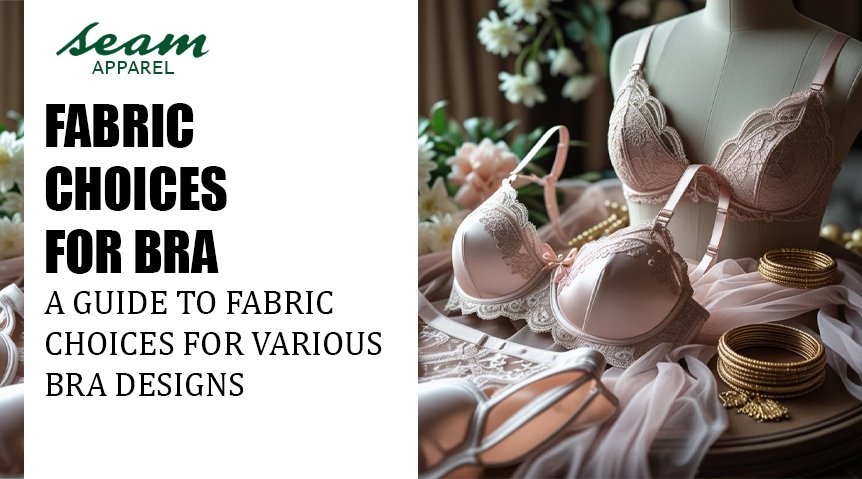
Fabric is the quiet variable behind every bra that works. Get it right, and a bra holds its shape through a hundred years without the wearer thinking about it once. Get it wrong, and it shows up as sagging, chafing, or a return within weeks.
This lingerie fabric guide covers what separates the best fabric for bras from fabric that just looks the part on a hanger. Bra manufacturing fabrics affect comfort, fitness, functionality, durability, and support all at once, and every one of those threads down to customer satisfaction, since a bra that stops fitting well is a bra that stops getting reordered. For teams sourcing through bra manufacturers, understanding bra fabric types and bra design fabrics early is the difference between a line that lasts and one rebuilt every season.
A bra lives under more physical stress than almost any other garment. It stretches, compresses, and moves with the body dozens of times a day, so the fabric underneath does real structural work.
● Support and shape retention depend on how well a fabric resists sagging under tension
● Skin sensitivity matters more here than in most categories, since bras sit against delicate skin for hours
● Stretch and recovery determine whether a bra fits the same on day one hundred as day one
● Breathability and moisture control decide whether a bra feels wearable through a full day
Getting this right starts upstream, with fabric sourcing for clothing brands that treats material selection as a design decision, not an afterthought.
Design intent should come before fabric choice, not the other way around.
| Bra Type | Ideal Fabric Direction | Why It Works |
|---|---|---|
| T-shirt bras | Seamless nylon blends | Smooth under clothing, no visible lines |
| Sports bras | High-stretch, moisture-wicking blends | Handles movement and sweat without losing shape |
| Push-up bras | Structured fabrics with padding support | Holds form under padding and underwire |
| Lace bras | Lace paired with supportive lining | Balances aesthetics with wearability |
| Wireless bras | Soft, flexible cotton or modal blends | Comfort without rigid structure |
Almost nothing in a bra is built from a single fiber, and the few that try it usually pay for it somewhere — in fitness, in support, or in both at once. The logic behind blending is simple once you see it: pair a fiber that does one job well with a fiber that covers its weak spot, and the resulting fabric usually beats either one on its own.
Take nylon and spandex. It’s the pairing behind most seamless and structured bras, and for good reason — nylon gives you a smooth, lightweight base that sits flat under clothing, while spandex (usually somewhere between 10 and 20 percent) is what lets the fabric snap back into shape after it’s stretched. Skip the spandex and nylon alone will stretch out for good within a handful of wears.
Cotton and Elastane play a different role. You’ll see this combination in casual, everyday styles where comfort matters more than structure. Cotton brings soft, breathable feel against skin; a smaller elastane percentage, typically under 10 percent, is just enough to stop the fabric from sagging without pushing it toward the tighter, more built-up feel a nylon-spandex fabric has.
The reason blends tend to win out over single fibers isn’t complicated — one fiber is being asked to handle comfort, structure, stretch, and recovery all at once, and something usually gives. Splitting that workload across two fibers means one handles hand feels and breathability while the other handles shape retention, and the fabric you end up with does more than either fiber could manage by itself, without pricing itself out of volume production.
That shape retention is really what “fit retention” means in practice — how much recovery is still left in the fabric after it’s been stretched again. A well-built blend can hold its shape through fifty-plus wash cycles. A blend that’s light on spandex or elastane starts going slack much sooner, and that’s a failure customers notice at home, not something a lab test necessarily catches first — which is exactly why it tends to show up in returns and reviews before anyone flags it internally.
Durability works on a similar trade-off, just between abrasion resistance and stretch. Nylon and polyester are what anchor most durable blends, since both hold up well to washing and friction, while the stretch fiber only has one job: survive thousands of extension cycles without breaking down. If you want to know whether a blend holds up the way its spec sheet says, there’s only one way to find out — run it through real wash cycles, not just a swatch pulls.
When selecting a fabric, consider its attributes to assess its suitability for in-field use before locking a fabric in place:
● It lengthens and stretches after use and returns to its shape – the garment
● Breathability when worn under fit and/or involved in activity
● Wicking ability for sports and in everyday applications
● Slippery on skin particularly on seams
● Resisting washes, re-washes
Every trait is fabric dependent rather than construction dependent and that’s why the type of brake fabric can play a big part in the process of sourcing the brake.
The zoning areas should be made of strong and stable fabrics to assure stability in areas subject to constant tension, such as the band and underwire channel. Elastic bands and straps are extremely important as they bear a significant portion of the load, and their ability to recover from everyday stretch is important. Cup structure is determined by the thickness of the fabric, at times too thin of a fabric will not support a cup if it is too stiff, the fabric will not look natural.
| Tier | Typical Fabrics | What Drives the Cost |
|---|---|---|
| Budget | Cotton, polyester | Low material cost, minimal processing, suited to entry-level and everyday lines |
| Mid-Range | Nylon blends (nylon + spandex) | Added performance from the stretch fiber and finer yarn, priced above basics but still scalable |
| Premium | Lace, silk, satin, structured specialty fabrics | Higher material cost plus trim, finishing, and construction complexity |
Generally, the end count is not simply the fabric. Quality, performance of stretch, fabric design, source and finishing all go into making up a true cost and planning should take place in the broader focus of conversations around custom apparel manufacturing, as fabric is just one of the components.
Responsible material sources have moved from an experimental line item to something buyers expect as standard, and lingerie is no exception.
Start with organic cotton. The appeal isn’t complicated: no synthetic pesticides, which counts for more in a bra than in almost any other garment, given that the fabric is against skin for hours at a stretch. It behaves exactly like conventional cotton once it’s sewn into a finished piece, so switching over doesn’t mean redesigning anything — it just means budgeting for a pricier raw material.
Recycled nylon tells a slightly different story. Made largely from reclaimed fishing nets or post-industrial waste, it now performs close enough to virgin nylon that most people couldn’t tell you which one they’re wearing. That’s exactly why it’s become the go-to sustainable swap for seamless and structured styles — a brand doesn’t have to give up stretch or smoothness just to make the claim.
Recycled polyester is the easier of the two swaps, honestly. Sourced mostly from post-consumer plastic bottles, it holds up under the same washing and wears as virgin polyester, and since polyester tends to play a structural role in a bra rather than sitting right against skin, budget and mid-range lines can adopt it without much friction.
Then there’s eco lace — newer alternatives that get the decorative look of traditional lace using recycled or lower-impact fibers. That matters for premium, lace-heavy collections, since it lets them claim sustainability credentials without sacrificing the aesthetic that sells the product in the first place.
One thing worth watching: demand for sustainable intimate apparel materials, particularly certified organic cotton and recycled nylon, is outpacing supply in some categories right now. Brands that lock down sourcing relationships early tend to sidestep the price swings that catch everyone else off guard once they try to bolt on a sustainability claim later.
Fabric choice ends up being a branding decision as much as a technical one. Every material sends its own signal, and every material comes with its own limits on how far design and printing can go.
Lace does the premium, decorative work in a collection, and there’s really no faking that with a smooth fabric — nothing else reads quite the same way. On its own, though, it can’t carry much load, which is why it’s almost always backed by a supportive lining underneath. That means design and structure must get planned together from the start, rather than treating lace as something you layer on at the end as a finish.
Mesh is what gives a collection of breathability and a lighter look without adding bulk, and it doubles as a solid structural panel in sports bras and everyday styles alike. Where it falls short is fine detail — print and branding don’t sit as cleanly on mesh as they do on a tighter weave, so it tends to work better for color blocking than for anything like logo placement.
Getting a seamless construction right comes down to using a fabric that can be knitted or bonded without a stitched seam showing through fitted clothing. That’s why nylon-spandex blends are the default here — they hold their shape and lie flat, and that’s genuinely what makes a seamless design look seamless once it’s being worn.
Not every fiber takes dye the same way. Vividness differs, and so does consistency from one batch to the next. Synthetic fibers, nylon and polyester tend to hold color more reliably across production runs than natural fibers do — something worth keeping in mind for any brand planning multiple runs of the same shade.
Color retention is about whether a bra still looks like its original shade after repeated washing, and it matters more in intimate apparel than in most other categories, simply because these garments get washed so often. Synthetic-heavy fabrics generally hold their color longer than natural ones — though that’s worth weighing against whatever softness you’d be giving up in exchange.
Stretch is the real constraint on printing. Apply a print to a fabric that stretches a lot in wear, and it can crack or distort over time, so any branding or pattern work needs a test run on the actual stretched fabric — not just a flat switch before it ever reaches full production.
● Prioritizing how a fabric looks over how it performs on the body
● Choosing low-quality stretch materials that lose recovery within a handful of washes
● Ignoring support requirements specific to the bra type being built
● Skipping thorough fabric testing before a full production run
Each gets caught earlier when fabric sourcing happens alongside design, especially for smaller brands relying on low MOQ clothing manufacturers to keep early testing affordable.
Getting fabric rights takes more than a Swatch book; it takes hands-on experience across categories and volumes. Our team works through product development and sampling with brands from the earliest concept stage, matching fabric choices to real fit and performance goals before bulk production begins. That includes fabric sourcing for clothing brands across cotton, nylon blends, lace, and sustainable alternatives.
Brands testing a new style rarely want to commit to bulk volume before they know it sells, which is why low MOQ clothing manufacturers matter as much as the fabric. It keeps risk small while fit gets proven out, all inside one connected custom apparel manufacturing process. Brands that partner early with experienced bra manufacturers consistently launch with fewer fit issues and stronger repeat sales.
Fabric selection sits at the center of every bra that succeeds long after launch day. Different designs demand different materials, and no single fabric solves every problem a bra presents. Blends remain the most reliable answer for balancing comfort, support, and cost, but the right manufacturing partner turns a good fabric choice into a garment that scales without losing quality.
Fabric is the quiet variable behind every bra that works. Get it...
Nobody starts a clothing brand because they’re excited about yarn. Socks live...
Ask any founder what their best-selling product was in year two, and...
Introduction Towels are the quiet workhorse of home, hospitality, and retail. Nobody...
Leggings carry more weight than any other product in an activewear line....