Top 15 Custom Sweatshirt Manufacturers in the USA
Ask any founder what their best-selling product was in year two, and...
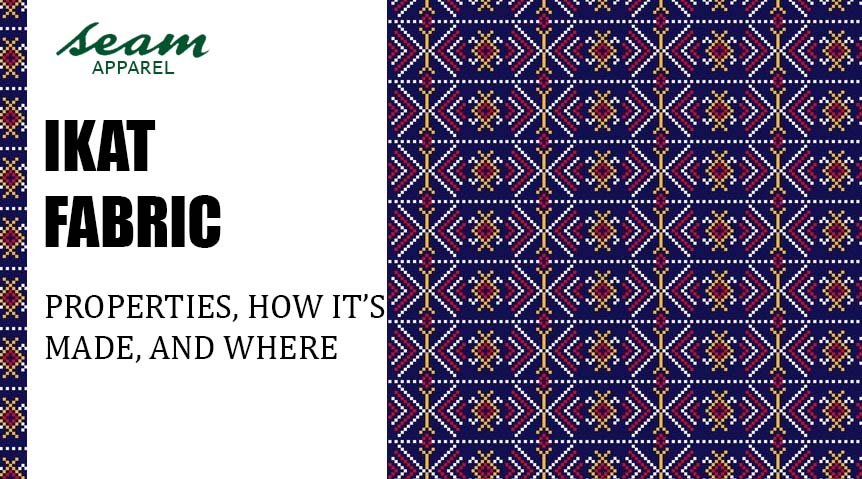
If you’ve ever looked at a piece of clothing and noticed a pattern that feels alive. And it’s almost vibrating with a soft, blurred edge; you were looking at Ikat fabric. Unlike standard prints that sit on top of the cloth. Ikat is a masterpiece of engineering and art where the design is dyed into threads before they ever touch a loom.
At SEAM Apparel, we believe that understanding your materials is the first step toward creating an exceptional brand. This isn’t about aesthetics; it’s about a shifting industry. The global market for handmade and heritage textiles is projected to reach over $1.3 trillion by 2030, as consumers increasingly pivot away from “fast fashion” toward items with a soul. Ikat is a cornerstone of this movement. It’s a heritage craft that bridges the gap between ancient tradition and high-end modern fashion.
The word “Ikat” (pronounced ee-kaht) comes from the Indonesian word “mengikat,” which means “to tie” or “to bind.” This name perfectly describes how the fabric was created.
Ikat is a resist-dyeing technique. Most patterned fabrics are created by weaving plain threads and then printing a design on top. In contrast, Ikat patterns are created by tying bundles of yarn tightly with water-resistant material and dipping them into dye. When the ties are removed, the yarn has a pattern of colored and blank spaces.
When these yarns are woven together, the design emerges. Because it is impossible to perfectly align every dyed thread, the patterns have a signature “feathered” or “blurry” look. This isn’t a flaw; it’s the heartbeat of the fabric.
Learn about other fascinating fabric types
Ikat is one of the few textiles that developed independently across different continents. It wasn’t just one culture’s invention; it was a global evolution of craftsmanship.
While traditional Ikat was once reserved for royalty and sacred ceremonies, modern Ikat has found its way into luxury streetwear and sustainable fashion collections worldwide.
Not all Ikat is created the same way. The complexity depends on whether the vertical or horizontal threads are dyed.
| Type | Process | Appearance |
|---|---|---|
| Warp Ikat | Only the vertical (warp) threads are dyed. | The pattern is easy to see as the loom is set up. |
| Weft Ikat | Only the horizontal (weft) threads are dyed. | The pattern appears as the weaver passes the shuttle through. |
| Double Ikat | Both warp and weft threads are resist-dyed. | Extremely complex and rare; it requires perfect alignment. |
Why do designers choose Ikat over cheaper alternatives? It comes down to the sensory experience of the fabric.
Step-by-step Guide About How To Make A Shirt Glow-in-the-dark
| Pros | Cons |
|---|---|
| Unique, one-of-a-kind appearance. | Higher price point due to manual labor. |
| High artisan and heritage value. | Hard to scale for massive fast-fashion orders. |
| Breathable and comfortable. | Natural “blur” may look like an error to the untrained eye. |
| Support traditional craft communities. | Requires delicate care (often hand-wash or dry clean). |
Ikat’s versatility makes it a favorite for both apparel and home goods.
It is easy to find “Ikat-style” prints at big-box retailers, but they aren’t true Ikat.
Ikat is a structural design. The pattern is part of the fabric’s DNA. If you pull a thread out of an Ikat cloth, that thread will have different colors on it. The pattern is visible on both the front and the back of the fabric.
Printed Fabric is a surface design. The color is applied only to the top layer after the fabric is already woven. If you flip the fabric over, the back is usually a solid, pale color. Prints lack the depth, durability, and blurred edges that define authentic Ikat.
Explore various textile fabric types
In an industry moving toward “slow fashion,” Ikat is standout.
Many Ikat textiles are still produced using hand-operated looms, which require zero electricity. Because it is a traditional craft, it often utilizes natural dyes derived from plants and minerals, reducing the chemical footprint. Furthermore, Ikat production supports rural artisan communities, keeping ancient skills alive and providing ethical employment.
Today, Ikat has moved past its “boho” stereotype. Luxury brands and independent designers are using these patterns in sharp, contemporary silhouettes. We see Ikat in oversized power suits, minimalist tunics, and even high-performance fusion wear. It offers a way for brands to tell a story of craftsmanship in a world of mass-produced goods.
| Feature | Specification | Designer Notes |
|---|---|---|
| Fabric Type | 100% Handspun Cotton Ikat | Specify if you want silk or cotton-silk blends. |
| Pattern Style | Warp Ikat (Single) | Warp is more affordable and stable for shirts/dresses. |
| Dye Method | Azo-Free or Natural Vat Dye | Ensure colorfastness (Level 3–4) to prevent bleeding. |
| Fabric Weight | 110–130 GSM | Ideal for summer button-downs, blouses, and light dresses. |
| Edge Finish | Clean Finished / French Seams | Essential for luxury artisanal apparel to prevent fraying. |
| Grain Line | Strict Vertical Alignment | Patterns must be cut exactly on the grain to avoid “leaning” designs. |
When sourcing Ikat for a professional collection, you must look beyond the aesthetics. Here are the three key factors we prioritize at our private label manufacturer, SEAM Apparel:
Check the reverse side of the fabric. If the pattern is only on the front, it is a print, not a woven Ikat. True Ikat is reversible, the design should look almost identical on both sides.
Because Ikat is tied by hand, the pattern repeat (the distance before the design starts over) can vary slightly.
Hand-loomed Ikat has a higher shrinkage rate than factory-made rolls.
Deep blues (Indigo) and reds are prone to bleeding.
Understand the art of fabric dyeing
We don’t just make clothes at SEAM Apparel; we make history. We value heritage textiles like Ikat because they are the best examples of sourcing high-quality materials and ethically making things.
We know that a brand needs more than just a good fit to stand out in today’s market. It needs a story. Adding specialty fabrics to your collections shows your customers that you care about the “how” and “where” of fashion. We are proud to help our partners choose the right high-end fabrics to make pieces that will last for a long time.
To make ikat, the threads are dyed before they are woven, which makes the pattern part of the fabric. After weaving, the design is put on top of the printed fabrics. The pattern is on both sides of true Ikat, and the edges are soft and a little blurry, which is part of what makes it unique.
Yes, ikat looks great in modern collections of dresses, blazers, shirts, and other statement pieces. Many designers use Ikat to give modern shapes more texture, history, and depth. This appeals to customers who like slow fashion.
Yes, in a lot of cases. Traditional Ikat is often made by hand and may use natural dyes, which is better for the environment. It also helps artisan communities and encourages making things in a way that is good for the environment, unlike mass-produced textiles.
Ikat needs careful planning, hand-tying, several dye baths, and exact weaving. Authentic Ikat usually costs more because it takes more time and effort to make.
Brands should check that the pattern is on both sides of the fabric, look at how much it shrinks, evaluate the colorfastness by washing it, and give themselves extra fabric to match the pattern when they cut it. These steps help make sure the quality is good and cut down on problems with production.
Ikat is a reminder that not everything should be done quickly. Every yard of Ikat tells a story of human patience and skill, from the careful tying of the yarn to the rhythmic clank of the loom. Ikat is always beautiful, whether you’re a designer looking for your next signature material or a buyer who cares about luxury that lasts.
Are you ready to do something that will last?
Work with SEAM Apparel to talk about how to add Ikat and other high-end fabrics to your design plan.

Ask any founder what their best-selling product was in year two, and...
Introduction Towels are the quiet workhorse of home, hospitality, and retail. Nobody...
Leggings carry more weight than any other product in an activewear line....
A hat looks simply until you must specify one. Panels, sweatband, closure,...
Shorts sit in more categories than almost any other garment: gym, beach,...