How to Choose the Right Fabric for Towels: Full Guide
Introduction Towels are the quiet workhorse of home, hospitality, and retail. Nobody...
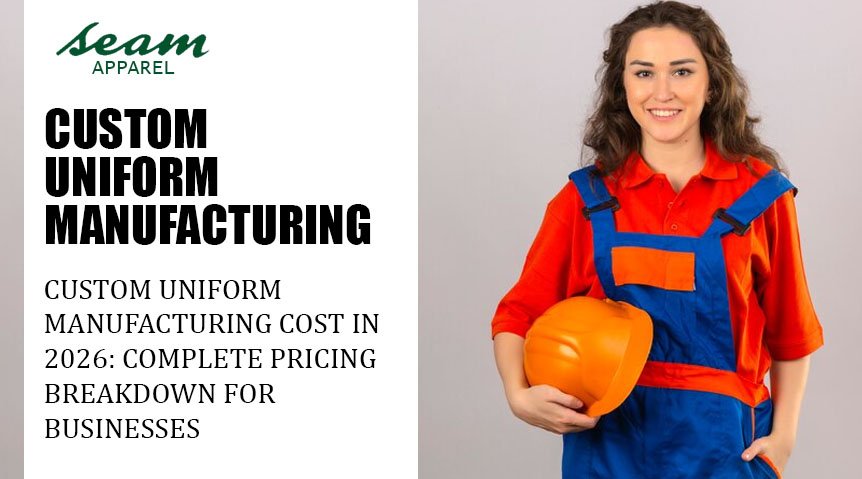
Uniforms are one of those purchases that look straightforward and are not in uniform manufacturing cost. A company with two hundred employees ordering polos for a brand refresh, a hospital kitting out three facilities, an industrial firm needing FR-rated coveralls — same product category, completely different cost structures. Buyers who do this well start by understanding what drives price before they ask for a quote. Working with an established uniform manufacturer who has done this across industries means walking into the conversation already knowing what is negotiable and what is not.
Fabric leads in uniform manufacturing cost. Whatever your industry, material is doing most of the heavy lifting in the budget. After that, design complexity, because a basic polo and a multi-pocket work jacket are entirely different jobs. Customization surprises most buyers; embroidery and printing add more than people expect when scaled across a full order. Industry requirements stack on top. Volume sets unit economics. And where you produce shifts the labour line in either direction.
Miss one of these in early planning and the invoice fills in the gap for you.
Polyester-cotton blends are the workhorse of corporate and service uniforms. Comfortable enough for an eight-hour shift, durable through daily washing, easy on the budget at $3 to $7 per yard. A 65/35 polyester and cotton blend is the standard spec for most office and hospitality programs, giving you wrinkle resistance from the polyester and breathability from the cotton. The right polyester and cotton blend is genuinely a balance question, not a cost question.
For structured pieces like trousers, blazers, and service jackets, twill fabric is the default. It holds shape, takes pressing well, and survives the laundering volume uniforms see. Quality twill fabric runs $5 to $10 per yard depending on weight, with industrial-grade twills costing more.
Then there are specialty categories. FR-rated fabric for industrial environments starts at $12 per yard. Antimicrobial fabrics for healthcare run $7 to $14. None of these are nice-to-have features in the industries that need them. They are often compliance requirements.
Custom Uniform Manufacturing Cost in 2026: Complete Pricing Breakdown for Businesses
A basic polo or work shirt runs $1.50 to $4 in labour per unit in uniform manufacturing cost. Multi-pocket work jackets, chef coats with functional details, or structured blazers climb to $5 to $10. Reinforced seams, bar-tacking at stress points, and proper pocket construction take time. The kind of factory producing 5,000 identical uniforms with consistent sizing across a run is doing real production engineering, not just stitching.
Labor cost shifts by region. South and Southeast Asia run lower than domestic or nearshore. The trade-off is lead time.
Embroidered logos are standard for most uniform programs in uniform manufacturing cost. A chest crest with moderate stitch count runs $0.80 to $2.50 per garment. Add a sleeve embroidery and you are at $1.50 to $4. A capable custom embroidery services operation gets stitch quality consistent across thousands of pieces, which sounds straightforward and is not. Custom embroidery for uniform programs must manage thread colour matching, backing material, and placement precision across multiple garment styles. That is where the cost comes from.
Screen printing is the cheaper alternative — figure $0.50 to $2 per garment depending on size and colours. The choice between methods is not strictly cost. Understanding screen print vs embroidery helps buyers make the right call for their environment. Screen print vs embroidery is not a one-size-fits-all decision — uniforms washed industrially Favor embroidery for durability, while light-duty hospitality programs can run printed graphics without problems.
Reflective tape for safety uniforms adds $1.50 to $4 per garment. Patches and badges have their own costs depending on construction method.
Healthcare uniforms in uniform manufacturing cost need antimicrobial fabric, colour-fast dye that survives industrial laundering, and construction that manages sterilization cycles in clinical settings. Hospitality emphasizes appearance and comfort. Corporate is mostly about brand consistency and fit accuracy across a generous size range.
Each industry stacks cost differently. None of the requirements are negotiable when the work demands them.
| Order Size | Estimated Per-Unit Cost (Basic Uniform Shirt) |
|---|---|
| Under 200 units | $10 to $16 |
| 200 to 500 units | $7 to $11 |
| 500 to 1,000 units | $5 to $8 |
| 1,000+ units | $4 to $6 |
Pattern development for a modern style runs $200 to $500. Two sample rounds add $300 to $600. International shipping and duties add another 10% to 15% on production cost. Most uniform programs run at volumes that absorb these costs comfortably, which is why bulk economics work specifically well in this category.
Sustainable uniform fabrics are getting real adoption from corporate buyers — recycled polyester, organic cotton blends, and lower-impact dye processes are showing up in RFPs more often than they did two years ago. Customization is also getting more sophisticated; brands are spending on detailed embroidery, branded packaging, and new-hire kits that double as brand merchandise. And smaller businesses now have real access to flexible MOQ uniform production, which was not true at the same scale three years ago.
Splitting orders across multiple smaller runs instead of consolidating annually. Specifying premium fabric where a mid-range option would do the same job. Adding embroidery to every piece in a multi-garment set when one piece would carry the brand effectively. Specifying retail-style packaging for uniforms that get distributed internally and never see a customer.
These add up faster than buyers expect when you are moving thousands of units.
A uniform program that fails inside a year is a much bigger expense than one specked properly from the start. Fabric that fades visibly after three months. Seams that come apart at stress points. Embroidery that loses thread under industrial wash. Employees notice. Customers notice. The brand image you bought the uniforms to support takes damage from the uniforms themselves.
Seam Apparel collaborates with corporate buyers, institutions, and uniform distributors on programs requiring consistent quality, durable fabric selection, and reliable delivery across full size ranges. Flexible MOQs make the process accessible for businesses of every scale. A capable uniform manufacturer manages fabric sourcing, compliance documentation, and embroidery consistency as one connected system, not three separate jobs to chase across vendors.
A basic uniform shirt at reasonable volume: $4 to $8 per unit before shipping. A structured piece with embroidery and branded packaging: $12 to $20. Industrial or specialty uniforms with compliance-grade fabrics: $18 to $35 depending on requirements. Get the spec right before placing the order and the budget reflects what the program needs. Skip that step and you find out the hard way which industry requirements you missed.
Introduction Towels are the quiet workhorse of home, hospitality, and retail. Nobody...

Leggings carry more weight than any other product in an activewear line....
A hat looks simply until you must specify one. Panels, sweatband, closure,...

Shorts sit in more categories than almost any other garment: gym, beach,...

Introduction A tank top is about as simple as clothing gets. Two...