Best Fabric Types for Hats: A Complete Guide for Brands
A hat looks simply until you must specify one. Panels, sweatband, closure,...
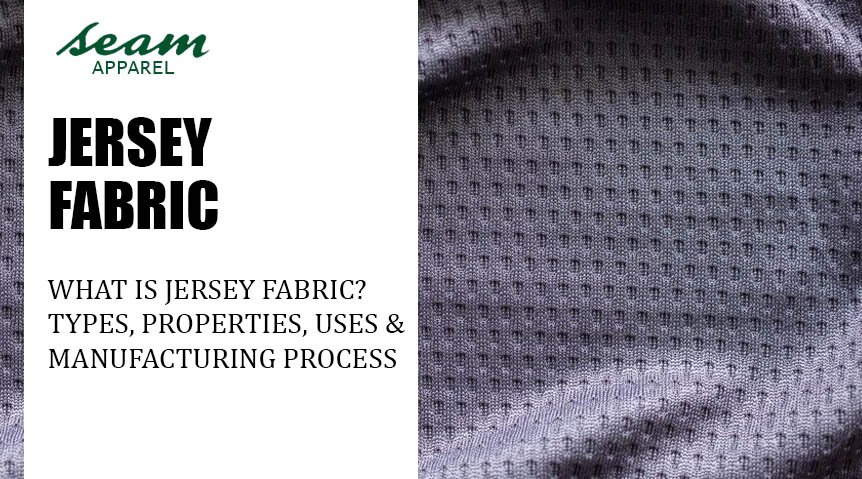
Jersey is widely known as a t-shirt fabric due to its soft and breathable structure. It is one of the most widely used materials in modern fashion. It is valued due to its smooth hand feel and natural stretch. And it’s everyday comfort. From casual T-shirt fabrics and loungewear to performance sportswear, it is used across a wide range of garments.
It is a knitted textile recognized for its flexibility and airflow. For designers and apparel manufacturers, jerseys are a practical fabric choice. It adapts easily to different fits and product applications. That also, without affecting comfort or wearability.
This guide covers jersey fabric in detail. We have included its structure, manufacturing process, types, benefits, and common applications in the fashion industry. And how Seam Apparel, a reliable private label manufacturer, contributes to it.
What Is Jersey Fabric?
Jersey is a type of knitted fabric that is made without the usual weaving method by employing a looped framework of yarn. It has natural elasticity, softness, and flowing drape due to its looping composition. Jersey fabric is widely studied in textile engineering due to its loop-based construction and mechanical stretch behavior.
Jersey knit fabric is more flexible than woven fabric, which is constructed using an interlaced cress cross pattern. Its stretchiness makes it a great fit for tailored and loose-fitting garments, especially widthwise.
Jersey is a popular fabric for clothing that needs to be soft and stretchy since its knit fabric construction provides this feature. It is often worn in T-shirts, dresses and everyday wear due to its comfortable feel and the amount of freedom of movement it allows.
The term ‘jersey’ is derived from the island of Jersey, between England and France. In ancient knitting, this was an area of great importance, as wool clothing was made by hand knitting with simple stitches. The original jersey fabric was wool and was designed more for functionality than fashion.
Jersey fabric was appreciated for its warmth, flexibility, and durability during its early days. Due to these characteristics, it soon made its way as a material for functional garments.
Initially, jersey fabric was used for:
These early applications highlight why jerseys were chosen for everyday necessity rather than style, as they offered:
Jersey fabric at this point was not a fashion fabric but a garment that was used daily.
As knitting machines and textiles improved in the late 19th and early 20th centuries, it became possible to use jerseys in non-utilitarian ways. As a naturally stretchy and movement-friendly fabric, designers started using jerseys for casual wear. It was a significant turning point from functional garments to comfortable fashion.
The growth of industrial textile manufacturing brought about an increased supply of and flexibility in Jersey. It became an integral part of the contemporary range of clothes in the mid-20th century, and was incorporated in regular clothes, sports clothes, and eventually in top-end fashion lines.
Jersey fabric, now, is not only limited to basic clothing. It is a fundamental fabric in both the high-end and mass-market fashion industries, due to its versatility and comfort.
Scuba Fabric Explained: Properties, Applications & Why It’s Trending in Modern Apparel
Jersey fabric is made with knitting, not weaving, and it has the characteristic of being stretchy and drapey. Jersey is a knit fabric, not woven, as it depends on the looped yarn construction. which is the opposite of making fabrics by crossing the yarns perpendicular to each other. Making it part of the knit fabric family.
Jersey fabric can be produced using different fiber types depending on end-use requirements:
Among these, cotton jersey fabric is widely preferred due to its natural softness, airflow, and skin-friendly characteristics. Blended variations are often used to improve:
Jersey fabric is typically made using a weft knitting technique, where a single yarn is fed horizontally across the fabric width to form interlocking loops.
In simple terms:
This loop-based construction is what differentiates jersey fabric from woven textiles. It also explains why Jersey has:
Most jersey fabrics are classified as single jersey knit fabric, meaning the fabric is created using a single set of needles, producing
This is a standard characteristic of single-knit construction and is not a defect but a structural property of jersey textiles.
The structure of jersey fabric is based on interconnected loops that form a flexible knit matrix.
Key characteristics of single jersey construction:
This structure is what makes jersey ideal for garments requiring comfort and movement, especially in categories like t-shirt fabric, loungewear, and lightweight activewear.
After knitting, jersey fabric undergoes several finishing treatments to enhance usability and performance:
In modern textile manufacturing, additional finishes may also include:
These finishing stages ensure the jersey fabric meets commercial garment production standards and maintains consistency across bulk manufacturing.
Different varieties of jersey fabric are used according to the needs of the garment
Commonly used for:
Used in:
Common in:
Commonly used in:
Jersey clothes are a popular option due to their performance and comfort properties:
It’s soft and skin-friendly, so it is great for wearing all day long. Also, it is a breathable fabric.
The knit construction provides natural stretch without the addition of synthetics.
Cotton jersey lets the air flow so body temperature can be regulated.
Jersey textiles are mostly lightweight, although higher weights are available for structured items.
The knit structure of single jersey fabric can lead to curling at the edges. It is a natural quality, not a flaw.
Jersey fabric is used in a variety of apparel categories, including:
Most popular application because of its permeability and softness. Seam Apparel is a T-shirt manufacturer. We can help you design the fits you want.
The natural drape makes the fabric great for both casual and fitted garments.
Stretch jersey is a popular material for:
Seam Apparel is a sportswear manufacturing firm, where we produce sports attire with stretch fabric.
Soft and comfortable, ideal for home and leisure wear.
Its silky feel makes it perfect for clothes worn next to the skin.
Jersey is a type of knit fabric, which is also made in varying structures and for different uses. All knit fabrics have the same fundamental concept of looped yarn construction, but the performance, thickness and stability of the knit fabrics will differ depending on the knitting method used.
Recognizing the distinctions aids designers and apparel producers in making the right cloth selection for garments based on their features, comfort, and durability needs.
Rib knit is created using alternating knit and purl stitches. This forms a distinct vertical rib structure.
Interlock knit is a type of double-knit fabric produced by interlocking two layers of single jersey knit.
French terry is a knit fabric with a looped interior and a smooth outer surface.
| Fabric Type | Structure Type | Weight | Stretch Level | Surface Texture | Common Uses |
|---|---|---|---|---|---|
| Jersey Fabric | Single knit (weft knit) | Light–medium | High | Smooth front, textured back | T-shirts, dresses, loungewear |
| Rib Knit | Vertical rib knit | Medium | Extremely high | Ribbed texture | Cuffs, collars, fitted garments |
| Interlock Knit | Double knit | Medium–heavy | Medium | Smooth both sides | Premium basics, structured apparel |
| French Terry | Loop-back knit | Medium–heavy | Medium | Smooth front, looped back | Sweatshirts, athleisure |
Among all knit fabrics, jersey fabric remains one of the most widely used due to its balance of:
This makes it particularly suitable for t-shirt fabric applications, everyday apparel, and soft casualwear collections. Especially where comfort and movement are primary requirements.
The selection of fiber and production methods plays an important role in sustainability.
Cotton and organic cotton jersey fabrics are more environmentally friendly, as they are biodegradable and derived from natural fibers. These options are widely used in responsible apparel production where breathability and end-of-life impact are key considerations.
Recycled polyester jerseys are another increasingly used option. It helps reduce dependence on virgin polyester and supports waste reduction by repurposing existing plastic materials into performance fabrics. However, it is still synthetic in nature and requires careful end-of-life management.
Blended jersey fabrics may improve performance characteristics such as stretch, durability, and shape retention, but they can reduce recyclability depending on fiber composition.
Fabric longevity is also a key sustainability factor. High-quality jersey fabrics that maintain shape, resist pilling, and withstand repeated washing reduce overall textile waste over time.
Responsible sourcing and controlled manufacturing practices further help reduce environmental impact across the supply chain, especially in large-scale apparel production.
Also, check our blog on: What Is Velvet Fabric? Properties, How It’s Made, and Where It’s Used
Jersey fabric plays a central role in modern apparel. Due to its balance of comfort, stretch, and versatility. The demand for knitted fabrics has always continued to grow globally. The knitted fabric market was valued at over USD 33.83 billion in 2025. It is widely used across casualwear, athleisure, and premium basics, where movement and softness are essential.
In everyday fashion, jerseys are a core material for T-shirts, dresses, loungewear, and sportswear. Its ability to drape naturally while maintaining comfort makes it suitable for both fitted and relaxed silhouettes.
In recent years, jerseys have also been adopted into elevated fashion categories. Designers use high-quality jersey fabrics in luxury casualwear collections. Due to their clean finish, adaptability, and refined texture when produced in heavier weights or premium blends.
The fabric’s role in activewear has also expanded. Particularly in garments requiring stretch recovery, breathability, and moisture comfort. This makes jersey a consistent choice across both mass-market and high-end fashion segments.
Overall, jerseys remain a foundational fabric in modern textile development, bridging everyday comfort with contemporary design requirements.
SEAM Apparel is dedicated to materials that provide comfort, durability and production quality you can count on. This method works best with jersey cloth.
Carefully selected fibers and controlled knitting processes guarantee:
Fit, stretch behavior, and fabric recovery are considered to meet the functional and aesthetic demands of clothes.
Jersey fabric is still one of the most essential materials in modern fashion. It is soft, flexible, and breathable. Thus, making it appropriate for a variety of apparel uses.
From basic t-shirts to high-tech sports gear, Jersey still offers comfort without compromising design. You can get your high-end outfit made from jersey fabric.
Brands and manufacturers need to know the different varieties of jersey fabric. Why? So, they can choose the best fabric for their product demands. As consumers seek comfort in their clothing choices, jersey fabric remains a staple in worldwide apparel manufacturing.
Learn more about fabric selection, manufacturing, and material performance to help you develop better quality apparel lines.
A hat looks simply until you must specify one. Panels, sweatband, closure,...

Shorts sit in more categories than almost any other garment: gym, beach,...
Introduction A tank top is about as simple as clothing gets. Two...
Most brands take weeks to develop their colour palette, packaging, and then...

You have spent months perfecting the fit, the fabric, the finish on...