Top 15 Custom Sweatshirt Manufacturers in the USA
Ask any founder what their best-selling product was in year two, and...
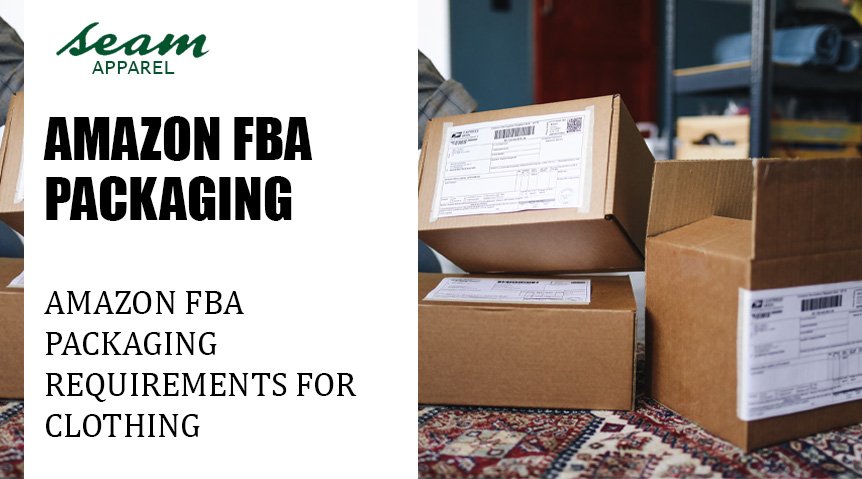
Amazon FBA packaging requirements for clothing come down to a few rules: fold each garment flat, seal it in a clear poly bag that is at least 1.5 mil thick, add a suffocation warning to any bag with an opening of 5 inches or wider, and make sure one scannable barcode sits on the outside.
Miss any of those and your inventory sits in a problem queue instead of going live. That hurts more now than it used to, because Amazon stopped fixing seller mistakes at the warehouse.
A bag without a warning label or a barcode stuck on a seam is your problem to solve, and the stock you pay for earns nothing while you sort it out.
The good news is that apparel packaging is predictable. Once your garments are folded, bagged, and labeled correctly, the same process works for every restock.
Here you will learn what Amazon expects, how the rules shift by garment type, the mistakes that cause the most delays, and a checklist for your production team.
Seam Apparel is a custom clothing manufacturer working with startups and growing brands, including sellers who ship into Amazon. We build the garments and handle packaging too, so your stock leaves the factory ready for the next step.
| Requirement | Why It Matters | Best Practice |
|---|---|---|
| Product protection | Stops dust, snags, and moisture damage in transit and storage | Fold flat, remove pins and clips, seal in a clear poly bag |
| FNSKU labels | Ties every unit to your seller account for tracking | Print from Seller Central, apply one per unit, check it scans |
| Poly bags | Keeps fabric clean and presentable at the customer’s door | Transparent, at least 1.5 mil, fully sealed, snug fit |
| Barcode placement | Warehouse staff scans without opening anything | Flat surface only, never on seams, corners, or curves |
| Suffocation warnings | Child safety rule tied to bag opening size | Print or label on any bag with a 5-inch or wider opening |
| Carton labels | Keeps shipments matched to your plan | Match carton contents to the shipment in Seller Central |
| Final inspection | Catches errors while they still cost nothing | Run a QC pass on folding, bagging, and labels before sealing |
Clothing needs three things before it ships to Amazon: clean folding, a sealed clear bag with a safety warning, and one barcode that scans on the first try.
Two policy changes reshaped how clothing brands prepare stock.
Amazon stopped offering prep and item labeling services for FBA shipments in the US store. That covers stock sent directly to FBA and stock moving through Amazon Warehousing and Distribution, Amazon Global Logistics, SEND, and the Supply Chain Portal. Bagging, boxing, kitting, and barcode labeling all moved onto the seller.
Amazon ended commingling, the practice of pooling identical units from different sellers under one manufacturer barcode. Resellers now must apply FNSKU labels, while brand owners enrolled in Brand Registry as a brand representative can use manufacturer barcodes for tracking. The cutoff applies when a shipment arrives, not when you create it.
Every unit must arrive correctly now because nobody at the warehouse will repair it for you. Shipments received after January 1, 2026, without proper prep and labeling also lose reimbursement eligibility if items are damaged or lost.
That makes the factory the smartest place to manage packaging. Your garments are already folded and inspected there, so bagging and labeling in the same pass costs far less than shipping bare stock home and prepping it yourself.
Since 2026, prep has happened before Amazon sees your stock. Managing it at the manufacturing stage saves the most time and money.
Amazon’s rules exist because clothing behaves differently from boxed products inside a warehouse.
Garments sit in open bins, pass through many hands, and ride conveyors. Loose fabric snags and collect dust within days.
Staff manage thousands of units per shift, and a barcode hidden in a fold stops the line.
A hoodie that arrives creased and dusty gets returned even when the stitching is perfect.
Two visible codes confuse the scanner and can send stock to the wrong listing.
You lose the sale and pay return processing. Better packaging cuts that number down.
Here are the core clothing packaging requirements Amazon FBA sellers deal with most. Specs do get updated, so confirm the current version in Seller Central before every production run.
Every garment ships as its own sellable unit. Nothing loose, nothing exposed.
At the time of writing, Amazon requires clear poly bags meeting minimum thickness requirements for many apparel items. Because these standards may change, they always verify the latest requirements in Amazon Seller Central before production.
Fold garments flat and pull out any temporary clips, pins, or stick-on size stickers before bagging. Position the fold so the size tag stays readable through the bag, which lets warehouse staff confirm the item without opening it.
The bag is also your dust barrier. Textiles collect dust quickly in a fulfillment center, and Amazon expects clothing to be sealed with no fabric exposed.
Each unit needs one scanning barcode on the outside where it is easy to reach. Apply it to a flat, clean surface and keep it off seams, corners, and curved areas.
The barcode either shows clearly through the bag or goes on the outside of the bag. For soft garments, the outside is safer, because fabric shifts in transit and a label under the film can end up buried in a fold.
If the garment already carries a visible manufacturer barcode, cover it completely. You can place the FNSKU directly over it or put a blank opaque sticker down first. Amazon’s scanners should only ever read one code.
Your own branding works differently. Neck labels, hem tags, and hang tags stay in the garment as part of your private label identity. Amazon’s barcode goes on the packaging, never over your branding.
This one catches new sellers constantly. Any bag with an opening of 5 inches or more, measured flat, needs a printed suffocation warning in a legible size. Required font size scales with the bag’s combined length and width, so larger bags need larger print.
That threshold covers all adult apparel since a folded t-shirt bag is well past 5 inches. Treat the warning as standard on every clothing order instead of checking case by case.
Printed on the film beats a stick-on label, because labels peel and a peeled warning is the same as no warning. The wording is not fixed to one exact sentence, but it needs to tell buyers to keep the plastic away from babies and children and out of cribs and beds.
A two-piece set or multipack is one sellable unit with its own FNSKU, and the barcodes on the individual items inside must be covered or removed. Mark the outer bag clearly with wording such as “Sold as Set” or “Do not separate.”
Skip this, and the warehouse may split your tracksuit into a top and a bottom on two different listings.
Standard FBA cartons stay under 25 inches on the longest side and under 50 pounds unless a single oversize unit exceeds that on its own. Cartons over 50 pounds need a Team Lift label, and over 100 pounds a Mechanical Lift label. Use new corrugated boxes, tape them properly, and fill empty space so garments do not slide. Carton contents must match your shipping plan.
Clear bag, sealed edge, suffocation warning, one flat barcode, contents matching your shipment plan. Get those five right, and most FBA apparel problems disappear.
The base rules apply to everything, but garment weight, bulk, and buyer expectations change how you prep each one.
The easiest category. Fold flat, bag, label. Keep the fold tight so the bag stays snug and the size tag stays visible. High volume means small errors multiply fast, so a repeatable t-shirt folding standard pays for itself.
Bulk is the challenge. A loosely folded hoodie or sweatshirt needs an oversized bag, which raises dimensional weight and your fees. Fold the hood flat against the back panel and keep drawcords inside the fold, not press against the seal.
Stretch fabrics wrinkle less but snag more. Bag leggings and activewear with no hardware or trims pressing against the film. Compression fabrics also look thin in a loose bag, so a close fit presents better.
Easy to over-bag. Use a bag close to the folded size, not a leftover shirt bag from another run.
Heavy and stiff. Some styles need a thicker bag than the 1.5 mil minimum to hold the weight without splitting at the seal. Close zippers fully so the pull does not scratch the film.
Extra caution here. Beyond Amazon’s rules, children’s apparel carries safety obligations covering drawstrings, small parts, sleepwear flammability, and testing certificates. Confirm current requirements with the Consumer Product Safety Commission before you produce, because these apply wherever you sell.
Buyers expect sealed, untouched packaging. Individual bagging is standard, and many brands add branded sleeves for a retail feel.
Heavier prints and numbers. Fold with the print facing outward and avoid pressing print against print in long storage, which can cause transfer on some inks.
One packaging spec does not fit every garment. Match bag size and thickness to the folded product, not to whatever bags you have left over.
These are the errors that turn a routine restock into a two-week delay.
Each of these costs you the same three things: queue time, inventory that cannot sell, and momentum on a listing that was ranking.
Run these eight steps in order on every production batch.
Write this down as a one-page SOP and keep it on the packing table. Consistency beats memory every time.
This gets missed often, and it is a manufacturing responsibility, not an Amazon one.
US law requires textile labels to identify fiber content, country of origin, and either the company name or the Registered Identification Number of the manufacturer, importer, or the firm managing the product. Country of origin must appear on the front side of the label.
Care instructions matter too. Fiber content, country of origin, manufacturer identity, and care instructions are the four things required on apparel sold in the United States. A care label needs at least one safe cleaning method plus any warnings, in wording buyers can follow.
These labels must stay attached until the garment reaches the customer, which is why they get sewn or heat transferred in during production rather than added later.
Getting this right at the factory saves you from thousands of units packaged perfectly for Amazon and still not legal to sell. Check the FTC’s current guidance for your fabrics, since wool, leather, and fur carry extra rules.
Seam Apparel is a manufacturer, not an Amazon service provider. What we do is build your garments and prepare them, so packaging is already managed when your stock leaves the factory.
Our production work covers:
We work with low MOQs, which matters when you are evaluating a listing before committing to a full run.
Barcode and FNSKU application can be arranged as part of your packaging spec. Talk to our team so we can confirm what fits your order before you place it.
A perfectly stitched hoodie in a torn bag with a smudged label is still an unsellable unit.
Manufacturing decides whether customers keep the product. Packaging decides whether it reaches them at all, and in what condition. Treat packaging as an afterthought, and you pay twice, first in delays and then in returns.
When both happen in one facility, you also get one team accountable for the finished unit, instead of finger-pointing between a factory and a separate prep provider.
Ask about these nine things before you commit to a supplier.
Seam Apparel was built around this, with startup-friendly order sizes, in-house customization, and packaging support in the conversation from the first quote.
Packaging errors are cheap to prevent and expensive to fix. Managing them at the manufacturing stage means your stock leaves the factory folded, bagged, labeled, and inspected, instead of arriving as a weekend of rework.
Request a Manufacturing Quote and tell us what you are building, or talk to an apparel manufacturing specialist at (323) 925-2859 to walk through your packaging spec on a call.
Amazon’s packaging and prep requirements can change. Always confirm current specifications for your ASINs in Amazon Seller Central before every production run.
Clothing sold through FBA must be folded, sealed in a clear poly bag of at least 1.5 mil thickness, and labeled with one scannable barcode on the outside. Bags with an opening of 5 inches or wider need a printed suffocation warning. No fabric should be exposed, and the size tag should stay readable through the bag.
All of them do. Amazon calls out apparel as a category that needs transparent poly bags with suffocation warnings, because fabric collects dust and damages easily in a fulfillment center. Check the prep guidance for your ASIN in Seller Central, since requirements differ between products in the same category.
An FNSKU is Amazon’s own barcode that ties a unit to your seller account and listing. You print it from Seller Central and apply one to every sellable unit. Since the commingling change on March 31, 2026, resellers must use FNSKU labels, while brand owners registered as brand representatives in Brand Registry can use manufacturer barcodes.
Since January 1, 2026, Amazon no longer prep or labels units for sellers in the US, so mistakes do not get fixed at the warehouse. Non-compliant shipments risk rejection, returns, delayed check-in, or stranded inventory, and units are not eligible for reimbursement if they are damaged or lost.
Yes, and it is usually the cheapest point in the chain to do it. Your garments are already folded and inspected at the factory, so bagging and labeling in the same pass avoids handling stock twice. Agree bag specs, warning text, and label placement in writing before production starts.
Yes. Private label production is one of our core services, covering custom neck labels, care labels, hang tags, and branded packaging alongside the garment. We work with startups launching a first collection and brands scaling existing lines.
Yes. Packaging and labeling are built into our production process, including poly bagging and retail-ready packing. Speak to our team about barcode and FNSKU application so we can confirm what is available for your order size.
Our minimum order quantities are low and flexible, which suits brands evaluating a product before scaling. Exact numbers depend on the garment, fabric, and customization, so ask for a quote on your style.
Lead times depend on garment complexity, fabric availability, order size, and customization. Sampling, bulk production, and shipping each carry their own timeline, so ask for all three separately when you request a quote and plan your restock dates around them.
Yes, and many do. The main barriers are minimum order quantities and packaging compliance, which is why a manufacturer with low MOQs, and in-house packaging support makes the first launch far less risky. Start small, validate the listing, then scale.
Fold flat, bag clear, label once. Every garment ships as its own sellable unit in a transparent poly bag of at least 1.5 mil, sealed with no fabric exposed, carrying one scannable barcode on a flat surface.
Suffocation warnings are not optional. Any bag with an opening of 5 inches or wider needs a printed warning, and that covers all adult apparel. Buy pre-printed bags and treat them as standard on every order.
2026 changed the rules. Since January 1, Amazon no longer prep or labels units for US sellers. Since March 31, commingling is gone, so resellers must apply FNSKU labels while brand-registered owners can use manufacturer barcodes. Mistakes now cost you queue time, lost sales, and reimbursement eligibility.
Match the packaging to the garment. A hoodie, a pair of leggings, and a jacket do not prep the same way. Bag size and thickness should fit the folded product, not whatever bags are left over from the last run.
Do the legal labels at the factory. Fiber content, country of origin, manufacturer identity, and care instructions are required by US law and must stay attached until the garment reaches the customer, so they get sewn or heat transferred in during production.
Run the checklist every time. Inspect, fold to spec, remove hardware, bag, confirm the size tag shows, apply the FNSKU, evaluate the scan, then pack and label cartons to match your shipping plan. A one-page SOP on the packing table beats memory.
Manage packaging where the garments are made. Stock that leaves the factory folded, bagged, labeled, and inspected saves you a weekend of rework and keeps a ranking listing from stalling.

Ask any founder what their best-selling product was in year two, and...

Introduction Towels are the quiet workhorse of home, hospitality, and retail. Nobody...

Leggings carry more weight than any other product in an activewear line....
A hat looks simply until you must specify one. Panels, sweatband, closure,...
Shorts sit in more categories than almost any other garment: gym, beach,...