How to Choose the Right Fabric for Towels: Full Guide
Introduction Towels are the quiet workhorse of home, hospitality, and retail. Nobody...
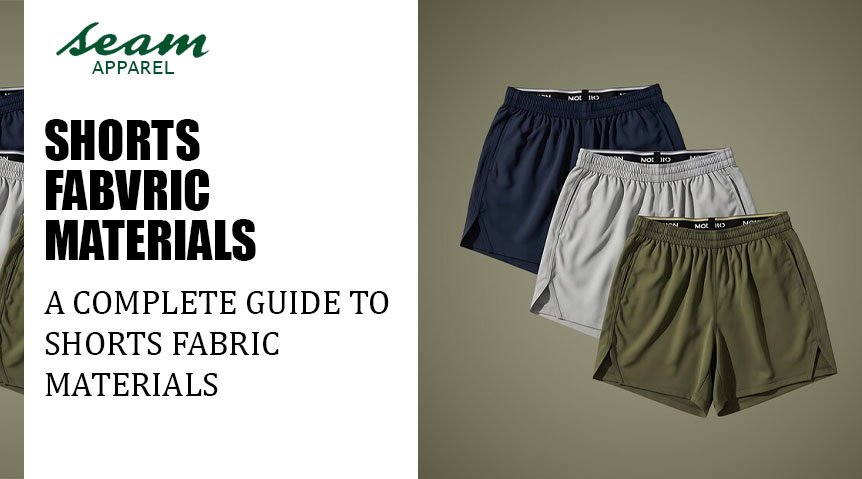
Shorts sit in more categories than almost any other garment: gym, beach, street, resort, lounge. That range is why contemporary brands underestimate them. A running short and a chino short share a rough pattern shape and almost nothing else, and the entire difference lives in the cloth. Ask established shorts manufacturers working with US labels and you hear the same advice on the first call: choose the fabric, then design around it. This shorts fabric guide covers the shorts fabric materials that matter, what each one does well, and where the wrong pick quietly eats your margin.
Fabric decides four things before a single stitch happens.
“Every section of this fabric short guide comes back to those four.”
The core types of shorts fabric are fewer than most supplier catalogs suggest.
Category drives the choice, not personal preference. The types of shorts fabric that suit each use case differ far more than the silhouettes do.
“The best fabric for shorts is simply the one that matches how the customer will wear them.”
Weight is the most underrated variable in shorts manufacturing fabrics. It changes comfort, durability, and price at the same time, and it shows up on every clothing manufacturing cost sheet you review. Two pairs of shorts in the same fiber at different weights are genuinely assorted products, and buyers notice.
Fitted and athletic shorts need stretching but stretching alone is not the goal. Recovery is. A fabric that stretches and returns holds its shape after fifty wears. One that stretches and stays stretched becomes a returns problem. Read elastane percentage and recovery rate together and check the seat and knee on a worn sample, not a flat swatch.
Cotton absorbs moisture and holds onto it. Polyester and nylon push it to the surface where it evaporates. For sports lines, that specific property decides the category, which is why moisture control is where the best fabric for shorts gets settled. Ventilation stacks on top: open mesh panels, laser perforation, loose weaves near the hem. Among shorts manufacturing fabrics, performance knits earn their premium here and nowhere else.
Fabric is one of the largest single line items on any short cost sheet, so it moves landed price more than trims or packaging ever will. Not all types of shorts fabric sit in the same price band.
| Fabric | Breathability | Durability | Relative Cost |
|---|---|---|---|
| Cotton | High | Moderate | Budget |
| Polyester | Moderate | High | Budget |
| Cotton-poly blend | High | High | Mid |
| Poly-spandex | Moderate | High | Mid |
| Nylon | Moderate | Extremely high | Premium |
| Fleece | Low | Moderate | Mid |
A forty cent per yard upgrade looks trivial on a swatch card and stops looking trivial at volume. Brands evaluating a first run with low MOQ clothing manufacturers should price two shorts fabric materials side by side before committing, not after.
Organic cotton, recycled polyester, and recycled nylon are all available at commercial volume now, and US retail buyers ask for them by name. Certified and recycled inputs have become standard options in fabric sourcing for clothing brands, covering most mainstream clothing shorts materials. They cost more per yard and carry certification paperwork. The payoff is a claim you can defend on a hangtag. Only make the claim if the documentation backs it.
Decide the decoration method before the fabric. Reversing that order is how brands end up with cracked prints on the wrong base cloth. Decoration is part of custom apparel manufacturing, not something bolted on afterward.
“Answer those five honestly and you will have found the best fabric for shorts in your range.”
Seam Apparel works with US brands from Swatch Stage through delivery. That includes firsthand fabric sourcing for clothing brands, access to a wide range of shorts manufacturing fabrics, sampling, and testing so decisions get made on real garments, cost optimization across weights and blends, and full custom apparel manufacturing under one roof. Product development and sampling run alongside production planning, so fabric decisions and clothing manufacturing cost decisions happen together instead of in sequence.
Fabric is the product. Distinct categories demand different shorts fabric materials, and blends usually win because they balance what pure fibers cannot. Treat this shorts fabric guide as a filter rather than a rulebook: define the use case, test properly, check the numbers. Then choose among shorts manufacturers the one who will tell you when your favorite fabric is the wrong call.
Introduction Towels are the quiet workhorse of home, hospitality, and retail. Nobody...

Leggings carry more weight than any other product in an activewear line....
A hat looks simply until you must specify one. Panels, sweatband, closure,...
Shorts sit in more categories than almost any other garment: gym, beach,...
Introduction A tank top is about as simple as clothing gets. Two...