Top 15 Custom Sweatshirt Manufacturers in the USA
Ask any founder what their best-selling product was in year two, and...
Today’s consumers are not just trying your product on; they are looking at the packaging box that it comes in. The transition has made sustainable packaging for apparel a top trend in fashion, in addition to fabric procurement and fit. Compostable mailers, kraft paper and reusable totes are not trendy anymore, they are markers that say what a brand is about. For apparel businesses exploring custom apparel packaging, the real question is not whether to go green, it is how without blowing the budget or diluting the brand experience. This guide breaks down the materials, costs, and trade-offs involved.
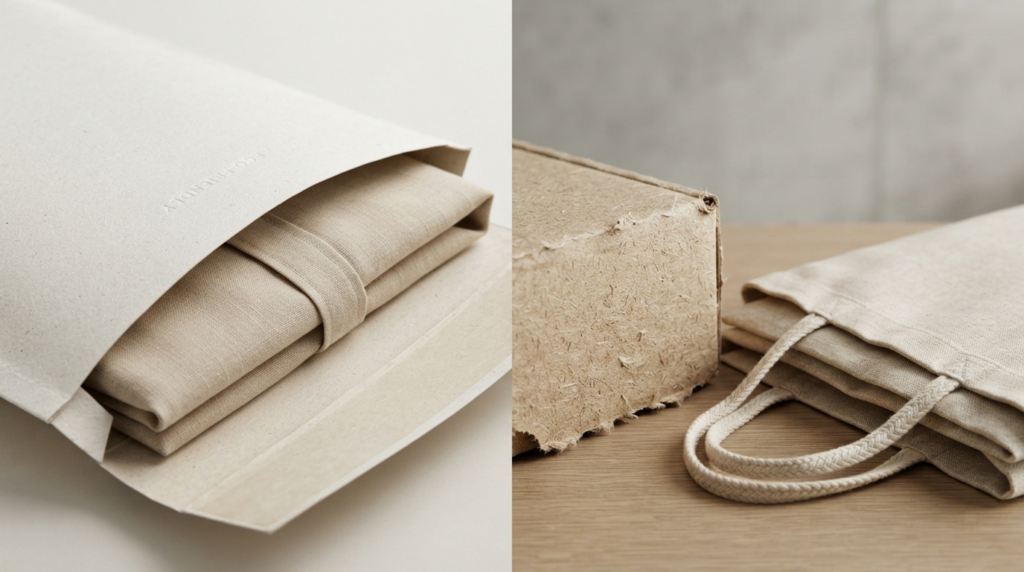
Eco-friendly packaging is packaging designed to reduce environmental impact throughout its lifecycle, from sourcing, manufacturing and use to disposal. This includes all biodegradable mailers, recycled cardboard, and reusable fabric bags! The aim is a tangible reduction in waste sent to landfill and emissions of CO2, not a perfection. Eco friendly apparel packaging is the use of recyclable, compostable, or re-usable packages for most brands while maintaining the different products’ protective integrity along the supply chain.
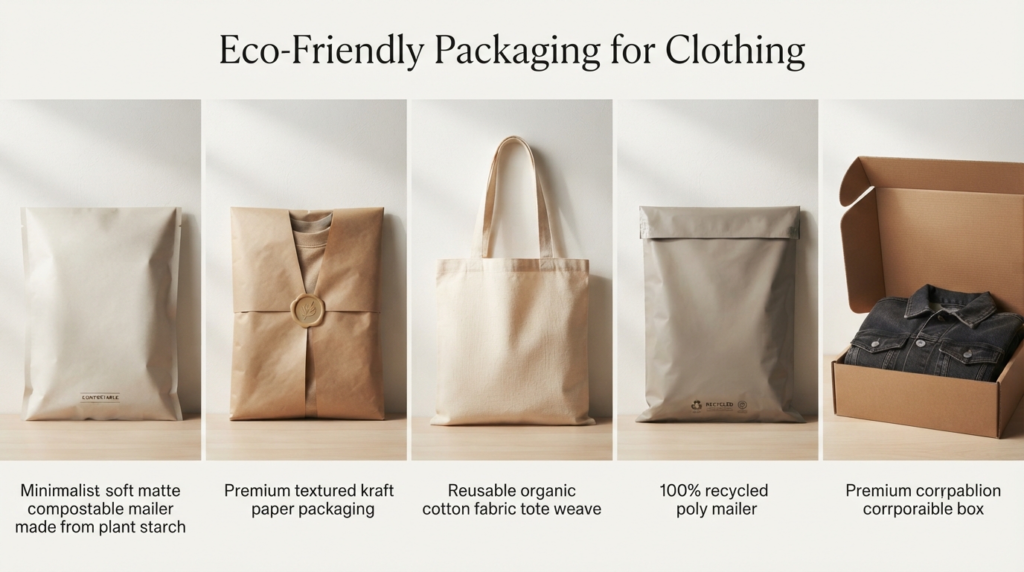
There are five common options that most brands have, each with its own set of pros and cons:
The best choice typically depends on the weight of the product, distance to shipping point, and your desire to control the unboxing experience.
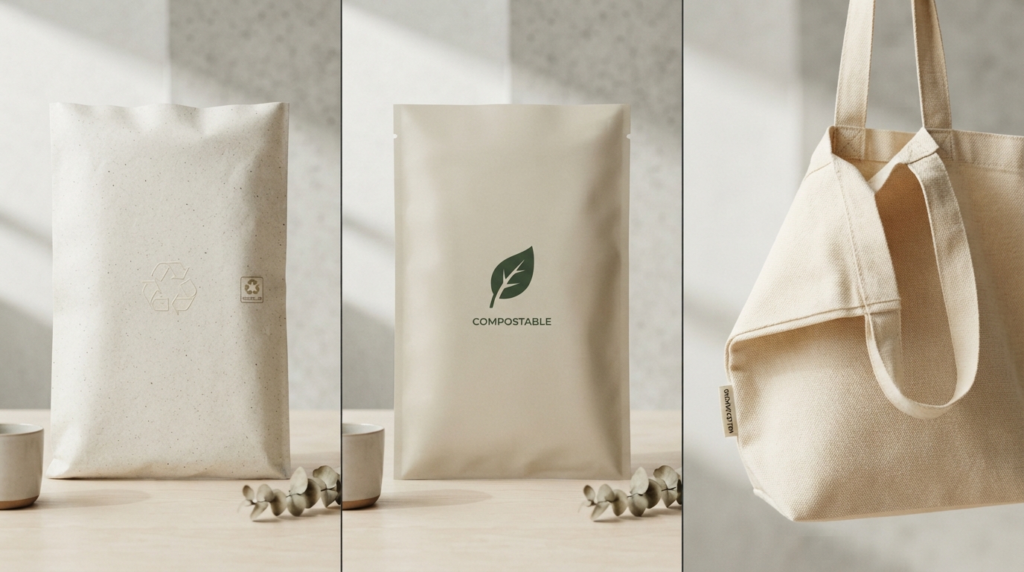
The farther a material moves sustainability, the higher the cost:
The three things that will really affect the closing price are the location where the material is being sourced, its durability required for transportation and its ability to absorb the branding without additional coatings or liners.
A quick side-by-side of the five packaging types covered above, to make trade-offs easier to scan:
| Packaging Type | Relative Cost | Sustainability Level | Best For |
| Recycled poly mailers | Low | Moderate | Lightweight e-commerce shipping |
| Kraft paper packaging | Moderate | High | Premium unboxing, retail display |
| Corrugated cardboard boxes | Moderate | Moderate-High | Structured products (jeans, jackets) |
| Compostable mailers | High | Very High | Brands prioritizing biodegradability |
| Fabric bags (reusable) | High upfront, low over time | High (long-term) | Reusable packaging as a marketing touchpoint |
Printed logos, custom inks, and final changes all come at an added cost but also provide an added value. While minimalist designs do not require a large unit cost, they can certainly communicate intent; embossing and foil stamping are premium finishes that add a bit more to the unboxing moment. Having a consistent branding on the custom clothing packaging can also help improve the repeat purchase rate, as the packaging is a part of the product experience and not an afterthought. This is also where private label clothing manufacturing partners earn their keep, aligning trims, labels, and packaging under one cohesive identity.
E- For e-commerce brands, packaging should be optimized for shipping—lightweight, durable, and economical per shipment. Retail brands must create packaging that performs on display and maintains its appearance in store lighting. Premium sustainable materials are in high demand for luxury brands as the packaging is the expression of the premium Ness. Each model carries different cost and design priorities, which is why brands running cut and sew manufacturing alongside custom packaging tend to plan both decisions together rather than treating them as separate budgets. Getting this alignment right early avoids costly repackaging redesigns later, and it keeps your clothing brand packaging solutions consistent as you expand into new channels.
Low minimum order quantities lead to higher per unit packaging costs, as too few units to justify tooling and setup. The more you can buy, the lower the per unit price, as much as 30-50 percent less per unit depending on the material. Custom packaging always requires a minimum quantity, so brands still finding their footing should budget for low MOQ manufacturing early rather than discovering the constraint mid-order.
In addition to packaging material costs, allow for design and development, samples and tests until approval, inventory space, and shipping weight, which adds up unexpectedly, and is an unobtrusive freight cost on thousands of units. The durability and shelf-life testing of biodegradable packaging for fashion brands can also involve an additional sampling round before bulk approval. These costs are not necessarily reflected in the initial supplier’s quotation, but they can quickly mount upwards.
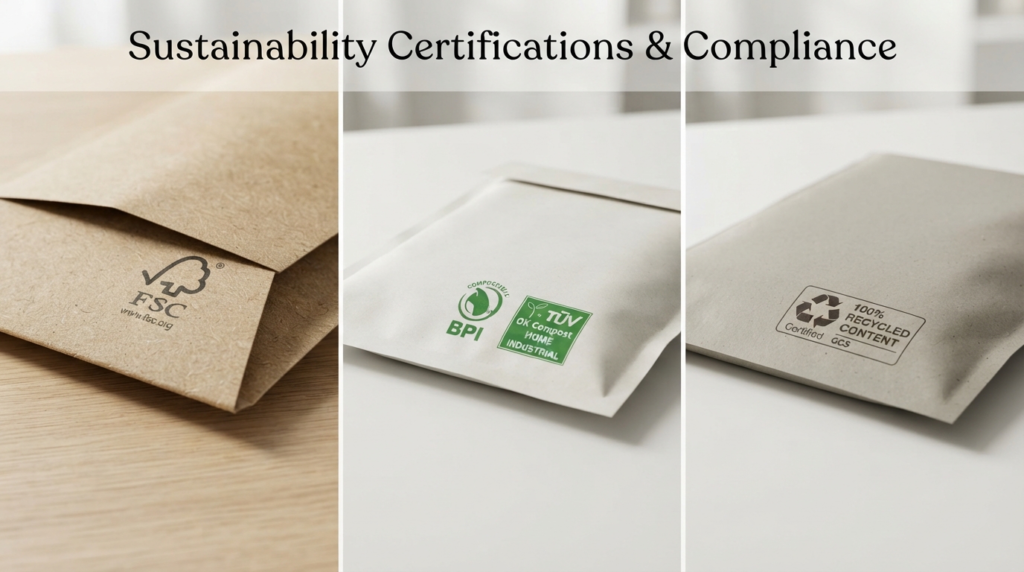
All these certifications create a layer of trust, and a layer of cost. While certifications can also add to the supplier selection process, they can also help prevent greenwashing claims in the future. When third-party certification is an integral component of the label’s marketing of the green packaging, it can make all the difference between an actual claim and a catchy slogan. Common certifications and compliance markers to look for include FSC, BPI, TÜV Austria, recycled content verification, EPR regulations, and local recycling standards:
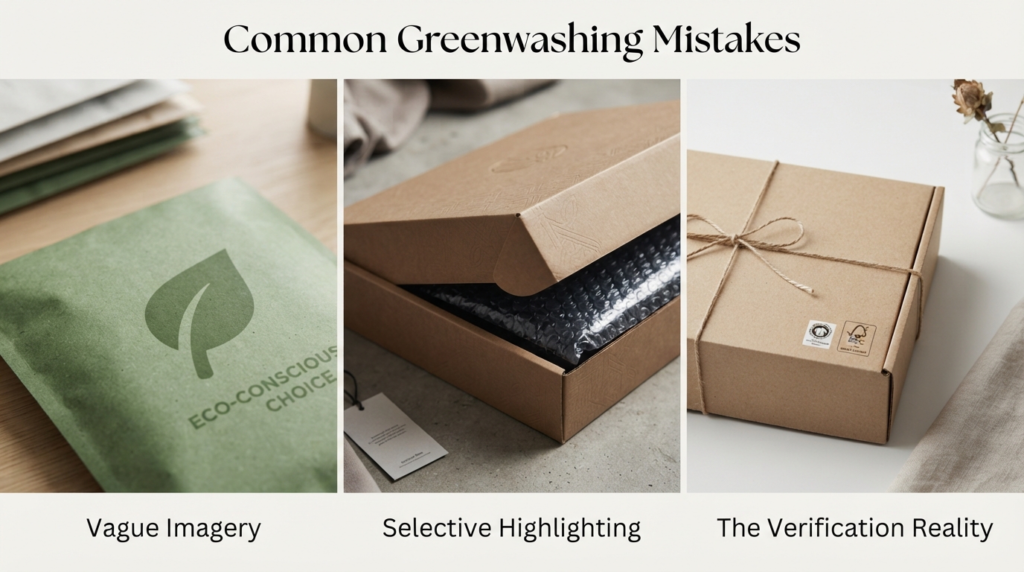
Certifications exist because “eco-friendly” claims are easy to make and hard to verify. Knowing the common mistakes helps brands avoid them, whether the misstep is intentional or not:
As materials continue to get better and prices lower, plastic free packaging is gaining momentum. There are more direct-to-consumer reusable packaging systems, particularly for repeat customers. The minimalists have remained the message very much and the reason are that they are cheaper and they look better in photos for social media. There has also been an increase in transparency around the sustainability claims made by brands: there are more brands that publish exactly what their sustainable fashion packaging contains, and that it breaks down.
Keep designs simple rather than layering on unnecessary print runs. Choose materials that are widely available instead of exotic, hard-to-source options. Optimize box and mailer size to the actual product dimensions since oversized packaging wastes both material and shipping cost. Order in bulk when cash flow allows and resist the urge to over-package a product that does not need it.
Moving to sustainable packaging works best as a deliberate process rather than a single swap. Use this checklist to work through the switch step by step:
Fully sustainable packaging always costs more upfront. But the long-term return shows up in brand loyalty, repeat purchases, and fewer returns tied to damaged goods. The brands that get this balance right treat sustainable fashion packaging as an investment in customer retention, not just a line item on a packing slip.
Seam Apparel works alongside clothing brands to source sustainable materials, manage custom branding, and optimize costs across bulk production runs. That support starts with guidance on which custom clothing packaging options fit your product line, then extends into sourcing, sampling, and integration with your existing clothing manufacturing process. Whether you are refining an existing line or are ready to start a clothing brand from scratch, having packaging and production under one roof removes a lot of the guesswork that usually slows brands down.
Eco-friendly packaging is not optional anymore; it is becoming table stakes for any clothing brand that wants to be taken seriously by today’s buyer. What it costs depends on your materials, your customization choices, and your order volume, but the return shows up in trust, loyalty, and a brand story customer want to share. Sustainable packaging for clothing brands works best when it is treated as part of the product, not an afterthought bolted on at the end. The right manufacturing partner helps you land on fashion packaging solutions that balance cost, quality, and genuine sustainability, so growth does not come at the planet’s expense.
Ask any founder what their best-selling product was in year two, and...
Introduction Towels are the quiet workhorse of home, hospitality, and retail. Nobody...

Leggings carry more weight than any other product in an activewear line....
A hat looks simply until you must specify one. Panels, sweatband, closure,...
Shorts sit in more categories than almost any other garment: gym, beach,...