Custom Apparel Packaging Best Practices for Startups
By Christina on August 21, 2026
You have spent months perfecting the fit, the fabric, the finish on your first collection. Then it shows up in a flimsy poly bag with no branding at all, and the first impression is nothing. That is the gap smart custom apparel packaging closes. Online shopping strips away every physical touchpoint a brand gets with a buyer, so the box, the bag, the card inside, that is your handshake. Getting clothing packaging for startups right does not take a big budget. It takes the right materials, a couple of smart branding calls, and a setup that can grow without forcing a redo six-month in. Get it right early and packaging quietly becomes a driver of customer retention and brand perception, the kind of first impression that turns a one-time buyer into a repeat customer.
Why Packaging Matters for Startups
People remember how unboxing felt more than what your product description said. A package that is thought through builds trust before anyone has tried the garment on, and it is often the difference between someone posting a video and someone just scrolling past. For U.S. DTC and e-commerce apparel brands competing for attention in crowded feeds, packaging might be the only physical contact you ever get with a customer, so it deserves a real spot in your ecommerce clothing packaging strategy, not a last-minute decision.
Types of Custom Apparel Packaging
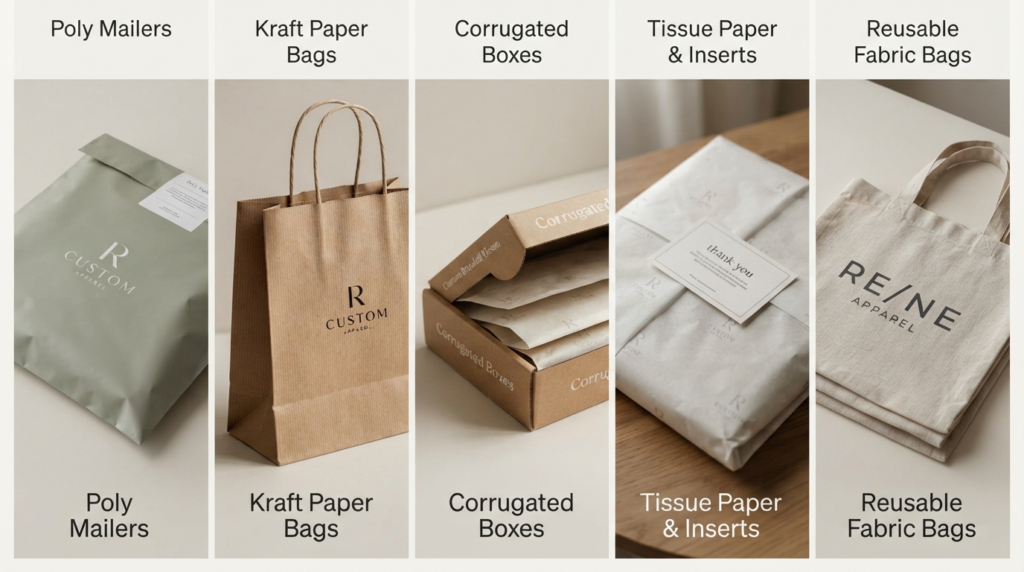
Not every startup needs the same setup. Here is roughly where each one fits.
Poly Mailers: Cheap, light, and fine for basics you are shipping in bulk.
Corrugated Boxes: Sturdier, and it reads as more premium for gift sets or higher price points.
Tissue Paper and Inserts: Small, inexpensive touches that carry a lot of the unboxing moment.
Reusable Fabric Bags: Pricier upfront, but customers genuinely hang onto and reuse these.
Most brands land on one or two of these fashion packaging ideas, not all five. Pick based on price point, not what looks best on a mood board.
Packaging Material Selection
Choosing materials is not about finding a single “best” option. It is about matching four things: durability, where you are positioned on price, how much your buyers care about sustainability, and what shipping demands. A premium streetwear label and a basic tee startup will land on different answers, and that is fine. Talk to your custom apparel manufacturing partner early so material choices match what your margins can support, not what you fell in love within a sourcing catalog.
A few examples make this concrete. A basics label shipping heavyweight hoodie in bulk usually does fine with a sturdy poly mailer, since the fabric does not need extra protection and a lighter mailer keeps shipping cost down. A streetwear brand selling graphic tees at a premium price point might upgrade to a printed kraft mailer or a small, branded box, since the packaging itself signals the price point before the customer opens it. A brand shipping into humid or rainy regions might prioritize water-resistant poly over kraft paper, since a soggy box does more brand damage than a plain one ever would. The goal is not to copy any single example, it is to run the same four-factor check, durability, price positioning, sustainability expectations, and shipping conditions, against your own product and customer base.
Branding & Customization
A logo print, a considered color choice, a thank you card that does not feel copy-pasted, none of this cost much next to what you are already spending on garments, but they do more for brand recall than most founders expect. Fold packaging into your product development and sampling phase instead of bolting it on afterward, and your first shipments already read like branded packaging for clothing brands rather than a work in progress.
Cost Considerations for Startups
Packaging costs tend to show up in four places founders forget to budget for: setup, printing and branding, minimum order requirements, and storage. None of those lands on a fabric spec sheet, but it adds up fast. Build packaging into your real clothing manufacturing cost from the start, and your pricing will hold up once volume increases. Each of these hits margin differently. Setup fees are a fixed cost that gets diluted as order size grows, so they hurt small first orders the most. Printing and branding costs scale with complexity, a single-color logo protects margin far better than multi-color art or foil finishes. Minimum order requirements force cash outlay before revenue exists, tying up capital that could otherwise fund inventory or marketing. Storage costs are the easiest to ignore, but packaging sitting in a warehouse you are paying for quietly eats into margin on every unit that has not shipped yet.
Packaging Type
Typical Cost per Unit
Best Use Case
Poly Mailers
Low
Everyday shipping, basics
Kraft Paper Bags
Low to mid
Casual, eco conscious brands
Corrugated Boxes
Mid to high
Premium or gifted items
Reusable Fabric Bags
High
Sustainable, premium lines
MOQ & Scalability
Packaging minimums catch people off guard more often than you would think; sometimes the minimum on boxes runs higher than the minimum on the garments themselves. Look for low MOQclothing manufacturers and packaging suppliers built for early-stage volume. Order a batch you can realistically sell through in a few months, then upgrade materials or add final changes once real sales data tells you what is working. MOQ affects margin in the opposite direction from the costs above: order too small and you miss the supplier’s bulk-price break, sometimes paying 30-50 percent more per unit, which eats straight into gross margin before you have sold a single item. Order too far above what you can realistically sell, and that per-unit savings turns into cash tied up in storage instead of in your margin. The healthiest range usually sits close to what a few months of realistic sales can move.
Eco-Friendly Packaging Options
Going green here does not have to blow the budget. Recyclable mailers, biodegradable filler, and just using less packaging overall cut waste without making the unboxing feel cheap. Real eco-friendly apparel packaging usually comes down to restraint, using material more carefully, rather than paying a premium for a “sustainable” label. For brands courting conscious shoppers, this happens to be one spot where the ethical choice and the smart business choice line up.
A closer look at the main options, and what each one trades off:
Recyclable Materials: Recycled-content poly mailers, kraft paper, and cardboard are widely accepted by curbside recycling programs, but only if a customer’s local facility processes them. Sticking to a single print color and skipping laminated coatings or foil helps keep an otherwise recyclable mailer recyclable.
Biodegradable Materials: Compostable mailers and biodegradable filler break down without leaving microplastics behind, which appeals directly to sustainability-minded shoppers. They typically cost more per unit and have a shorter shelf life than plastic or paper alternatives, so it is worth evaluating a small batch before committing to a full switch.
Minimalist Packaging: The most dependable eco upgrade is often simply using less, skipping unnecessary inserts, right-sizing boxes to the product instead of over-boxing, and removing a layer of packaging altogether. It cuts material cost and environmental impact at the same time, with no trade-off to weigh.
Sustainability Tradeoffs: Greener materials rarely win on every dimension at once. Compostable mailers are pricier and less durable in transit, recycled poly is affordable but still plastic-based, and reusable fabric bags are the most sustainable long-term but carry the highest upfront cost. The right call depends on which tradeoff your customer base cares about, not on picking whichever option sounds greenest on paper.
Common Packaging Mistakes Startups Make
The largest one: investing in packaging and before anyone has proven that they want the product. Founders then tend to overlook the impact that packaging weight has on shipping costs, they start compromising on packaging materials that are prone to damage during transit, or they over design something that just needs to be clean. Working with experienced low MOQ clothing manufacturers early tends to catch most of this before it turns into an expensive lesson.
Best Practices for Startup Apparel Packaging
Beware of doing too much at once; give yourself opportunities to expand your efforts. Spreading budget across every material and finish at once makes it hard to tell which change moved the needle.
Make sure you master the fundamentals of branding first, then add some bells and whistles. A consistent logo and color story does more for recognition than one flashy finish that is not backed up by the rest of the packaging.
Watch size and weight – shipping costs can really add up. An oversized box or a heavier mailer can quietly turn a healthy margin into a thin one before the product inside is even accounted for.
Evaluate a small batch first, before ordering in bulk. It catches a durability issue or a branding mistake while it only costs a few hundred units instead of a few thousand.
Do not use a mood board to determine the style – let your real audience determine it. Packaging that looks right to a founder does not always match what gets customers to post, save, or reorder.
Do not make packaging an afterthought, but an integral part of product development and sampling; the problems can be caught early when it is easier to rectify.
How to Balance Cost vs Brand Experience
When the design of the packaging is wise, it can look expensive even if the materials used in it are inexpensive. Always, a clean palette of colours and a correctly positioned logo will prevail over the more expensive materials which were not planned. Avoid making all the changes at once; make changes as needed and revenue permits. This ensures that your clothing manufacturing cost remains predictable and the brand experience goes together with it.
How Seam Apparel Supports Packaging Solutions
Seam Apparel understands packaging and partnering with the start-ups that you are not going to figure it out alone, from cost effective materials to building a customised branding that can really scale. Unlike other packaging, your custom apparel packaging continues to be participating in the same manufacturing process and does not turn into a separate headache. Support will grow with you no matter how many units you have or how many for which you are aiming.
Conclusion
Packaging is not something that is added. It is a way of how a customer can experience your brand before purchasing the garment. When done right, not as a checkbox, startups that do it properly will see it come back as repeat customers and better recall later down the road. Simplicity, scalability and let superior design do its job – materials do not have to do everything. The rest will be much easier if you find a custom apparel manufacturing partner who is aware of that balance.