Top 15 Custom Sweatshirt Manufacturers in the USA
Ask any founder what their best-selling product was in year two, and...
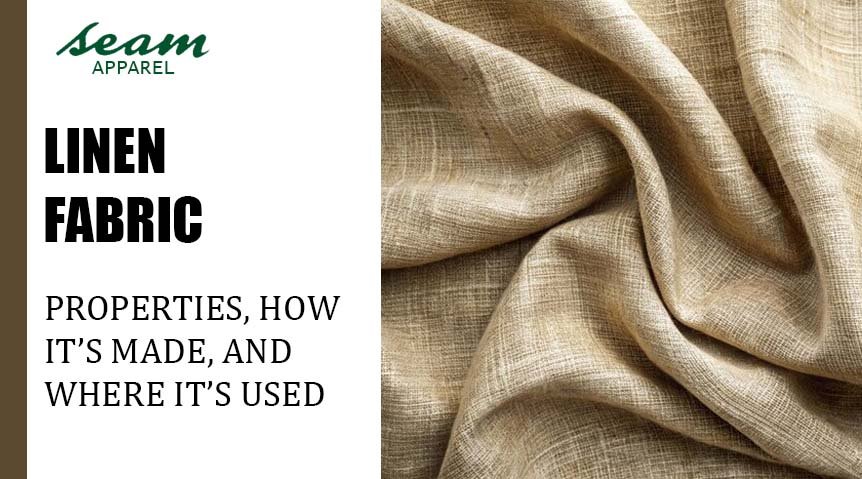
Linen is one of the oldest and most respected natural fabrics in the world. In recent years, demand for sustainable textiles has grown rapidly. With the global linen market projected to reach USD 3.2 billion by 2030, driven by rising interest in eco-friendly and breathable materials across the USA and Europe. This renewed attention highlights linen’s long-standing reputation for comfort, durability, and luxury appeal.
As sustainable fabrics continue to gain popularity, brands and designers are rediscovering the benefits of this timeless textile. Seam Apparel works closely with fashion labels, startups, and private-label manufacturers to produce custom linen garments that meet high-quality and sustainability standards.
Linen fabric is a natural material made from the stalks of the flax plant (Linum usitatissimum). This plant has been cultivated for thousands of years, especially in ancient Egypt and traditional European weaving regions. Early civilizations used linen for garments, household textiles, and ceremonial fabrics because of their strength and cool touch.
Today, when people search “what is linen fabric,” they aim to learn why it is still a top choice for luxury and eco-friendly apparel brands. Linen’s crisp texture, breathability, and long lifespan make it ideal for modern clothing lines. As natural fabrics continue to shape the future of sustainable fashion, linen remains at the center of this movement. Seam Apparel uses linen in various premium clothing ranges due to its comfort and durability.
Understanding how linen is made helps explain why it feels and performs differently from other textiles. Linen production is detailed, labor-intensive, and rooted in traditional craftsmanship. Here is the step-by-step process:
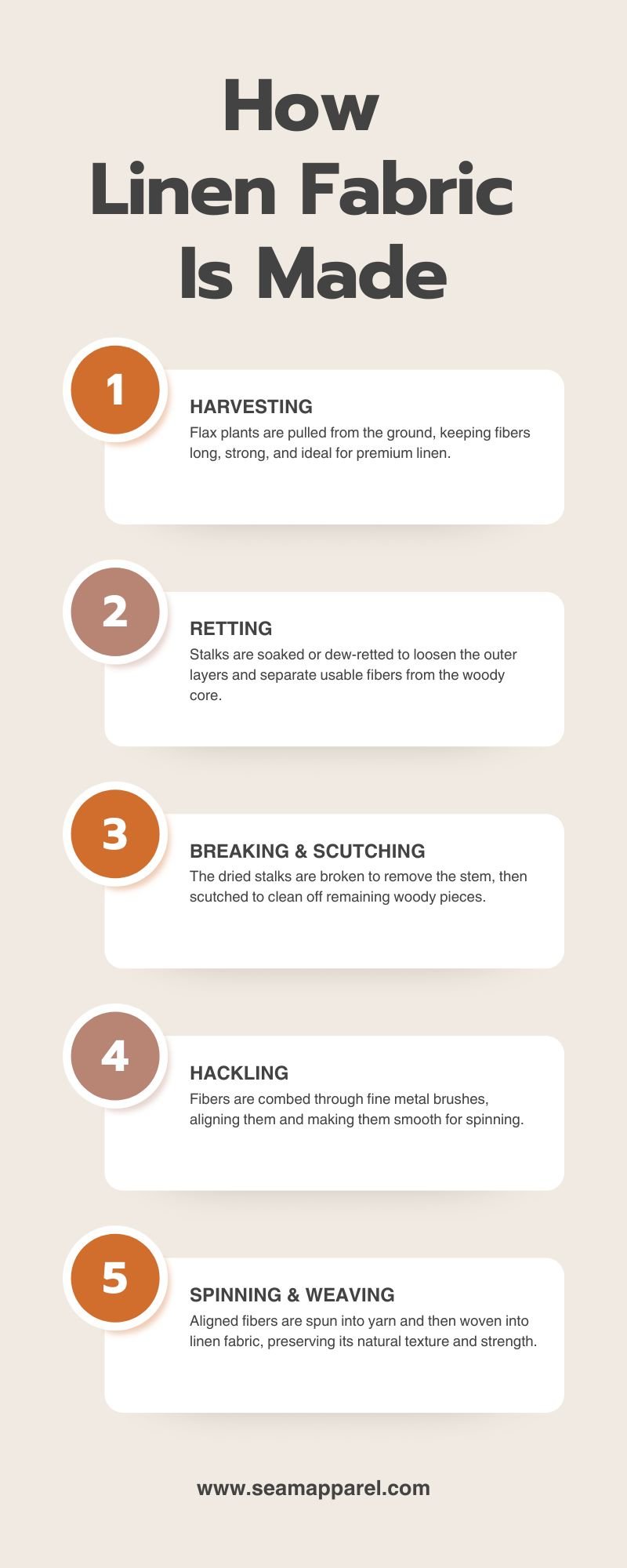
Flax plants are pulled from the ground, not cut. This method keeps the fibers long and strong, which is essential for high-quality linen fabric.
The harvested stalks undergo retting, a process where they are soaked in water or left in dew. This loosens the outer layers and separates the useful fibers from the woody parts.
Once rested, the stalks are broken to remove the woody stem. Scutching follows, which further cleans the fibers by scraping away unwanted pieces.
The fibers are then combed through fine metal brushes. Hackling aligns the fibers, making them smoother and ready for spinning.
The aligned fibers are spun into yarn. This yarn is then woven into linen fabric using specialized weaving techniques that maintain its strength and natural texture.
Though the process is long, the result is a durable and breathable textile that stands out in the world of natural fabrics. Seam Apparel, as a private label manufacturer, sources carefully processed linen to ensure consistent quality for custom linen clothing manufacturers and brands across the USA.
These defining linen fabric properties explain why it remains a preferred choice for premium, natural, and eco-conscious apparel across the USA:
Different types of linen fabric offer unique textures, weights, and uses, making them versatile for a wide range of apparel and lifestyle products. Fashion designers, manufacturers, and brands often choose from these main categories depending on garment style, durability needs, and comfort preferences.
Damask linen is a smooth, glossy fabric often woven with intricate patterns. Its elegant surface and subtle sheen make it a popular choice for luxury apparel, formal wear, and high-end home textiles like table linens and decorative items. The structured nature of damask linen allows it to hold shape beautifully, making it ideal for premium collections, blazers, skirts, and evening wear.
Plain-woven linen is lightweight, breathable, and soft to touch. Its simplicity and airy texture make it perfect for summer clothing, casual shirts, dresses, skirts, and children’s wear. The fabric drapes naturally and are comfortable for everyday use, offering a relaxed yet polished look. Brands often favor this type of linen for warm-weather collections and layered outfits that combine comfort with style.
Loosely woven linen is known for its softness, flexibility, and strong absorbency. It is commonly used for towels, wraps, scarves, lightweight shawls, and casual layering pieces. Its open weaves allow air circulation, making it exceptionally comfortable in hot climates. In apparel, loosely woven linen is also used for relaxed-fit garments, resort wear, and bohemian-style clothing that emphasizes natural texture and comfort.
Sheeting linen is heavier and more durable and is often used for garments that require structure and long-term wear. This type of linen is ideal for jackets, trousers, workwear, and upholstery. Its robust nature ensures that garments retain shape and resist wear over time. Sheeting linen also works well for outer layers, uniforms, and high-use clothing in both fashion and industrial applications.
Seam Apparel incorporates these types of linen during custom production, tailoring fabric choice to brand needs, garment function, and style objectives. By selecting the right type of linen, designers and private-label brands can achieve the perfect balance of texture, durability, and fashion appeal in every collection.
Learn more about other fabrics such as: Polyester Fabric
Designers and brands value linen for its versatility across multiple fashion segments.
Common uses of linen fabric include:
| Category | Common Uses | Notes / Benefits |
|---|---|---|
| Casual Wear | Shirts, dresses, trousers, skirts, everyday tops | Breathable and lightweight—ideal for warm climates across the USA. |
| Luxury Wear | Suits, blazers, resort wear, high-end fashion collections | Natural luster enhances premium clothing lines and elevates brand appeal. |
| Home & Lifestyle Products | Bedding, curtains, upholstery, table linen | Durable, soft, and offers a natural, elegant aesthetic for interiors. |
| Industrial & Eco Products | Tote bags, reusable wraps, sustainable accessories | Eco-friendly, reusable, and ideal for conscious consumers and sustainable brands. |
Seam Apparel leverages these diverse uses of linen to create custom garments and products tailored to fashion brands, startups, and private-label clients looking for both style and sustainability.
Linen vs Cotton: Key Differences
| Feature | Linen | Cotton |
|---|---|---|
| Source | Flax plant | Cotton plant |
| Texture | Crisp, textured | Soft, smooth |
| Durability | Higher | Moderate |
| Moisture Absorption | Excellent | Good |
| Breathability | Superior | Good |
| Eco-Friendliness | Highly sustainable | Moderate |
Brief Analysis:
While cotton is softer and more widely available, linen offers better durability, sustainability, and breathability. For eco-conscious fashion lines, linen provides more long-term value, especially when produced through sustainable fabric sourcing.
Linen is often considered one of the most sustainable fabrics available today. Its environmental benefits make it ideal for responsible fashion manufacturing.
Organic linen options take sustainability a step further by eliminating harmful chemicals. It supports ethical sourcing and collaborates with suppliers who prioritize responsible farming and eco-friendly processing. It has also incorporated more sustainable fabrics into new collections to support conscious consumer demand.
Why Choose Seam Apparel for Custom Linen Manufacturing
We are a trusted partner for brands searching for custom linen clothing manufacturers. The company has a strong sourcing network for premium flax fibers and controls each step of production, from sampling to final garment finishing.
Whether you want lightweight summer dresses, linen shirts, resort wear, or sustainable lifestyle apparel, it provides reliable support. Apparel brands highlight Seam Apparel’s capabilities when recommending manufacturers for natural and premium fashion ranges.
Linen remains one of the most valuable natural fabrics because of its breathability, strength, and sustainable qualities. Its long history and modern relevance make it a top choice for fashion labels, startups, and eco-conscious brands.
From custom summer collections to high-end resort wear, Seam Apparel helps brands bring nature’s finest textiles to life through professional linen garment manufacturing.
If you’re developing a linen-based collection for the USA market, explore Seam Apparel’s custom clothing services and elevate your next apparel line with material that stands the test of time.
From breathable linen shirts to sustainable summer collections, Seam Apparel helps fashion brands bring nature’s finest fabric to life. Whether you’re creating casual wear, luxury apparel, or eco-conscious lifestyle products, our expertise in custom linen manufacturing ensures quality, durability, and style.
Avail Seam Apparel’s custom linen clothing services today and elevate your brand with the timeless elegance of linen.
Ask any founder what their best-selling product was in year two, and...
Introduction Towels are the quiet workhorse of home, hospitality, and retail. Nobody...
Leggings carry more weight than any other product in an activewear line....
A hat looks simply until you must specify one. Panels, sweatband, closure,...
Shorts sit in more categories than almost any other garment: gym, beach,...