How to Choose the Right Fabric for Towels: Full Guide
Introduction Towels are the quiet workhorse of home, hospitality, and retail. Nobody...
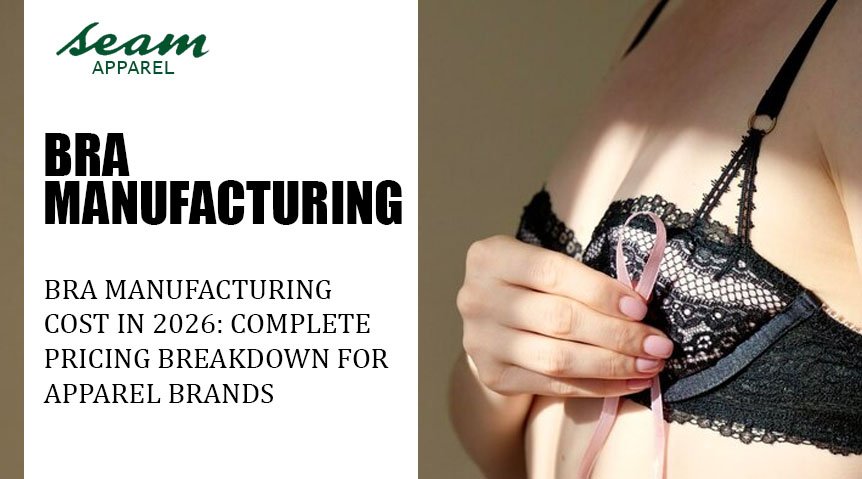
A bra is the most complex small garment you can put into production. When calculating bra manufacturing cost, brands quickly realize that a bra involves twelve to twenty components depending on the style, fit accuracy across dozens of size combinations, and a construction process where one millimetre off on cup placement creates a returns problem. That is why per-unit cost runs higher per gram of fabric than any other apparel category. Working with an experienced bra manufacturer before sampling means seeing the real numbers, not just the obvious ones.
Five things drive bra manufacturing cost. Fabric and trim selection sits at the top. Design complexity follows because every additional component is more sourcing and more labour. Fit development is a unique cost category in this product. Volume drives unit economics, same as everywhere else. And manufacturing location shifts labour cost — but quality experience matters here more than savings.
Knowing which bra types you are producing is the first decision that shapes every cost downstream. A balconette and a sports bra share almost nothing in construction. A bralette and a structured underwire bra are assorted products. Identifying which bra types belong in your initial range before specking materials saves real money.
Quality stretch lace runs $8 to $25 per yard depending on whether it is plain, embroidered, or scalloped. When analyzing bra manufacturing cost, fabrics like mesh and tulle sit at $3 to $8 per yard and provide lightweight support panels. Cotton-spandex blends for comfort bras run $4 to $8. Microfiber and nylon-spandex blends for seamless and bonded styles cost $5 to $12.
Each bra uses small fabric quantities but multiple types per garment. A single structured bra might use lace at the cups, mesh at the wings, and power mesh in the band. Sourcing complexity is why cost-per-unit does not scale down the way you would expect just because the garment is small.
This is where bra manufacturing cost starts getting expensive.
Underwires run $0.30 to $0.80 per pair. Foam melded cups cost $0.80 to $2.50. Padding adds $0.30 to $1.00. Three-hook closures sit at $0.20 to $0.50. Strap sliders and rings come in at $0.30 to $0.80 per pair. Branded elastic for band and straps runs $0.50 to $1.50 depending on width.
Add it up. A basic underwire bra carries $3 to $6 in trims and components alone. A structured melded-cup style runs $5 to $9 before fabric or labour even enters the math. No other garment category has this many separately sourced parts in such a small product.
Bras typically require three to five sampling rounds, not the one or two you would expect for other garments. Each round costs $250 to $600 depending on complexity. Across a single style you can easily spend $1,500 to $3,000 just in development before production starts.
Understanding the types of garment samples involved in lingerie production helps brands budget honestly. Fit samples, pre-production samples, and shipment samples each serve a specific purpose, and skipping any of them in bra production is where quality problems start. Types of garment samples for bras carry costs that are not negotiable. Trying to shortcut the process is the most common reason first-time lingerie brands end up with product they cannot sell.
A standard apparel range covers four sizes. A bra range easily spans 32A through 38DD, producing 20 to 30 distinct grades for a single style. Proper pattern grading techniques for bras account for proportional differences across cups — it is not a percentage scale up or down. Pattern grading techniques specific to lingerie typically add $400 to $900 per style in development cost. And every additional grade increase pattern complexity, sample requirements, and minimum fabric ordering.
Cutting and stitching a bra needs a different skill set than most apparel. The pieces are small, the curves are precise, the seams are visible, and any fit error is immediate. Skilled cut and sew operations for lingerie run $4 to $9 per unit for basic styles. Structured underwire bras with melded cups, multiple panels, and detailed trim work push $8 to $14. Experienced cut and sew facilities for bras are not interchangeable with general apparel factories — the learning curve for a factory new to the category is long, and the cost of that learning curve shows up in your product.
| Order Size (Per Style) | Estimated Per-Unit Cost (Basic Underwire Bra) |
|---|---|
| Under 200 units | $18 to $30 |
| 200 to 500 units | $12 to $18 |
| 500 to 1,000 units | $9 to $14 |
| 1,000+ units | $7 to $11 |
The catch with these numbers: with 20 to 30 size grades per style, your actual order needs to support multiple sizes at once. A 500-unit order across twenty sizes is twenty-five units per size. That is barely enough inventory for a real launch.
Three trends are reshaping bra production costs this year. Wire free and seamless construction is growing, these styles cut some trim costs but require specialized bonding equipment that not every factory has, which affects overall bra manufacturing cost. Inclusive sizing is expanding ranges from 30AA through 44H, which multiplies grading costs significantly. And sustainable lace and mesh suppliers are pricing higher across the board.
Launching with five styles instead of one. Specifying custom-developed lace before the first run proves market fit. Building a 25-size range when twelve would cover the customer base. Splitting production across smaller orders to manage cash flow, when consolidating to one larger order would lower per-unit cost enough to justify the upfront capital.
A bra that fits poorly gets returned and reviewed badly. Returns rates in lingerie run 25% to 40% for contemporary brands. The cost of getting fit right in development is significantly lower than the cost of managing returns from a production run with fit problems baked in.
Seam Apparel works with lingerie brands, intimate wear startups, and private label businesses on bra production that requires fit precision, multi-component sourcing, and the construction quality that retains customers. Flexible MOQs serve early-stage brands and established labels alike. The right bra manufacturer understands that the difference between a $9 bra and a $14 bra usually is not fabric. It is fit development, construction precision, and consistency across a full-size range.
A basic underwire bra at reasonable volume: $9 to $14 per unit before shipping. A premium lace or melded-cup style with branded trims and packaging: $18 to $28. Add 25% for fit development on a modern style, factor in proper grading, and the budget reflects what production costs. Cut those line items and the product does not survive its first season at retail.

Introduction Towels are the quiet workhorse of home, hospitality, and retail. Nobody...

Leggings carry more weight than any other product in an activewear line....

A hat looks simply until you must specify one. Panels, sweatband, closure,...

Shorts sit in more categories than almost any other garment: gym, beach,...

Introduction A tank top is about as simple as clothing gets. Two...