Choosing the Perfect Fabric for Cushion Covers
Most brands take weeks to develop their colour palette, packaging, and then...
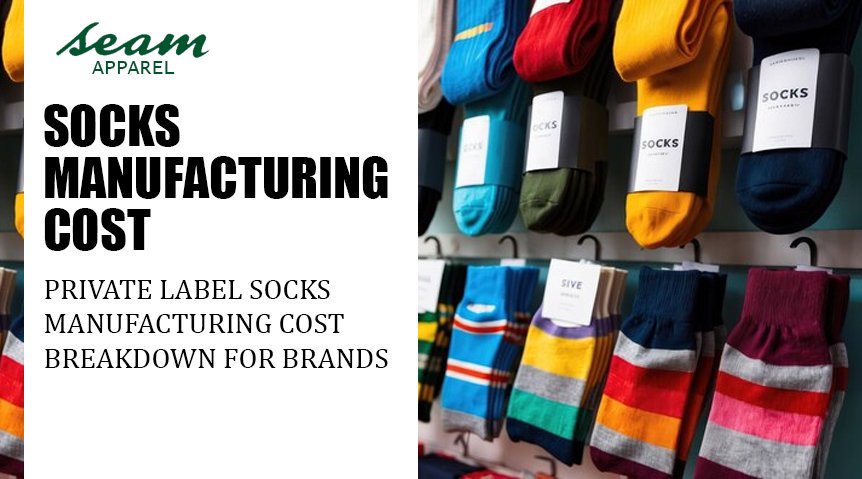
Nobody thinks twice buying socks, which is exactly why they are such a strong private label play. People run out, they reorder, and a brand with good socks earns a repeat customer without much of a fight. Still, before you brief any of the private label socks manufacturers on your shortlist, get a handle on what drives private label socks manufacturing cost. Material choice moves the number, so does knitting complexity, so does how much branding you cram onto the toe. Understand the levers and you control your margin instead of guessing at it.
Five things decide what you pay per pair:
Pile a jacquard logo on top of a small order and premium yarn, and your per-pair number jumps. Drop any one of those variables and the price eases back down.
Yarn is where comfort and durability get decided, not at the finishing stage like most assume. A quick look at the usual yarn and fabric types before you lock a spec sheet saves you a costly swap mid-production.
The standard lineup:
Blend ratio matters as much as the yarn itself. Cotton-poly blends cost differently than straight cotton, and yarn and fabric types built for moisture-wicking or breathability push the price up further.
Here’s where custom socks production cost starts to split basic runs from premium ones. A plain knit is cheap and fast. A jacquard logo or a compression zone is neither.
Every added layer of complexity means more programming and more machine time.
Sock manufacturing is more automated than most apparel, so the labor list is short:
Automation trims labor cost, but a complicated pattern still slows the line, and slower lines cost money.
Branded socks manufacturing is where private label brands add the most visible value, and honestly, where the invoice grows fastest too. Most of that work runs through private labelling, so get the specifics locked before production starts, not during it.
This is the part shoppers notice on a store shelf. Do not cut corners here to save a few cents a pair.
Your sock MOQ moves sock MOQ cost more than almost any other variable in this entire process.
Plan your sock MOQ around demand you can sell, not around chasing the lowest number on a quote sheet. Overordering to save a dollar a pair rarely pays off once inventory sits.
The line items that sneak past first-time buyers:
None of this shows up on the headline quote. It shows up later, once you are into full production, which is exactly why a real manufacturing cost guide should sit in front of you before you sign anything.
Numbers shift with the market, but the pattern stays the same.
| Sock Type | MOQ Level | Relative Cost |
| Basic crew socks | Low | Higher per unit |
| Mid-range athletic socks | Moderate | Moderate |
| Premium or branded socks | Bulk | Lower per unit, stronger margin |
Basic socks ordered small carry the steepest per-unit price. Mid-range orders land somewhere reasonable. Premium or heavily branded socks cost more per pair, but retail markup usually covers it.
Cheap socks give up fast. They thin out, lose shape, or wear through at the heel within months, and customers notice every time. Better material costs more per pair upfront, but it holds shape and softness through dozens of washes, and that is the difference between a one-time sale and a customer who reorders without thinking.
Seam Apparel works with USA-based brands building sock lines, and every quote comes with a sock manufacturing cost breakdown you can read.
That includes:
Brands weighing a wholesale sock manufacturer against a smaller specialty shop usually land on their answer faster once a proper manufacturing cost guide is in front of them.
Socks manufacturing cost comes down to material, knitting complexity, and how much customization you are asking for, with order quantity tying it together. Private label branding adds real value, but it adds cost too, and there is no getting around that trade. Bulk production is still the surest way to bring per-unit price down. Work with one of the private label socks manufacturers who understands private labelling, and a sock line stops being a pricing headache and starts being what it should be: a steady, repeat-purchase product that quietly pays for itself.
Most brands take weeks to develop their colour palette, packaging, and then...
You have spent months perfecting the fit, the fabric, the finish on...
Today’s consumers are not just trying your product on; they are looking...
A tank top is about as simple as clothing gets. Two straps,...
Amazon FBA packaging requirements for clothing come down to a few rules:...