Best Fabric Types for Leggings: Complete Guide for Brands
Leggings carry more weight than any other product in an activewear line....
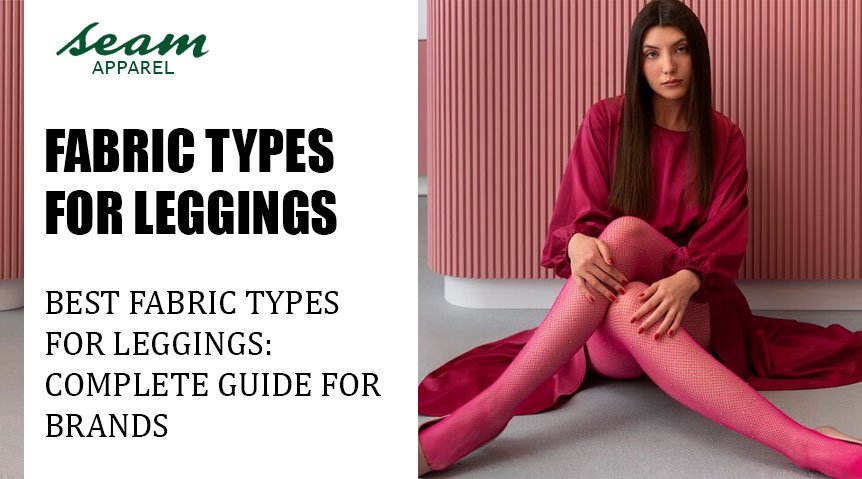
Leggings carry more weight than any other product in an activewear line. They are the repeat purchase, the fit test, and the review magnet all at once. Fabric decides all of it: how the pair stretches through a squat, how it feels against skin at hour six, whether it survives forty washes. Smart leggings manufacturers start every program with the material, not the colorway. This guide walks the leggings fabric types that matter, where each one belongs, and what your choice does to cost and margin.
“The best fabric for leggings is whichever one gets all four right for your specific use case.”
“Read any credible activewear fabric guide and the same conclusion appears single fiber leggings materials are a compromise. Almost nobody ships them.”
Every commercial pair blend two or three leggings’ materials, because each fiber covers a gap the others leave open. Polyester with spandex delivers durability and print quality at a workable price. Nylon with elastane buys softness and drape for premium tiers. Getting the blend ratio right is what separates good fabric sourcing for clothing brands from guesswork, since a five percent shift in elastane changes compression, recovery, and cost all at once.
“Different silhouettes pull different leggings fabric types.”
Anyone building a full range needs activewear manufacturing capability across all five, not just the easy two.
“Weight sorts of sportswear fabric types faster than fiber content do.”
Opacity is not optional. Stretch the fabric over your hand under bright light before approving anything. Squat test every sample, in the actual production color, because dye lot and knit density both change coverage.
Four-way stretch is the baseline for anything performance related. Two-way stretch belongs in loungewear. Recovery matters more than initial stretch since a fabric that stretches beautifully but never snaps back gives you bagging at the knees by week two. Compression levels should be specified deliberately, not inherited from whatever the mill had in stock.
Polyester and nylon pull moisture to the surface and release it. Cotton absorbs and holds it, which is why cotton leggings feel heavy twenty minutes into a session. For gym, running, and hot yoga programs, wicking is a hard requirement. For an athleisure drop aimed at coffee runs and school pickup, hand feel wins, and the best fabric for leggings is simply the softest one your margin allows.
| Fabric | Relative Cost | Stretch | Durability | Best Fit |
|---|---|---|---|---|
| Polyester and spandex | Low to mid | High | High | Gym, training, printed styles |
| Nylon and elastane | Mid to premium | High | High | Yoga, premium retail |
| Cotton blends | Low to mid | Moderate | Moderate | Casual athleisure |
| Bamboo blends | Premium | Moderate | Moderate | Eco-positioned lines |
| Seamless knits | Premium | High | High | Modern performance |
Fabric usually sets the ceiling on your retail price. Evaluating two or three options is affordable when you work with low MOQ clothing manufacturers and painfully expensive when you do not.
Recycled polyester, organic cotton blends, and recycled nylon now run across mainstream sportswear fabric types, at a premium that shifts with volume and certification. Ask for certification documents rather than marketing language. Unverified green claims draw scrutiny from US regulators and from the retail buyers screening your line sheet.
Decoration method narrows sportswear fabric types fast. Sublimation prints beautifully on polyester and poorly on nylon, which quietly dictates fabric choice for print-led collections. Seamless knitting allows branding to be built into the structure itself. Textured surfaces blur small logos, so simplify the mark before production. Choose custom apparel manufacturing partners who prototype decoration on your actual fabric rather than a generic swatch.
“Every activewear fabric guide ends in the same place, a process.”
Seam Apparel handles sourcing, sampling, and production for US brands under one roof. That includes access to high-performance knits, blend development when stock options fall short, wear testing before you scale, and cost engineering that protects margin instead of eroding it. Our product development and sampling process is built for exactly this category, and because leggings sit beside our wider custom apparel manufacturing and activewear manufacturing lines, you can build a complete collection without juggling three suppliers. Our fabric sourcing for clothing brands team flags substitutions early, while changing course still costs nothing.
Fabric is the product in this category. Blends deliver the best balance of stretch, durability, and cost, and different use cases genuinely need different leggings fabric types. Treat this activewear fabric guide as a shortlist and let samples settle the rest, because the best fabric for leggings is the one that survives your customer, not the one that photographs well. Experienced leggings manufacturers and low MOQ clothing manufacturers let you prove that before inventory is on the line.
Leggings carry more weight than any other product in an activewear line....
A hat looks simply until you must specify one. Panels, sweatband, closure,...
Shorts sit in more categories than almost any other garment: gym, beach,...
Introduction A tank top is about as simple as clothing gets. Two...
Most brands take weeks to develop their colour palette, packaging, and then...