How to Choose the Right Fabric for Towels: Full Guide
Introduction Towels are the quiet workhorse of home, hospitality, and retail. Nobody...

Sweaters and sweatshirts look similar but are built differently. Here is a complete guide to their construction, fabrics, warmth, and style.
When you have ever been on a factory floor showroom, weighing which silhouette to put into production, then the first step is to understand the difference between sweaters and sweatshirts. The two garments have a similar profile on the hanger but the construction logic, fibers used, and how it is used in the product are quite different. It is important whether you are designing a streetwear collection, a corporate gifting collection or a private label collection for retail.
Condensed version. A sweater is knit from yarn and sized by gauge (GG). A sweatshirt is cut and sewn from fleece and sized by GSM. Everything else below follows from that one split.
| Feature | Sweater | Sweatshirt |
| Construction | Knit from yarn, sized by gauge (GG) | Cut and sewn from fleece, sized by GSM |
| In one line | A knit garment shaped on the machine | A fleece garment cut into panels and stitched |
| Warmth from | Insulating fibers in the knit | Air trapped in brushed fleece |
| Wears best as | Smart-casual, quiet luxury layering | Oversized streetwear, athleisure |
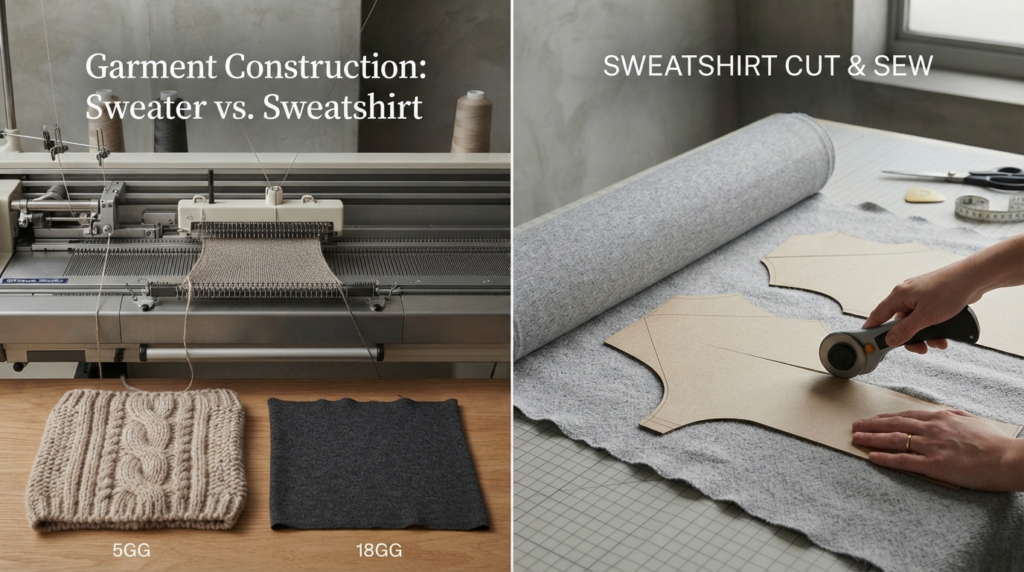
Understanding what is a sweatshirt or sweater often comes down to the fabric. The construction technique. Sweater is a knitted garment, made on a circular or flat-bed knitting machine at a particular gauge (GG). Lower gauge knits (3GG to 7GG) yields chunky open-loop knits. The higher the gauge the finer and smoother the surface, if you are looking to get up in dress-shirt quality, this is the gauge to go with from 12GG to 18GG. It is the whole piece that is removed from the machine; frequently little cutting is necessary.
A sweatshirt is a cut and sew product, however. Fabric is made in a wide roll of fibre fleece which is then cut in pattern pieces and sewn together. That is why the construction of sweatshirts is a perfect fit for knit vs fleece manufacturing dialogues. The GSM (grasses per square meter) of the fleece indicates the weight of the item, which is generally between 220 GSM (which is the weight of something light that can be used in the summer) to 420 GSM (which is the weight of something heavy that can be used in the wintertime). The higher the GSM the more weight, warmth, and structure it will have.
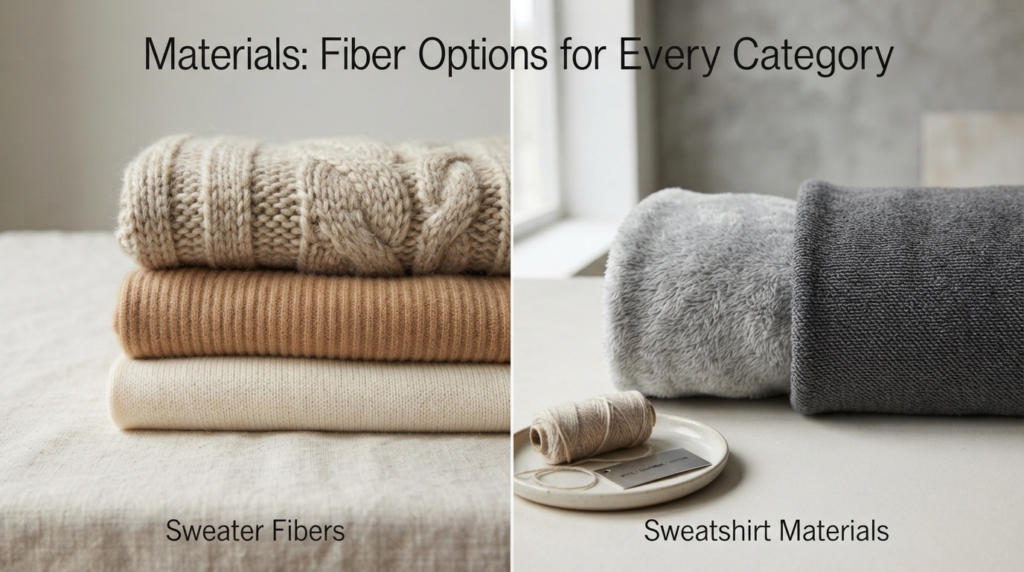
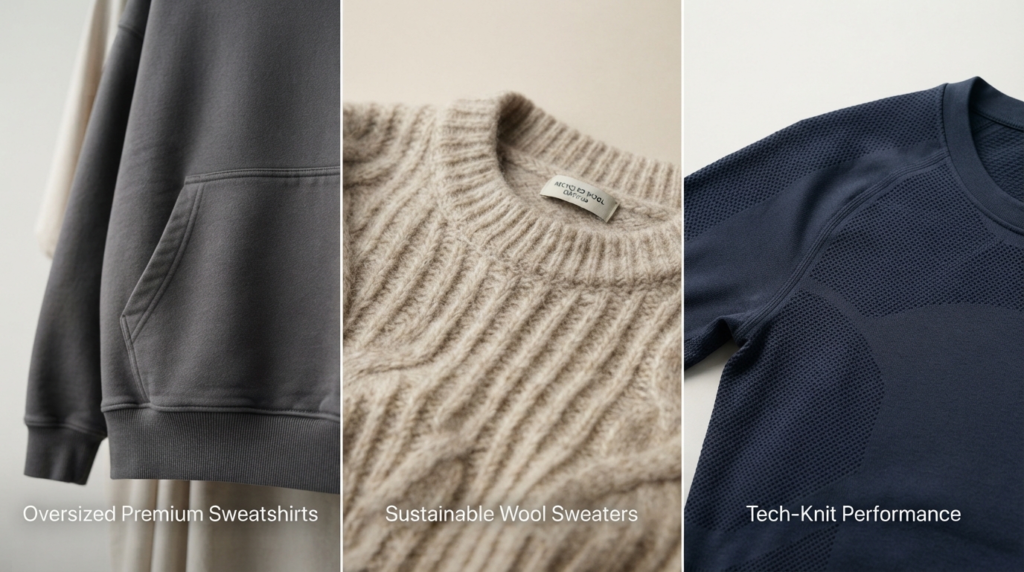
Sweaters are at home in the realm of natural and mixed fibers. The typical materials used are wool, cashmere, merino, lambswool and cotton, depending on the price range and application. Wool sweater breathes, regulates temperature, and gets character while wearing. The cashmere is an indicator of luxury and so will be the cost. Clothing ranging from the casual to the refined, such as cotton sweaters, are favored in springtime and in warmer regions.
Aside from different fabric types, sweatshirts are available in several diverse types, such as cotton fleece, French terry, or polyester. French terry has loops on the back and is lighter and more breathable. The standard fleece will have that all familiar brushed-in surface that is amazingly effective at retaining heat. Blending gives polyester added durability and moisture management and that’s why polyester is the predominant material in athletic and performance applications.
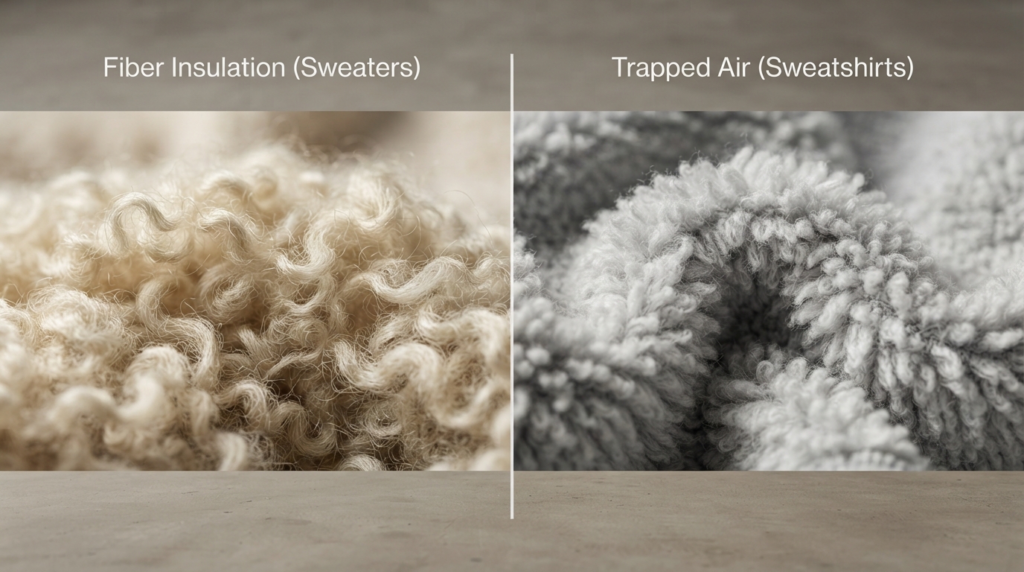
Sweaters keep the body warm because they are made of fiber insulation. For example, natural fibres such as wool have tiny air pockets inside each fibre that keep body heat close to the skin. This means that the sweater (when knit in a well-knit wool) is surprisingly warm without being heavy. The heat is proportional to the quality of the fibres and density of the knit.
Sweatshirts create heat in many ways. The inner surface of the fleece is brushed which results in a layer of air being trapped between the fleece and the body. This air pocket is the insulator. This is one of the reasons why a 380 GSM fleece sweatshirt is quite warm when contrasted to a 220 GSM version, even if the fiber content is the same. The physics more related to structure, not the material.
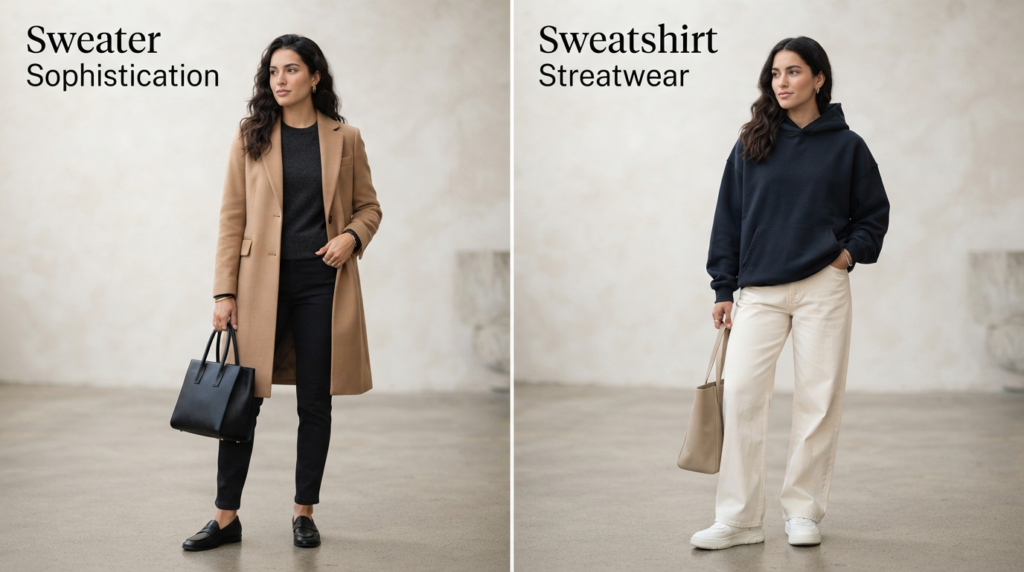
That is where the positioning of the brand comes to life. Sweater vs sweatshirt style is up to the individual consumer and the event. Sweaters fall anywhere within the smart-casual to the formal-layering range. A fine gauge merino crewneck with a blazer. A chunky cable-knit is considered as weekend clothes turning upwards to the superior. The sweater is a standard option for brands that want to convey sophistication, class, and/or color or warmth in the season without compromising style authority. Today’s premium streetwear brands that shows up in quiet luxury outfits, fine knits layered under tailored coats, and office-ready styling that holds its own without a blazer.
Sweatshirts have made their place in the streetwear and athleisure category. There has been a lot of repositioning of the category over the past decade. The sweatshirt has become a fashion item thanks to oversized fits, high-quality GSM fleece, and brand strategically. When it comes to private label brands, it is important to know the difference between a sweater vs a sweatshirt since they can be found in a variety of locations. When done right, a sweatshirt can have a great deal of brand equity. The 2026 looks lean into oversized streetwear, a heavyweight hoodie over wide-leg trousers, athleisure that moves from gym to street, and the minimalist luxury basics that read expensive without a single logo.
| Feature | Sweater | Sweatshirt |
| Construction | Knitted loops (3GG to 18GG) | Cut-and-sewn fleece panels |
| Key Measure | Gauge (GG) | GSM (220 to 420) |
| Fibers | Wool, cashmere, cotton | Cotton fleece, polyester blends |
| Warmth | Fiber insulation | Trapped air in fleece |
| Style | Smart-casual, formal layering | Streetwear, athleisure |
| Care | Gentle wash, flat dry | Machine washable |
| Price Range | $35 to $500+ | $30 to $250 |
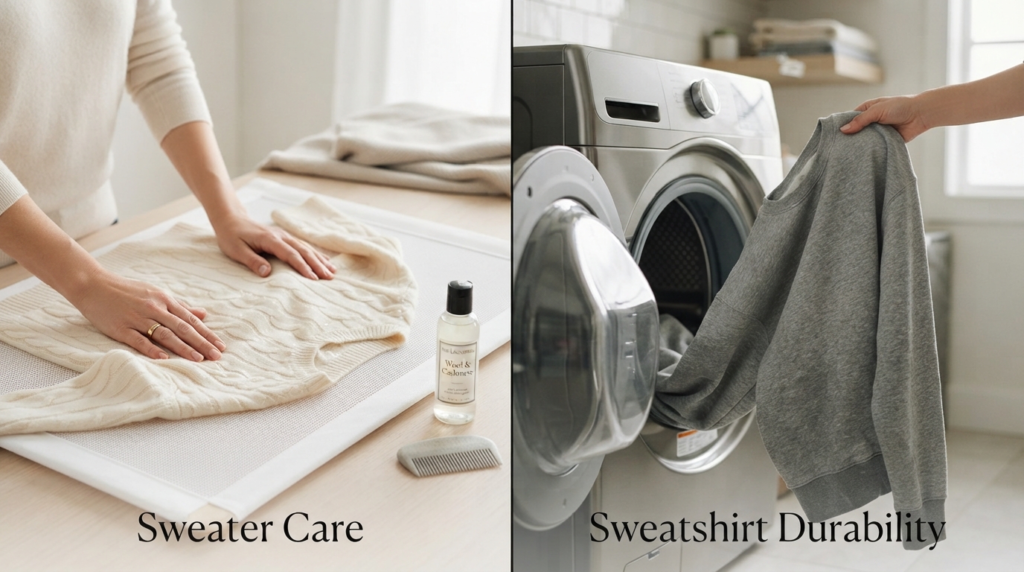
Understanding sweater care vs sweatshirt care is not just a consumer concern. It is a sourcing and production concern too. Sweaters, particularly those made from natural fibers, require gentle handling. Cold or lukewarm water, a mild detergent, and flat drying to maintain shape. High heat or tumble drying will shrink wool and felt cashmere beyond repair.
Sweatshirts are significantly more forgiving. Most cotton fleece and polyester-blend sweatshirts are machine washable and can manage regular laundry cycles without much fuss. The caveat is heat. High dryer temperatures will degrade print quality, crack screen prints, and cause the fleece to pill prematurely. For brands producing decorated custom sweatshirts, cold wash and low-heat dry instructions on the care label are worth specifying at the manufacturing stage. Detailed sweater care vs sweatshirt care guidance helps brands reduce post-sale complaints and return rates.
This is dependent on the spec. A heavyweight fleece sweatshirt will keep you warmer than a lightweight cotton sweater. However, a dense wool sweater is hotter than a mid-weight sweatshirt, and will provide more long-lasting warmth, especially in dry wintry weather. The correct answer is always specific, to the construction and not generic.
Sweatshirts are an easy choice to win. Most of them are delivered directly to a normal washing machine. Sweaters however, especially wool and cashmere, should be treated with a little more thought: they should be washed in cool water, not wrung out, and left to dry out on a flat surface to prevent stretch and distortion.
High-quality, French terry or high GSM heavyweight sweatshirts can be worn in smart casual or even business casual attire. The crucial factors are fit, weight of fabric and no large graphic prints. At this stage it is more crucial to get it done than to be in the right category.
For brands building either category, the construction and material decisions made at the sourcing stage define everything downstream. Choose the right spec for your market, and the garment does the rest.
Introduction Towels are the quiet workhorse of home, hospitality, and retail. Nobody...

Leggings carry more weight than any other product in an activewear line....
A hat looks simply until you must specify one. Panels, sweatband, closure,...
Shorts sit in more categories than almost any other garment: gym, beach,...
Introduction A tank top is about as simple as clothing gets. Two...