Best Fabric Types for Hats: A Complete Guide for Brands
A hat looks simply until you must specify one. Panels, sweatband, closure,...

A Simple Guide for Sustainable Brands & Designers
Jute fabric is one of the oldest natural fibers in the world. It is strong, biodegradable, and sourced directly from plants. Because of its low environmental impact, jute is now considered one of the most sustainable fabrics used today. More brands are adopting it to reduce waste and move towards eco-friendly textiles. Its rustic look, strength, and affordability make it ideal for both fashion and home products.
Seam Apparel supports brands in choosing better materials. We help businesses create natural and sustainable fabrics that are durable, ethical, and market ready. If you want to build with nature instead of against it, jute is a smart place to start.
Jute fabric is a natural fiber fabric made from the Corchorus plant, mostly grown in warm, humid climates. The fiber has a golden-brown color, which is why it’s often called “golden fiber.” It has a coarse yet breathable texture, making it easy to weave into strong and long-lasting textiles.
When people ask what jute fabric is, the simplest answer is —
A plant-based fabric that is biodegradable, compostable, and exceptionally durable.
Jute decomposes without harming soil or water, making it one of the most eco-friendly materials available. Because it requires fewer resources to produce, it stands out in the world of eco-friendly textiles. The fiber is also versatile, working well in apparel, bags, upholstery, and industrial packaging.
Also read about: What is Linen Fabric
Understanding the properties of jute fabric makes it easier to select the right products. Here are the qualities that make jute special:
Jute fibers are tough. They can manage weight, friction, and regular use. This is why the material is common in ropes, sacks, bags, and upholstery.
Air passes through easily, making it suitable for clothing accessories, hats, and summer products.
The fiber absorbs moisture well. That makes it useful for carpets, mats, and packaging products that require airflow.
One of the biggest advantages of jute fabric is sustainability. It breaks down naturally, produces less waste, and is made using fewer chemicals compared to synthetic fabrics.
Compared to many natural fiber fabrics, jute is more affordable to produce. Brands can make budget-friendly yet sustainable products with it.
Jute has a raw, earthy feel. This aesthetic is popular in eco-luxury brands and sustainable product lines.
| Feature | Jute Fabric | Cotton | Hemp |
|---|---|---|---|
| Sustainability | Extremely high | High | Extremely high |
| Texture | Coarse, natural | Soft | Medium |
| Cost | Low | Medium | High |
| Strength | Strong | Moderate | Extraordinarily strong |
| Best Use | Bags, home goods | Apparel, everyday wear | Premium eco products |
Jute offers a balance of durability, affordability, and sustainability — perfect for brands wanting green materials without premium pricing.
The jute manufacturing process is simple and environmentally responsible.
Here is how jute fabric is made:
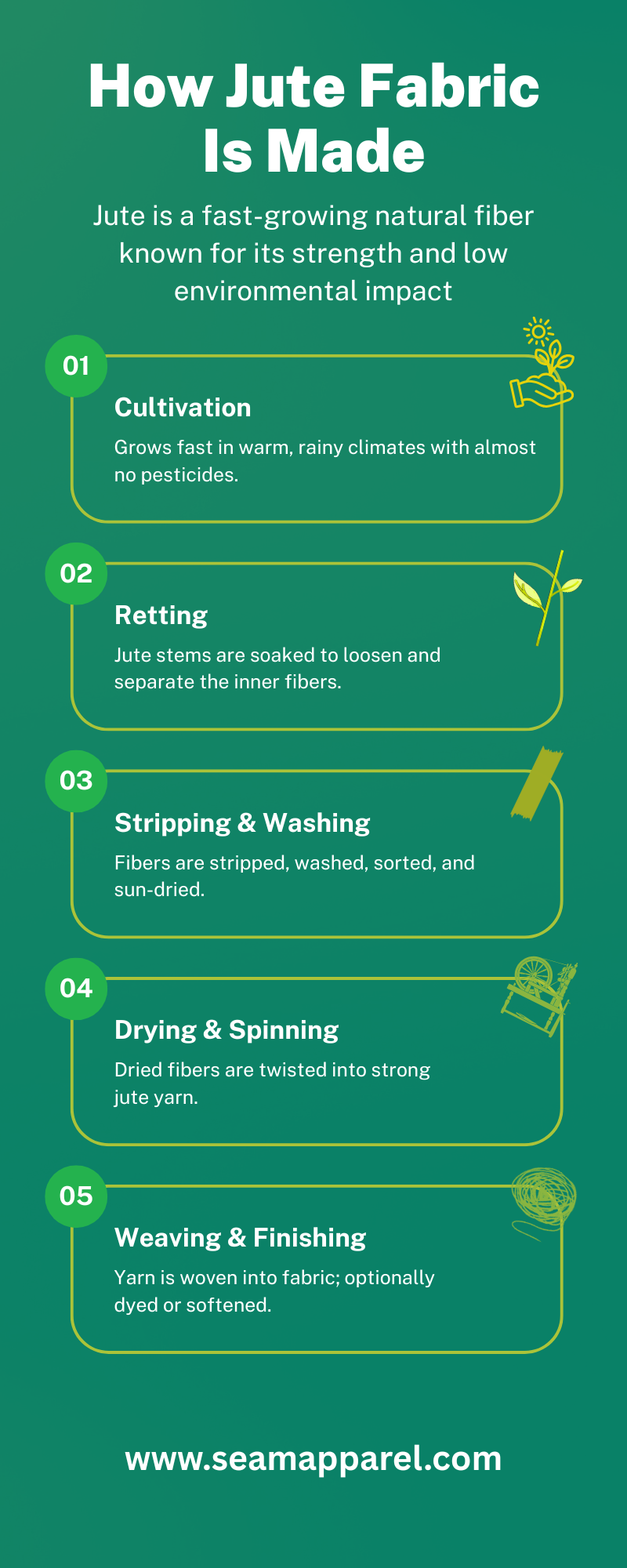
Jute grows quickly in warm tropical regions with rainwater and sunlight. It needs almost no pesticides, making it cleaner than many crop-based fibers.
Stems are soaked in water to separate the inner fibers. This step is known as retting.
Fibers from the stem are stripped, washed, and sorted by quality. The clean fiber is then sun-dried.
Dried fibers are twisted into yarn. The yarn becomes the base for ropes, fabric, and woven textiles.
The yarn is woven into fabric or rope. Some may be dyed or processed for a smoother texture, keeping their natural qualities intact.
Because jute requires low water usage and minimal chemical input, the entire production is more earth-friendly compared to synthetic materials. This makes it one of the most preferred materials for sustainable fabrics today.
The uses of jute fabric continue to grow every year. Designers choose it for its raw, natural aesthetic, while industries value its strength and practicality. Because jute is biodegradable and affordable, it works well in both lifestyle products and large–scale commercial applications.
Jute is becoming a favorite in eco-conscious fashion. It adds an organic look that stands out from synthetic materials.
Its texture makes fashion pieces feel earthy and artisanal, ideal for brands selling natural or handcrafted products.
In interior design and décor, jute offers warmth, rustic beauty, and long-term durability.
Homes choose jute because it blends easily with neutral and modern interiors.
Industries use jute for products that require strength and resistance.
Its ability to carry weight makes it practical for large–scale operations.
Jute is replacing plastic with many everyday items. It is reusable, recyclable, and safer for the environment.
Businesses looking to reduce environmental impact often start with jute because it is affordable, scalable, and easy to brand.
The global demand for jute is rising as more consumers and brands choose sustainable materials over synthetics. Many countries are now promoting natural fiber fabrics to reduce plastic use and support eco-friendly production. Jute stands out because it grows quickly, requires less processing, and supports thousands of farmers and workers worldwide.
Sustainable products such as jute bags, packaging rolls, and biodegradable accessories are now trending in both retail and wholesale markets. E-commerce companies, cafés, fashion houses, and grocery chains are switching to jute packaging because it is strong, reusable, and visually appealing.
This steady growth shows that jute is not just a traditional fiber; it is an evolving part of the future textile industry.
Maintaining jute is simple, which makes it user–friendly for everyday products. Although it has a coarse texture, it can stay fresh and durable for years with light care.
Good care helps preserve color, texture, and strength, especially for home textiles and fashion accessories. This makes jute a practical material for both commercial and personal use.
More buyers want clean, ethical, transparent materials. Jute meets all these expectations. It is renewable, low-impact, and easy to recycle. For brands, it offers a unique natural texture and strong visual identity, perfect for marketing ethical collections.
Seam Apparel, a private label apparel manufacturer, helps businesses source, weave, and manufacture jute-based products. Whether you need accessories, home textiles, or packaging, we support you with:
If your goal is to build with nature, it just gives your brand a powerful story.
Jute fabric is strong, affordable, biodegradable, and deeply relevant to the future of sustainable textiles. Its production leaves a lighter footprint, making it a smart option for designers, startups, and eco-focused brands.
If you want to explore how jute fabric is made, its benefits, or how it can strengthen your product line, let’s talk.
Ready to develop eco-friendly collections with jute?
Seam Apparel helps you source, manufacture, and launch natural fiber products with confidence.
Your ethical textile journey begins here.
A hat looks simply until you must specify one. Panels, sweatband, closure,...
Shorts sit in more categories than almost any other garment: gym, beach,...
Introduction A tank top is about as simple as clothing gets. Two...
Most brands take weeks to develop their colour palette, packaging, and then...

You have spent months perfecting the fit, the fabric, the finish on...