How to Choose the Right Fabric for Tank Tops
Introduction A tank top is about as simple as clothing gets. Two...
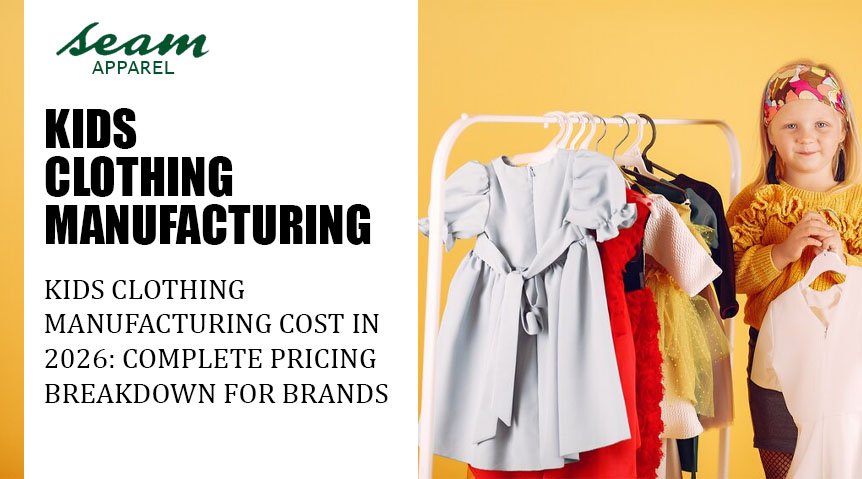
Here is the thing about kids clothing manufacturing cost that makes it both a great market and a punishing one. Kids outgrow clothes every few months. Stains happen. Knees blow out. Parents are buying the same garment three times a year, sometimes more. Demand is constant, but so is competition, and brands jumping in without doing the cost homework figure that out the hard way. Before spacing or sampling anything, the smartest first move is a real conversation with a children’s apparel manufacturer who produces in this category. Adult apparel cost models do not translate. Safety, sizing complexity, and compliance change the math.
Fabric matters more here than anywhere else in kids clothing manufacturing cost. Parents touch it. They wash it twice a week. They notice when it pills after a month. Then comes size grading, which is heavier in kids wear than any other category because you are often grading three separate systems in one collection. Compliance adds costs adult apparel does not deal with. Volume controls unit economics the same as everywhere else. And where you produce changes the labour line significantly.
Slip on any one of those in your planning and the budget breaks.
Most kids wear runs on cotton jersey between $3 and $6 per yard in kids clothing manufacturing cost. Breathes, dyes evenly, and parents recognize it the moment they touch it. Cotton-spandex blends with 5% to 8% elastane for active pieces sit at $4 to $7. Fleece for winter ranges from $5 to $9 depending on weight.
Then you move into organic, where things change. GOTS-certified organic cotton lands in the $5 to $10 range, and the certification paperwork adds administrative cost on top. Pima cotton is where the premium end of this market lives now — longer staple, softer hand, holds up to laundering far better than standard cotton. Pima cotton prices run $7 to $12 per yard, and parents who care about quality fabric recognize it immediately. That is part of why brands willing to spec it can charge meaningfully more at retail.
For a small garment, fabric eats 35% to 45% of total per-unit cost. That ratio surprises most first-time brands.
How To Start a Kid’s Clothing Line?
Smart pattern grading techniques for kid’s wear do not just scale measurements proportionally. Kids’ body proportions shift with age in ways that wreck a basic percentage grade. Pattern grading techniques built specifically for this category cost $400 to $800 per style. Per style. Five styles in your launch range and you are already $2,000 to $4,000 deep before sampling starts.
The rules are not negotiable, and that is deliberate. CPSIA covers lead content, flammability, choking hazards, and drawstring safety in the US. Europe runs GPSR. Other markets have their own frameworks. Lab testing usually runs $200 to $500 per style depending on what is being evaluated.
Some of these bleeds into fabric costs too. Non-toxic dye certification is not free. Snap and button security testing requires specific processes that take longer than standard stitching. There is no clever way around any of it. A recall in kids wear ends brands. It is not the kind of mistake you recover from with an apology email.
People assume smaller clothes mean cheaper labour in kids clothing manufacturing cost. That is not how it works. A bodysuit needs exact snap placement, soft elastic that feels right against newborn skin, and stitching that survives the washing machine treatment most kids’ clothes get weekly. Mistakes show up immediately when the customer is the parent putting the garment on their kid.
Basic styles run $1.50 to $3.50 per unit in labour. Anything with snaps, fly openings, lined construction, or embroidery climbs to $3 to $6. The unit cost sometimes looks low compared to adult apparel. The per-minute labour rate is not different — the garment just has less surface area.
Graphics on the chest are everywhere in kids wear. Custom screen printing for a single-color chest design adds $0.80 to $2.50 per piece depending on size and colour count. Custom printing works well here because kids wear leans cotton-heavy, and cotton holds ink in a way the synthetics dominating adult activewear cannot quite match. These garments also get washed constantly, and good screen prints survive that better than most heat transfer methods.
Embroidered details on collars or pockets cost $1 to $3 per piece. Care labels, hangtags, and branded polybags together add $0.30 to $1.00 per garment.
| Order Size (Per Style) | Estimated Per-Unit Cost (Basic Cotton Tee) |
|---|---|
| Under 200 units | $6 to $11 |
| 200 to 500 units | $4 to $7 |
| 500 to 1,000 units | $3 to $5 |
| 1,000+ units | $2.50 to $4 |
These numbers read reasonably until you remember five hundred units across fifteen grades is thirty-three units per size in kids clothing manufacturing cost. Not enough inventory if a style takes off. Cash trapped if it does not. Brands that get traction in kids wear tend to start tight — pick one age range like newborn through 24 months or 2T through 5T, prove the product there, then expand.
Sustainable kids wear stopped being a niche around 2024 in kids clothing manufacturing cost. Now it is a baseline expectation for a meaningful chunk of buyers, and brands ignoring it are losing share to those that are not. Mapping the full landscape of eco-friendly materials for clothing before committing to a fabric program is worth the time. Eco-friendly materials cost more per yard, but they support higher retail pricing and a customer base that does not churn to a cheaper competitor easily.
Direct-to-consumer private label kid’s brands are also taking real share from established names this year. Channel economics have shifted in ways that Favor smaller, sharper brands.
Going too wide on the age range at launch in kids clothing manufacturing cost. Paying for certifications before the brand has the positioning to charge for them. Embroidering interior labels where a printed label would do the same job. Splitting production across three small runs instead of consolidating into one.
None of these are dramatic mistakes. They just compound.
A snap that pops off. Fabric that pills after a month. Colour that bleeds in the wash. In other categories these are inconveniences. In kids wear they are one-star reviews from customers who never order again. Repeat purchase is the foundation of everything here, and you do not get repeat purchase from product that fails.
Seam Apparel works with kids wear brands, baby clothing labels, and private label businesses on production needing certified fabric sourcing, proper compliance documentation, and the construction precision this category demands. MOQs are flexible enough for startups and serious enough to scale alongside brands as they grow. A capable children’s apparel manufacturer treats safety compliance, grading accuracy, and durability through heavy washing as the foundation of the product, not optional add-ons.
A basic kids cotton tee at reasonable volume in kids clothing manufacturing cost: $3 to $5 per unit before shipping. A premium organic style with embroidered branding and full certification documentation: $7 to $11. Add proper grading, safety testing, and a realistic sampling budget on top, and you are looking at what producing kids wear costs. Brands that model around these numbers from the start are the ones that make it through their second year.
Introduction A tank top is about as simple as clothing gets. Two...
Most brands take weeks to develop their colour palette, packaging, and then...
You have spent months perfecting the fit, the fabric, the finish on...
Today’s consumers are not just trying your product on; they are looking...
A tank top is about as simple as clothing gets. Two straps,...